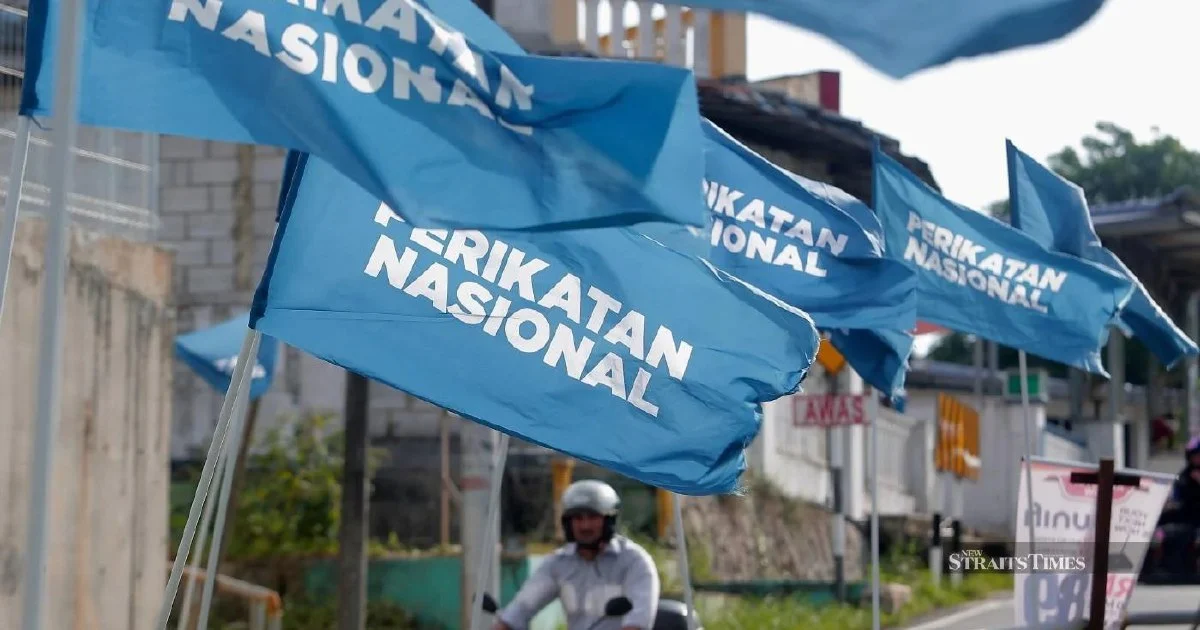
Perikatan Nasional is unlikely to engineer a dramatic split with its ally Bersatu in the coming weeks, according to political observers monitoring developments within the Opposition coalition. The calculation is straightforward: with state elections in Johor and Negri Sembilan drawing closer, any public rupture would hand a critical advantage to rival political camps and fragment voter support at precisely the moment when unified messaging matters most.
The timing of these electoral contests means PN's leadership faces strong incentives to paper over internal disagreements rather than allow them to fester into open conflict. Both states present different political landscapes and voter demographics, but both are winnable terrain for an Opposition alliance that presents a cohesive front. A coalition at war with itself cannot effectively communicate a unified vision or policy platform to electorates preparing to make their choice.
Bersatu's position within PN reflects the broader structural reality of Malaysian politics, where no single Opposition party commands sufficient parliamentary or grassroots machinery to govern alone. The party emerged from UMNO dissidents and retains considerable influence within certain constituencies, particularly in states where it has cultivated deep organisational roots. Losing Bersatu would not merely cost PN a few seats; it would signal ideological fragmentation and potentially trigger a cascade of defections among politicians and party members uncomfortable with visible disunity.
From a strategic perspective, PN leadership understands that Johor and Negri Sembilan represent test cases for viability beyond Peninsular Malaysia's traditional heartlands. Johor, in particular, holds symbolic weight as a Barisan Nasional fortress for decades. Demonstrating Opposition capacity to contest effectively in such territory requires demonstrating competence at coalition management—the ability to hold multiple partners with divergent interests towards common goals. A fractured PN entering these elections sends the opposite message.
Analysts note that internal tensions within Opposition coalitions often surface during state-level contests rather than federal campaigns. Local politics operates by different rules, with municipal and district-level power structures, patronage networks, and historical party allegiances creating distinct incentives. However, the publicity surrounding any public disagreement over candidate selection or campaign strategy cascades upwards, affecting perception of national-level coherence. PN appears determined to avoid giving ammunition to ruling parties seeking to portray the Opposition as incapable of functioning as an alternative government.
The electoral mathematics in both states suggest PN cannot afford losing Bersatu's contributions to voter mobilisation and candidate recruitment. While PN's core components—PAS and PN's Peninsular entities—command substantial support bases, a three-way contest involving Barisan Nasional, PN, and splintered Opposition groups would dilute anti-government votes. Bersatu's withdrawal or overt friction would create exactly such a scenario, undermining seats that otherwise appear competitive for Opposition forces.
Beyond the immediate electoral cycle, maintaining Bersatu within PN's orbit preserves longer-term optionality for coalition reconfiguration. Malaysia's political landscape remains fluid, with potential swings in federal-level dynamics creating new possibilities for re-alignment between different parliamentary blocs. A coalition that successfully holds together through challenging elections acquires credibility and momentum that translates into both improved negotiating positions and increased attractiveness to potential defectors from competing camps.
Historically, Malaysian coalitions have proven fragile when subjected to electoral stress. The visible strains within Barisan Nasional preceding and following the 2018 general election served as warning about what happens when coalition partners diverge sharply over resource distribution or policy direction. PN's leadership has presumably absorbed these lessons, recognising that pre-election cohesion, however uncomfortable for individual partners, beats post-election recriminations and fragmentation.
The Johor and Negri Sembilan elections also function as a barometer of Opposition acceptability among crucial voter demographics. These states contain constituencies where swing voters and urban professionals previously supported Barisan Nasional but may be receptive to alternative governance models under proper conditions. Coalition dysfunction would reinforce perceptions of Opposition instability and unreliability precisely when building bridges to such voters matters most.
For Bersatu specifically, remaining within PN during this critical electoral window ensures continued access to party machinery, campaign resources, and the symbolic legitimacy of contesting as part of a broader political movement. Exit or confrontation would isolate the party, reduce its electoral prospects, and potentially accelerate internal defections. The logic of staying put, however vexing to party leaders concerned with specific policy differences or leadership positions, remains strategically compelling.
The coming weeks will test this coalition equilibrium as campaign season intensifies and candidate selection disputes inevitably emerge. How PN's decision-making bodies navigate these friction points—whether they can resolve disagreements through quiet negotiation rather than public confrontation—will reveal much about the coalition's genuine organisational depth and maturity. Analysts expect PN leadership to employ considerable diplomatic effort towards this end, viewing a unified appearance as fundamental to electoral success in both states.