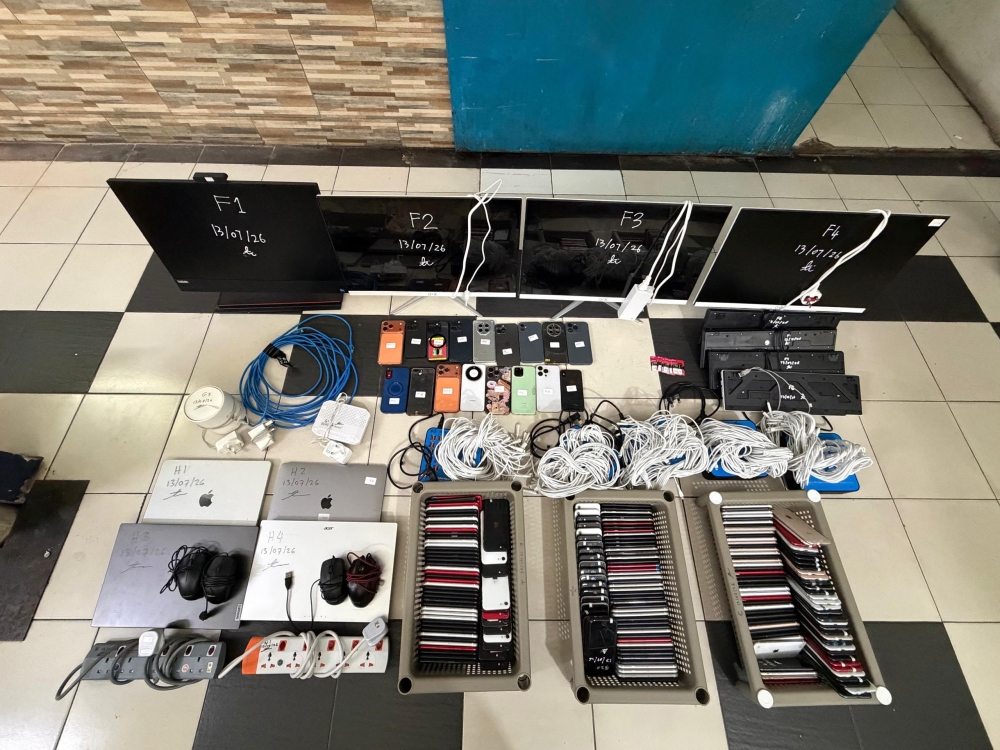
Perak police have successfully dismantled what investigators describe as a sophisticated online fraud operation, culminating in the arrest of 18 Chinese nationals during two coordinated raids conducted in areas surrounding Ipoh. The operation represents the latest in a series of enforcement actions targeting transnational scam networks that have increasingly targeted individuals across Southeast Asia, with Malaysia emerging as a key jurisdiction for both perpetrators and victims alike.
The synchronized raids, executed in July, uncovered evidence of an elaborate scheme that exploited digital platforms to defraud unsuspecting individuals. Such operations typically involve multiple layers of coordination, from front-end marketing and victim targeting to backend financial processing and money laundering. The sophistication of these networks underscores growing concerns among regional law enforcement agencies about the evolution of cybercrime beyond traditional phishing and advance-fee fraud into highly organized, compartmentalized criminal enterprises.
Investigations revealed that the syndicate maintained operational infrastructure designed to obscure the true location and nature of their activities. The Perak police force, which has increasingly prioritized cybercrime investigations as digital offences proliferate, identified the suspected ring through intelligence gathered from victim complaints and financial institution alerts. The two-pronged approach—simultaneous raids at multiple locations—reflects standard law enforcement practice aimed at preventing suspects from destroying evidence or coordinating with associates.
The arrests highlight the persistent vulnerability of Malaysia's position as a transit hub for international crime networks. Chinese nationals have featured prominently in several major scam busts across the country in recent years, often operating from rented premises in commercial or residential areas where their activities remained initially undetected. The proximity of these operations to legitimate business districts and residential zones presents particular challenges for neighborhood safety and law enforcement response capabilities.
Online fraud syndicates employing this operational model typically target victims in multiple jurisdictions simultaneously, adapting their messaging and deception tactics to exploit cultural nuances or current events. Malaysian victims have reported losing substantial sums through lottery schemes, romantic manipulation, and investment fraud variants. The financial impact extends beyond individual losses, as successful fraud campaigns generate proceeds that feed into broader money laundering networks throughout the region.
The investigation process for such cases demands cooperation between multiple agencies, including the Perak police commercial crime units, federal cybercrime specialists, and financial intelligence units. International coordination becomes essential when tracking cross-border financial flows and establishing the full scope of criminal activity. Many victims never come forward, fearing embarrassment or skepticism, which means reported cases represent only a fraction of actual fraud activity occurring within these networks.
For Malaysian readers and businesses, the dismantling of such operations carries broader significance. These networks don't operate in isolation—they frequently interlock with money laundering services, unlicensed money exchange operations, and facilitators who move illicit proceeds across borders. When authorities disrupt one node, they gather intelligence that helps map larger criminal ecosystems. This particular operation likely yielded information about supplier networks, financial conduits, and communication methods that will inform future enforcement actions.
The presence of such operations within Malaysian territory reflects both the country's strategic geographic position and its relatively advanced telecommunications infrastructure. Perpetrators exploit Malaysia's stable internet connectivity, established banking systems, and transient population demographics that can facilitate anonymity. However, these same factors also make Malaysia an attractive location for international law enforcement cooperation, as agencies can more readily establish jurisdiction and conduct investigations in relative safety compared to pursuing suspects in more unstable environments.
The ramifications for victims require attention beyond the criminal investigation phase. Many individuals who fall victim to romance scams, investment fraud, or other variants perpetrated by such syndicates suffer psychological trauma alongside financial loss. Support mechanisms remain underdeveloped in Malaysia, with few resources available for fraud victims to process their experiences and recover.
Looking forward, the success of this bust underscores the importance of sustained investment in cybercrime investigation capacity within state police forces. Perak's ability to identify and coordinate this complex operation demonstrates that regional police units, with appropriate training and resources, can effectively combat organized online fraud. The challenge lies in replicating this capacity across all Malaysian states and ensuring consistent follow-through in prosecution and asset recovery.
The arrest of these 18 individuals will likely result in an extended investigation phase as authorities attempt to map the full scope of the syndicate's operations, identify all victims, and trace the movement of illicit funds. International legal frameworks governing extradition and information sharing will become relevant, particularly if these suspects have distributed responsibilities across multiple jurisdictions. For Malaysia's law enforcement community, this operation provides an opportunity to demonstrate competence in complex financial crime investigation while signaling to transnational criminal networks that the country presents substantial operational risk.

