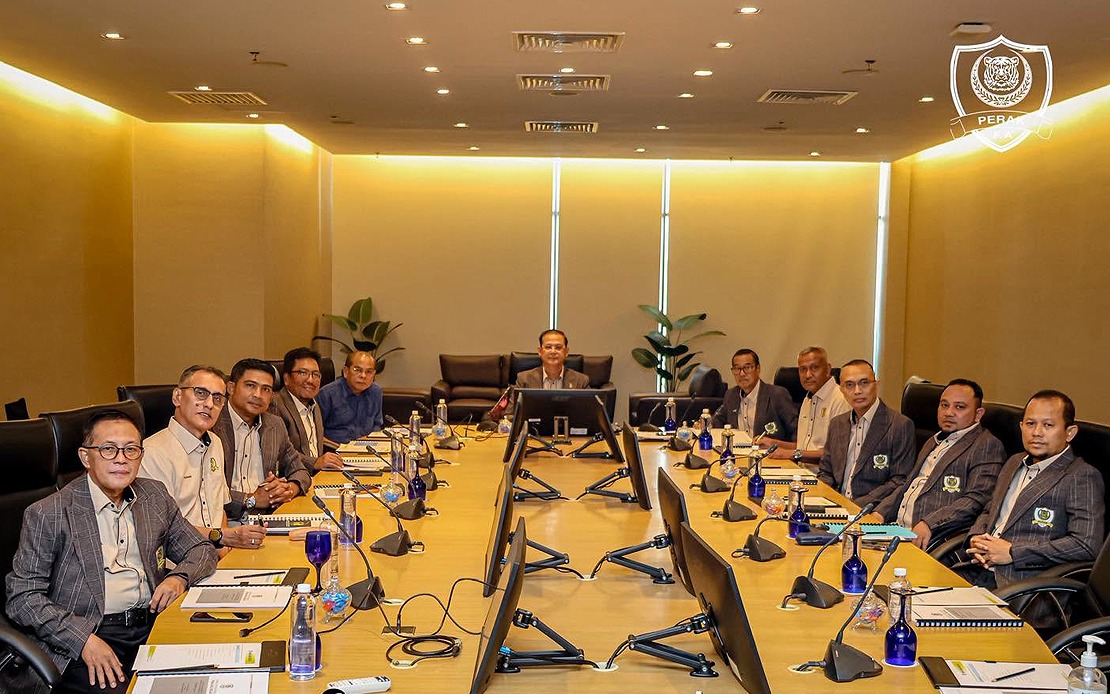
The Perak Football Association announced plans to recruit a new head coach ahead of the 2026-2027 Liga A1 Semi-Pro campaign, responding to updated licensing standards that have reshaped the competitive landscape for semi-professional football in Malaysia. The decision reflects a broader shift in governance as the Amateur Football League implements stricter qualification criteria designed to elevate coaching standards across the semi-pro tier of Malaysian club football.
Central to this recruitment drive is the Amateur Football League's newly mandated requirement that every participating team must employ a head coach holding an AFC Pro Diploma Coaching License, commonly referred to as the Pro-A credential. This standardisation marks a significant step in professionalising Malaysia's semi-professional football structure, ensuring consistency in coaching expertise and methodology across competing organisations. For Perak, the transition necessitates identifying a coach whose qualifications extend beyond mere licensing compliance to encompass substantive experience in athlete development and competitive coaching across multiple competitive levels.
The Perak Football Association emphasised that its recruitment strategy will prioritise candidates demonstrating not only the mandated AFC Pro Diploma but also substantial background in grassroots football development and modern coaching practices. The successful candidate must present a documented track record spanning state, national, and potentially international competition levels, indicating exposure to diverse competitive environments and evolving tactical frameworks. This multifaceted approach underscores Perak's commitment to appointing a coach capable of bridging the gap between foundational development work and competitive performance at the semi-professional level.
Integration of this recruitment initiative within Perak's broader strategic vision represents another layer of the organisation's planning. The new head coach appointment aligns with the Perak Sejahtera 2030 Plan, a comprehensive development roadmap that coordinates football advancement across multiple organisational and governmental levels. By embedding coaching recruitment within this longer-term agenda, Perak signals its intention to build sustainable competitive capacity rather than pursue short-term performance gains, addressing systemic development needs across the state's football ecosystem.
Outgoing coach Syamsul Saad, a former player, delivered a respectable campaign in the previous season, guiding Perak to fifth place in the league standings whilst achieving semifinal status in the MFL Challenge Cup and quarterfinal qualification in the Malaysia Cup. These achievements, whilst respectable, fell short of challenging the league's top tier, establishing a baseline from which the incoming coach must build. The transition creates opportunity to introduce fresh tactical approaches and intensity whilst maintaining organisational continuity in support structures.
Rather than displacing the existing coaching apparatus entirely, Perak's leadership has determined that the incumbent technical staff will be retained and reorganised alongside the incoming head coach. This collaborative framework aims to preserve institutional knowledge and established relationships with players whilst introducing the heightened qualifications and fresh perspective the newly recruited head coach brings to the table. Such integration strategies, when executed effectively, can prevent disruptive discontinuity and allow for smoother transitional periods during leadership changes.
Retention of performing players from the previous campaign forms another pillar of Perak's continuity strategy. The association has committed to offering fresh contracts to squad members who satisfied performance evaluation criteria, demonstrating confidence in the squad's foundational quality whilst providing stability for athletes navigating coaching transitions. This selective retention balances squad stability with openness to potential improvements or fresh talent integration as coaching strategies evolve.
Beyond the immediate Liga A1 Semi-Pro campaign, Perak has committed to a multi-tiered competitive participation strategy encompassing the Liga A2 Amateur competition and the President's Cup. This expanded competitive exposure serves a deliberate developmental function, creating pathways for emerging talented youth players to gain match experience and competitive rhythm. Such architecture reflects sophisticated talent pipeline thinking, recognising that semi-professional and amateur tier competitions function as incubators for identifying and developing players destined for higher-level opportunities.
Perak's grassroots development infrastructure has demonstrated measurable success in recent seasons, producing approximately 70 players in the 18-24 age bracket through integrated programmes spanning Malaysia Games participation, Liga A1 Semi-Pro competitions, and the Liga Perak Sejahtera 2030 pathway. This output demonstrates that the state has constructed functioning athlete development pipelines capable of generating consistent talent flows, though whether such volume translates into elite-level readiness remains an ongoing evaluation question. The new head coach will inherit responsibility for channelling this emerging talent toward sustainable competitive advancement.
Menteri Besar Datuk Saarani Mohamad's demonstrated support for Perak football represents crucial political backing that enables investment in coaching infrastructure and competitive participation. Continued governmental backing provides the fiscal foundation necessary for recruiting quality coaches, maintaining competitive squads, and sustaining multi-tier competitive participation. Such political commitment, whilst sometimes taken for granted, proves essential for semi-professional sports organisations operating within financially constrained environments.
The appointment process occurs within Malaysia's evolving semi-professional football landscape, where regulatory harmonisation and quality standardisation increasingly shape competitive structure. Perak's compliance with AFC Pro Diploma requirements positions the state's football programme in alignment with international coaching standards whilst signalling organisational commitment to professionalism. This alignment may facilitate future player development pathways toward regional or international opportunities, creating value beyond purely domestic competitive contexts.

