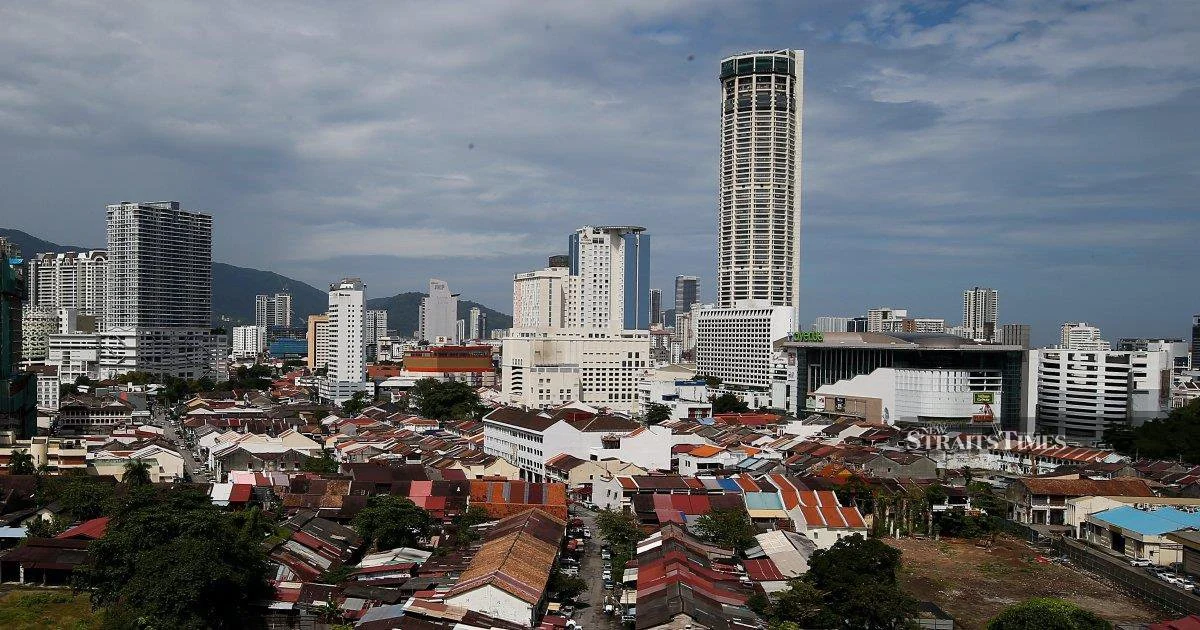
The Penang DAP Socialist Youth (Dapsy) has moved to neutralise criticism of the Penang South Reclamation (PSR) project by characterising the 'illegal island' designation as mere propaganda, capitalising on a recent court setback for environmental groups challenging the mega-development. This rhetorical escalation marks a shift in how state-aligned politicians are defending the RM76 billion waterfront expansion, moving beyond technical justifications to frame opposition in ideological terms.
Sahabat Alam Malaysia (SAM), a respected environmental non-governmental organisation with decades of track record in conservation advocacy, had pursued legal avenues to halt the reclamation scheme, which involves transforming approximately 4,500 hectares of Penang's coastal waters into reclaimed land. The organisation's recent court appeal concluded unfavourably, a development that has emboldened proponents of the project to dismiss future criticisms as coordinated political messaging rather than substantive environmental concerns.
The deployment of the term 'propaganda' by Dapsy signals a consolidation of political messaging around the PSR, transforming what remains a substantively contested development into a binary framework where supporters cast themselves as champions of development and progress, while portraying critics as obstructionists wielding emotional language. This framing carries particular weight in Malaysian discourse, where scepticism of NGO motives has become an increasingly potent rhetorical weapon in infrastructure debates.
For Malaysian observers, the PSR represents a microcosm of broader tensions between environmental protection and economic development ambitions that have defined policy discussions across Southeast Asia. Penang, historically positioned as the region's most environmentally conscious state government, finds itself advancing a project that fundamentally contradicts its green credentials—a contradiction that Dapsy's dismissive language attempts to sidestep rather than address directly.
The reclamation project's scale and scope remain extraordinary by regional standards. The scheme envisions constructing an artificial island larger than many Southeast Asian nations' territorial claims, with ramifications for marine ecosystems, fishery-dependent communities, and the peninsula's hydrological systems. Yet by collapsing substantive technical objections into accusations of propagandistic intent, proponents seek to delegitimise environmental science itself as merely political rhetoric.
The timing of Dapsy's intervention follows judicial proceedings that disappointed environmental lawyers and conservation advocates who had invested considerable resources in legal challenges. Rather than engaging with the specific marine biological, oceanographic, and socioeconomic studies that informed SAM's opposition, the youth wing's response operates at the rhetorical level, suggesting that questioning the project constitutes partisan positioning rather than legitimate civic participation.
Regionally, Malaysia's approach to mega-development projects increasingly mirrors global patterns where state-backed infrastructure initiatives encounter environmental resistance routed through civil society organisations and legal mechanisms. The Penang case demonstrates how political actors attempt to neutralise this resistance by redefining the terms of debate, transforming questions about environmental impact into questions about an opponent's credibility and intentions.
For the DAP, which constructed its political identity partly around environmental stewardship and good governance, the PSR represents a significant departure from foundational principles. Dapsy's aggressive rhetorical defence suggests internal recognition of this contradiction, necessitating a shift from defending the project on its merits to attacking the standing and motivations of those who raise objections. This strategic choice carries long-term implications for how the state government addresses future environmental controversies.
The 'propaganda' framing also reflects calculations about constituencies and political coalitions. By aligning support for PSR with concepts of progress, modernisation, and state development prerogatives, while positioning opposition as elite environmental activism divorced from working-class concerns, Dapsy attempts to reconfigure the political geography of the debate. This strategy has proven effective in other development contexts across Asia, where environmental scepticism can be bundled with nationalist sentiment and anti-Western positioning.
For Penang's fishing communities and coastal residents whose livelihoods depend on marine resources, Dapsy's dismissal of environmental concerns as propaganda offers scant reassurance regarding the project's actual impacts. The reclamation will fundamentally alter fishing grounds, inshore ecosystems, and traditional marine resource management systems that have sustained communities for generations. Whether framed as propaganda or legitimate environmental science, these material consequences remain unchanged.
The confrontation also highlights the limited utility of judicial review in Malaysian environmental governance. SAM's court appeal, while ultimately unsuccessful, had forced technical scrutiny and generated detailed examination of environmental impact assessments. Yet the failure to secure judicial relief through conventional legal mechanisms leaves opponents with diminished capacity to shape outcomes, potentially explaining why environmental groups may need to pursue alternative strategies including public communication campaigns—precisely what Dapsy dismisses as propagandistic.
Moving forward, the PSR debate will likely intensify as design phases advance and construction timelines approach, potentially forcing the state government to engage more substantively with environmental critiques rather than continuing to dismiss them through rhetorical deflection. The question whether Malaysian society remains persuaded by claims that environmental protection constitutes propaganda will ultimately shape how future mega-developments proceed across the region.

