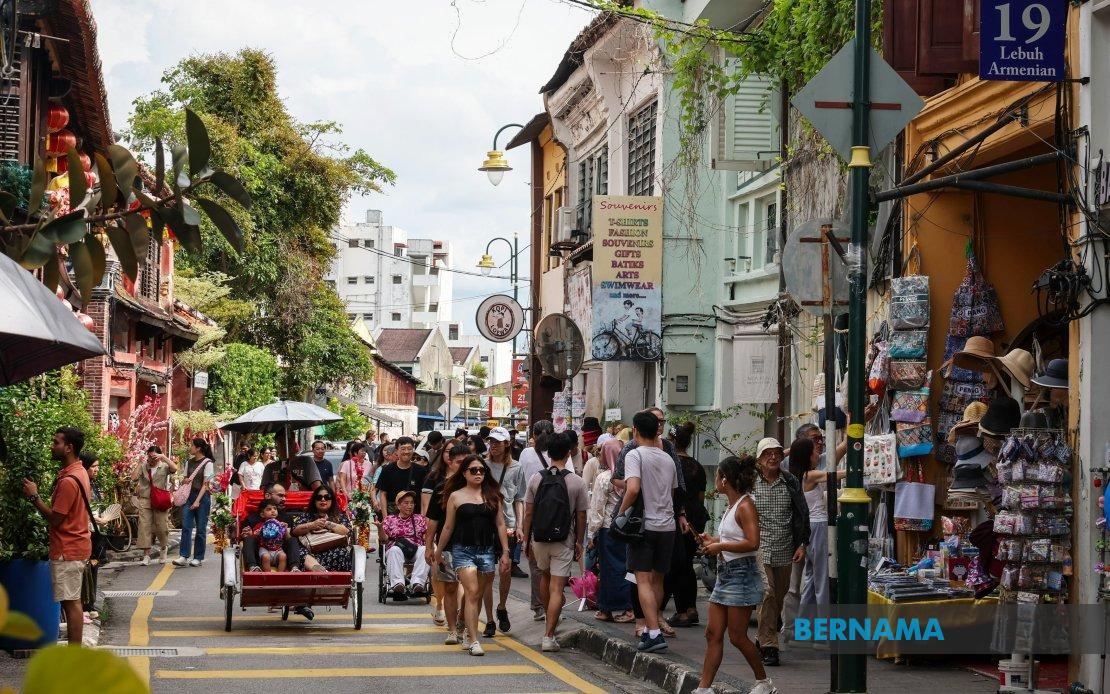
Penang has initiated plans to conduct a comprehensive structural safety assessment of all heritage buildings throughout the state following an incident where debris collapsed from a heritage shophouse on Armenian Street, injuring two visiting tourists. The fall of wooden beams and concrete fragments on August 5 has prompted state officials to prioritise a systematic evaluation of the condition and safety status of the island's extensive catalogue of protected structures, a move that reflects growing concern about the balance between preservation and public welfare.
Jason H'ng Mooi Lye, chairman of the Penang State Local Government and Town and Country Planning Committee, announced that the state government would collaborate with the National Heritage Department to engage an independent engineer who would undertake a detailed structural study. This examination will identify heritage buildings that are either unsafe or facing significant risk of deterioration, creating a prioritised list for intervention. The findings are expected to form the basis for regulatory action by the Penang Island City Council (MBPP), which may subsequently issue formal notices to building owners requiring them to execute essential restoration and reinforcement works.
The Armenian Street incident involved two Sri Lankan nationals, identified as Mohamad Ammtar, 66, and Fatimah, 55, who received immediate treatment at the scene before being transferred to Penang Hospital (HPP). Preliminary investigations attributed the structural failure to termite damage that had compromised the integrity of wooden components supporting the building. Mohamad Ammtar was discharged following treatment, though Fatimah remained hospitalised undergoing a computerised tomography scan to evaluate the full extent of her injuries. The fortunate absence of fatalities in this case has not diminished the urgency of addressing similar hazards across the heritage precinct.
H'ng emphasised that heritage conservation efforts cannot be pursued at the expense of visitor and resident safety. This position reflects a pragmatic shift in heritage management philosophy, acknowledging that preserving architectural and cultural significance must coexist with contemporary safety standards. The challenge lies in reconciling these objectives without stripping heritage buildings of their authentic character and historical value, a tension that has long confronted conservation practitioners in tourist destinations worldwide.
A particularly contentious aspect of the restoration framework involves material substitution. While conservation principles typically mandate the retention of original materials and construction methods to maintain historical authenticity, H'ng signalled that the state would entertain the use of modern, more durable alternatives where original materials, particularly timber, have become structurally inadequate or pose ongoing safety risks. This represents a degree of flexibility in strict heritage conservation doctrine, permitting engineered replacements that improve resilience while attempting to preserve visual and structural character.
State Tourism and Creative Economy Committee chairman Wong Hon Wai indicated that George Town World Heritage Incorporated (GTWHI) and MBPP had already circulated advisories to heritage building owners across Penang, underscoring the urgency of the safety situation. The involvement of GTWHI, the body responsible for maintaining George Town's UNESCO World Heritage Site designation, signals that the issue extends beyond routine municipal maintenance into matters affecting the international standing and reputation of the locality as a protected cultural precinct.
The Armenian Street incident carries particular significance for Penang's tourism sector, which relies substantially on the charm and historical authenticity of Georgetown's colonial and pre-war architecture. Two injured foreign tourists represent not merely individual casualties but potential negative publicity that could influence travel decisions among the international visitors who sustain the region's hospitality and retail economy. The speed with which state officials have responded to the incident reflects awareness of this reputational dimension, beyond the immediate humanitarian concern.
Georgetown's heritage district comprises hundreds of shophouses, temples, mansions, and colonial administrative buildings spanning multiple centuries. Many structures date to the 18th and 19th centuries and have been subject to varying degrees of maintenance, adaptation, and neglect. Some buildings have been thoughtfully restored, whilst others have been subdivided into commercial units or left to deteriorate, their owners lacking resources or motivation for upkeep. The proposed comprehensive audit will likely reveal a spectrum of conditions, ranging from sound structures requiring only preventative maintenance to severely compromised buildings necessitating urgent intervention.
The termite damage identified in the Armenian Street collapse illustrates a particular vulnerability of Malaysia's tropical heritage built environment. The warm, humid climate of Penang creates ideal conditions for termite colonies to flourish and consume timber elements within buildings. This biological threat operates continuously and, if unaddressed through regular inspection and treatment protocols, progressively weakens structural integrity. The issue is not unique to Penang but is endemic across Southeast Asia's heritage preservation challenges, affecting historic districts in Bangkok, Ho Chi Minh City, and other regional centres.
Implementing the proposed assessment and remediation programme will require coordination across multiple stakeholders, including state and municipal authorities, private building owners, conservation specialists, and potentially tourism operators dependent on the heritage precinct's appeal. Funding represents a significant practical challenge, as comprehensive restoration of hundreds of buildings far exceeds typical municipal budgets. Previous heritage preservation initiatives in Malaysia have often relied on public-private partnerships, tax incentives for owners undertaking restoration, and grants from cultural agencies, models that may be deployed here.
The incident also raises questions about liability and insurance for heritage buildings. Owners face potential legal exposure if visitors are injured by structural failures on their premises, yet the costs of bringing aging buildings to modern safety standards may be prohibitively expensive for individual proprietors, particularly those operating marginal commercial enterprises. This tension between responsibility and capability may necessitate innovative policy solutions or financial assistance mechanisms to achieve the dual objectives of safety and preservation.
Longer-term implications extend to how Malaysia positions its heritage preservation agenda within Southeast Asia and globally. Countries such as Thailand and Vietnam have invested substantially in heritage tourism and cultural conservation as economic development strategies. Penang's UNESCO designation and architectural legacy represent valuable cultural and economic assets, but only if these assets can be maintained safely and responsibly. The Armenian Street incident, whilst unfortunate, may catalyse a more systematic and adequately resourced approach to heritage management that strengthens rather than undermines Penang's position as a premier heritage destination in the region.
As the structural assessment proceeds, attention will focus on the concrete outcomes of H'ng's commitments and the timeline for implementing safety improvements. The incident has demonstrated that the current reactive, incident-driven approach to heritage building maintenance is inadequate for a state that has positioned heritage tourism as a strategic economic pillar. A proactive, well-funded, and systematically executed conservation and safety programme will be essential to protecting both the cultural patrimony and the physical wellbeing of the thousands of residents and visitors who daily navigate Georgetown's historic streets.

