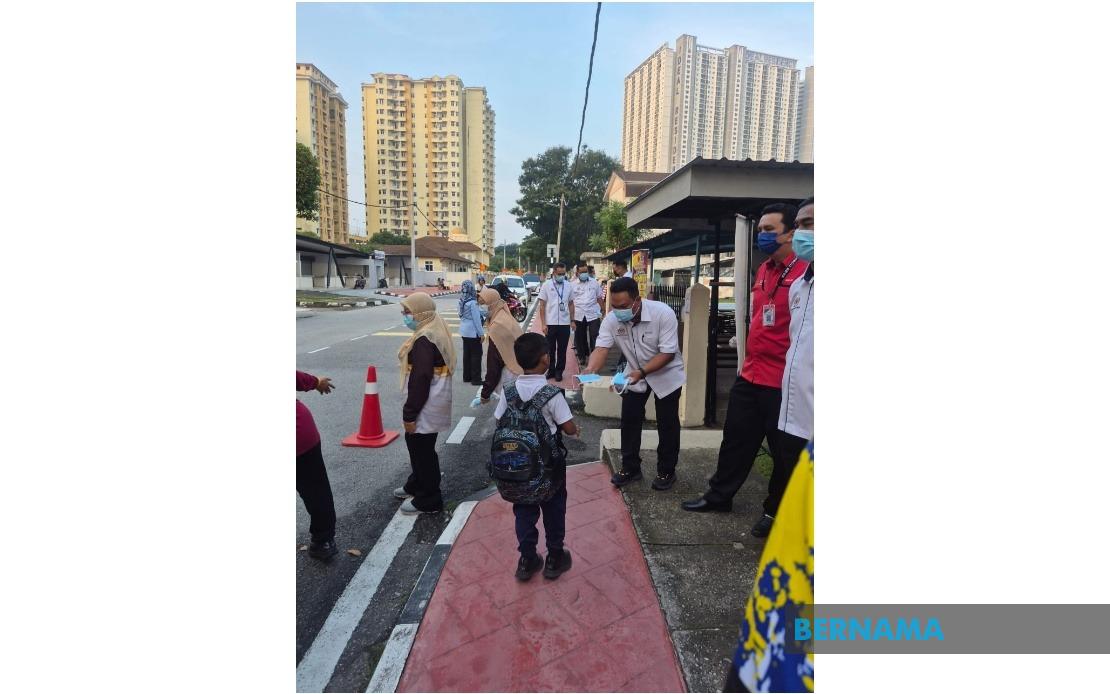
Penang's education system stands prepared to pivot to remote learning if air quality deteriorates significantly due to seasonal haze, the state's Education Department has confirmed. The transition to PdPR (Pembelajaran dalam Tempoh Rumah), or home-based teaching and learning, will be triggered when the Air Pollutant Index reaches 200, according to departmental director Mohamad Dziauddin Mat Saad. This threshold-based approach aligns with national protocols jointly established by the Ministry of Education, Ministry of Health, and the National Disaster Management Agency.
The decision reflects growing recognition of haze-related health risks facing Malaysia's school population, particularly in northern states like Penang that periodically experience transboundary air pollution. By setting a specific API trigger point, authorities aim to provide schools and families with clear, predictable guidance rather than ad-hoc announcements. Mohamad Dziauddin emphasised that the Penang Education Department (JPNPP) would not delay notifications, signalling a shift towards proactive rather than reactive crisis management.
To operationalise this strategy, JPNPP established a dedicated monitoring facility on August 13, functioning as a central command centre for haze-related decisions. This team continuously tracks readings from four strategically positioned API monitoring stations across Penang: Minden, Balik Pulau, Seberang Jaya, and Perai. By assessing data trends at either 6 pm or 8 pm each evening, the department gains sufficient lead time to communicate directives to district education offices, which then cascade instructions to individual schools. This tiered communication system aims to minimise confusion and ensure consistent implementation across the state's education network.
The infrastructure underpinning this response reveals the sophistication of modern educational crisis management in Malaysia. Rather than treating haze as an unpredictable natural disaster, authorities have institutionalised monitoring and response mechanisms. Parents need not expect last-minute scrambles to arrange childcare or worry about sudden school closures, Mohamad Dziauddin reassured, emphasising that departmental oversight prioritises the wellbeing and comfort of the school community. For students with pre-existing respiratory conditions or asthma, the early notification system provides vital preparation time.
Beyond regular schooling operations, Penang's haze contingency planning extends to major sporting and youth events scheduled for late August. The Malaysia Schools Sports Council (MSSM) Football Championship and the 15th Malaysian Scout Jamboree (MYJAM15) both face potential disruption if air quality deteriorates sharply. These are not minor fixtures; MYJAM15 alone will host over 5,000 domestic scouts alongside more than 450 international participants from eleven countries, including South Korea, Indonesia, Singapore, and Sri Lanka. Prime Minister Datuk Seri Anwar Ibrahim is scheduled to officiate the jamboree's opening on August 29, lending national political significance to the event.
Contingency planning for these activities demonstrates the cascading impact of environmental conditions on Malaysia's institutional calendar. Rather than cancellation, organisers are exploring schedule flexibility as a primary mitigation strategy. For the football championship, matches could be rescheduled to morning slots if API readings prove lower during daylight hours, allowing competition to proceed while minimising athletes' exposure to peak pollution. This adaptive approach represents pragmatic balancing between health imperatives and the logistical complexity of rescheduling national championships.
The Scout Jamboree organisers have similarly established their own operations room to manage haze-related variables throughout the programme's duration. This parallel command structure reflects recognition that national youth organisations operate with their own operational independence, even as they coordinate with government education authorities. International participants arriving from neighbouring countries and beyond will observe Malaysia's environmental management protocols, potentially shaping their perceptions of the nation's crisis response capacity. The presence of scouts from Indonesia, a country frequently cited as a transboundary haze source, adds subtle diplomatic dimensions to environmental monitoring.
For Malaysian schools and families, this episode underscores the persistent environmental vulnerabilities facing the region's educational systems. Transboundary haze remains a recurring seasonal phenomenon rather than an anomaly, forcing institutional adaptation across multiple sectors. The API threshold of 200 represents a significant pollution event—well above the "unhealthy" category—yet Penang's authorities treat it as a manageable contingency rather than a catastrophic scenario. This suggests either confidence in remote learning infrastructure or pragmatic acceptance that some disruption to face-to-face education is inevitable.
The remote learning transition itself warrants consideration. Unlike the early pandemic period when digital education infrastructure was hastily improvised, current PdPR implementation benefits from established protocols and improved technological readiness. However, socioeconomic disparities in internet access and device ownership persist across Malaysian households, meaning haze-triggered remote learning may inadvertently widen educational inequities. Students in well-resourced urban areas can transition seamlessly to online platforms, whilst those in disadvantaged communities may face connectivity barriers or lack personal devices.
Regionally, Penang's haze preparedness carries implications beyond state boundaries. As a developed state with relatively robust administrative capacity, its response framework may serve as a template for less-resourced neighbouring jurisdictions facing similar air quality crises. The demonstration that API-based triggers can operationalise swift educational transitions provides a replicable model. However, variations in monitoring infrastructure and institutional capacity across Peninsular Malaysia, Sabah, and Sarawak mean that uniform national responses remain challenging.
Looking forward, the sustainability of seasonal haze as an environmental challenge demands longer-term solutions beyond reactive educational scheduling. Whilst Penang's authorities have efficiently systematised immediate response measures, the underlying transboundary air pollution problem persists. Diplomatic engagement with Indonesia regarding land-clearing practices, coupled with Malaysia's own land-use policies, ultimately determines whether API thresholds of 200 become routine annual occurrences or exceptional outliers. In the interim, well-coordinated contingency planning protects student welfare and institutional continuity, though it remains a symptom-management rather than disease-treatment approach to environmental governance.

