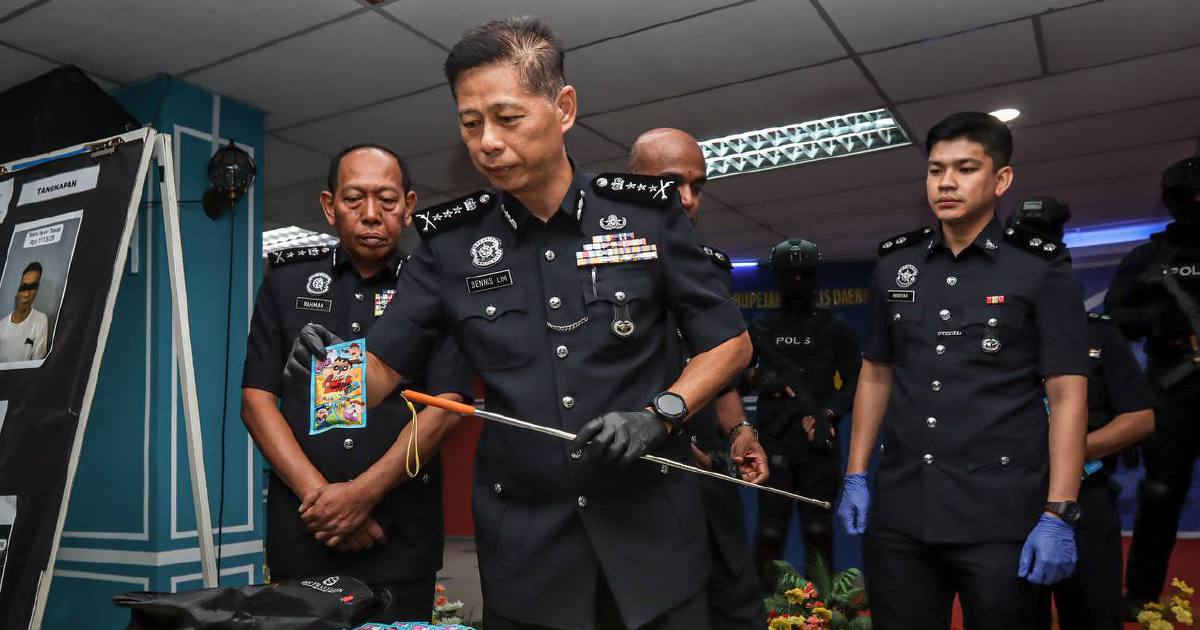
Penang police have dismantled what officers describe as a substantial drug operation, securing 3.1 kilograms of MDMA valued at approximately RM470,000 during a coordinated raid conducted in the Teluk Air Tawar area on Sunday. The operation represents another significant blow against organised drug trafficking in the northern state, which has increasingly become a focal point for narcotics enforcement efforts across Malaysia.
The bust underscores the persistent challenge that law enforcement agencies face in combating synthetic drug distribution networks operating within residential and semi-industrial zones throughout Penang. MDMA, commonly known as ecstasy, remains one of Southeast Asia's most sought-after recreational drugs, particularly among younger demographics and in urban entertainment districts. The street value of the confiscated substance—at approximately RM470,000—reflects the substantial financial incentives driving illicit drug operations throughout the region, with each kilogramme commanding prices that make trafficking operations highly lucrative despite enforcement risks.
The Teluk Air Tawar location has featured in previous drug-related incidents, suggesting that the area may serve as a distribution hub or storage facility within broader supply chains. Penang, as Malaysia's second-most populous state and a major commercial and tourist hub, presents an ideal market for drug traffickers seeking to establish distribution networks. The state's geography, with multiple ports and proximity to Thailand and other regional sources, creates additional vulnerabilities that law enforcement must continuously address.
One individual has been arrested in connection with the seizure, though police have not disclosed the full extent of investigations into broader supply chain networks that may be connected to this operation. Such targeted raids typically represent the visible segment of more extensive investigative work, suggesting that authorities may be pursuing additional leads relating to procurement sources, financial transactions, and downstream distribution networks. The individual's detention will likely involve interrogation aimed at identifying upstream suppliers and downstream customers within the trafficking hierarchy.
The operation aligns with the Royal Malaysia Police's heightened focus on synthetic drug trafficking, which has emerged as a priority following successive high-profile seizures throughout 2023 and 2024. Unlike traditional narcotics such as heroin, MDMA production and distribution networks operate through more sophisticated channels, often involving international criminal organisations with supply lines extending across Southeast Asia and beyond. This complexity requires coordinated intelligence gathering and strategic law enforcement intervention at multiple points within the supply chain.
From a public health perspective, the removal of 3.1 kilograms from circulation represents a meaningful reduction in available supply within local markets, though demand patterns suggest that users will attempt to source alternative supplies. Penang's youth population and active nightlife scene create particularly vulnerable demand conditions, making prevention and rehabilitation efforts equally important as enforcement operations. Community engagement and awareness campaigns addressing MDMA's documented health risks—including hyperthermia, dehydration, and long-term neurological effects—complement police work in addressing the drug problem comprehensively.
The financial dimensions of this seizure warrant consideration as well. The RM470,000 valuation reflects both wholesale and retail pricing variations across different transaction stages. Manufacturers typically produce MDMA at costs substantially below street value, meaning that criminal organisations operating at higher levels of supply chains realise enormous profit margins. Breaking these supply networks through strategic enforcement disrupts not merely drug availability but the financial flows that sustain organised crime groups operating across Southeast Asia.
Penang authorities have intensified drug enforcement operations throughout 2024, responding to community concerns about substance abuse and related criminal activity. The state's Narcotics Division has expanded surveillance capabilities and intelligence-sharing arrangements with federal agencies and neighbouring jurisdictions, recognising that modern drug trafficking transcends state borders and requires regional coordination. Such collaborative approaches have yielded increasing seizure volumes, though experts caution that enforcement alone cannot address demand-side drivers that sustain these markets.
Looking forward, the investigation into this particular operation will likely extend beyond the arrested individual to encompass broader criminal networks. Police forensic analysis of the seized material, financial records examination, and telecommunications investigation typically reveal connections between seemingly isolated operators and larger trafficking organisations. Such intelligence contributes to building comprehensive pictures of how narcotics distribution networks function within Malaysian jurisdictions, informing strategy development for subsequent enforcement priorities.
For Malaysian readers, this seizure exemplifies ongoing law enforcement efforts to contain drug trafficking's expansion, particularly in relation to synthetic substances that carry heightened risks to younger populations. The recovery of 3.1 kilograms represents tangible police performance, yet continued vigilance and community cooperation remain essential for sustaining progress against entrenched criminal networks that view Malaysia's affluent and relatively accessible markets as valuable distribution territories within broader Southeast Asian operations.

