Penang police have outlined an extensive security and traffic management framework for HAWANA 2026, the nation's premier journalism celebration, scheduled to take place at PICCA Convention Centre @ Butterworth Arena in Penang this month. The undertaking reflects authorities' commitment to hosting a world-class event while preserving the flow of everyday commerce and residential movement in the surrounding vicinity.
Datak Azizee Ismail, the Penang police chief, has provided assurances that the security apparatus and traffic arrangements will facilitate seamless operations throughout the three-day programme without creating bottlenecks for regular commuters and local residents. The police force has implemented a proactive operational strategy drawing directly from the success of Malaysia Day 2025, which was held at the identical venue just twelve months prior. This institutional experience allows planners to anticipate potential congestion points and deploy resources with precision.
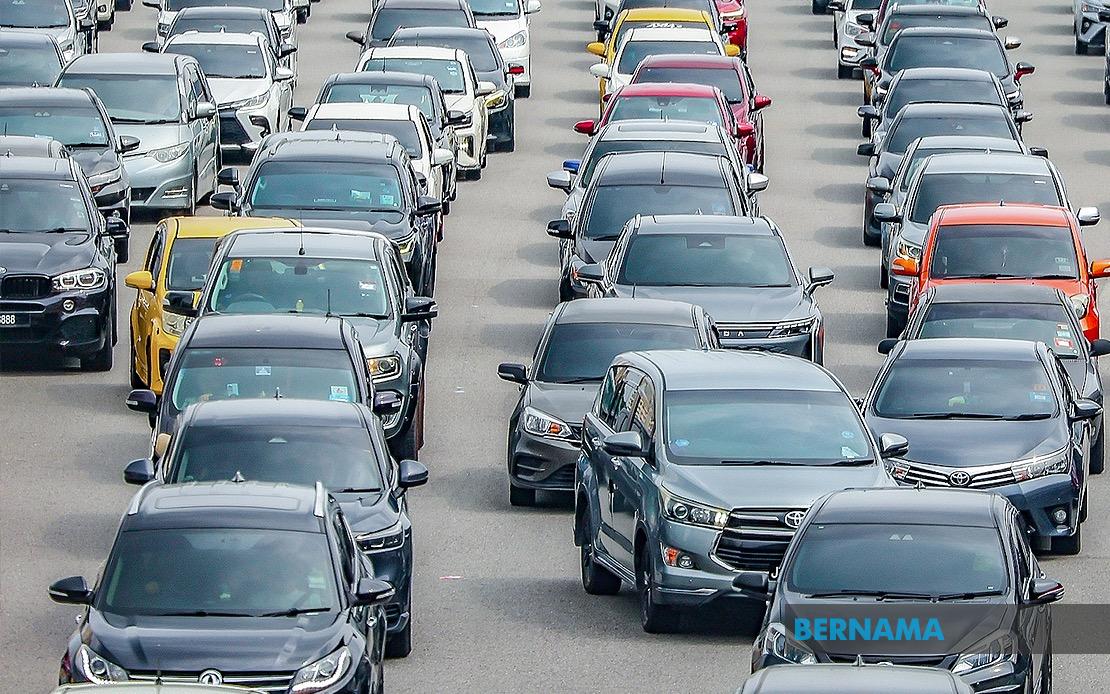
A significant emphasis in the operational design is the preservation of vehicular access to principal thoroughfares surrounding PICCA. Rather than implementing the blunt instrument of road closures, traffic police will execute carefully calibrated diversions at secondary routes to maintain circulation while channelling event-related traffic through managed corridors. Personnel stationed at major intersections throughout the precinct will exercise real-time directional control, adjusting vehicle flows in response to demand patterns as they develop across the three-day period.
The personnel allocation for security and traffic functions mirrors the scale deployed during the Malaysia Day 2025 event, indicating that planners have calculated sufficient human resources to manage anticipated attendance without requiring reinforcement from neighbouring jurisdictions. This measured approach suggests confidence in the operational model previously validated, though it also reflects careful budgeting of available constabulary resources across the state's broader security responsibilities.
Anticipated attendance figures underscore the significance of these arrangements. The HAWANA 2026 Summit itself is projected to attract approximately 1,000 journalism professionals from domestic and international sources, while a companion carnival event—Riuh Pi HAWANA—is expected to draw some 30,000 visitors across the three days. This tiered attendance pattern, with a concentrated core of media practitioners and a broader public carnival, creates distinct security and traffic demands that require differentiated responses.
The summit carries particular national importance, with Prime Minister Datuk Seri Anwar Ibrahim scheduled to officiate the proceedings on June 20. This high-level political participation amplifies security considerations beyond routine event management, necessitating coordination between police, intelligence services, and protocol units to ensure the safety of state dignitaries and international media representatives. The presence of overseas journalists adds a diplomatic dimension, positioning the event as a statement of Malaysia's media freedoms and professional standards to the global audience.
The thematic architecture of HAWANA 2026—"Media Integrity Strengthens Credibility"—frames the gathering as both celebration and platform for industry reflection. Organised by the Ministry of Communications with Bernama, the Malaysian National News Agency, serving as implementing body, the summit functions as the culminating recognition of Malaysia's journalism profession. The participation of approximately 1,000 practitioners creates opportunity for knowledge exchange, professional development, and networking that extends beyond ceremonial functions.
The companion Riuh Pi HAWANA carnival introduces a public-facing dimension that broadens the event's reach beyond professional circles. Spanning three consecutive days beginning Friday, the carnival curates more than 24 local creative product brands alongside 20 food and beverage operators, transforming PICCA into a consumer-oriented destination. The incorporation of 16 stage performances featuring established local artists—including Exists, Bunkfac, Masdo, Sakura Band, Budak Nakal Hujung Simpang, and Chelsea Ng—with complimentary admission underscores official intent to democratise access and generate community engagement.
The decision to maintain free entry to carnival entertainment reflects government strategy to strengthen public perception of institutional generosity while maximising foot traffic. By eliminating ticket barriers, planners anticipate attendance exceeding the 30,000 baseline projection, potentially straining traffic arteries during peak periods. This possibility renders the traffic management framework critical to operational success, as unexpected surges in carnival attendance could overwhelm secondary routes if diversions lack sufficient capacity.
For residents and commuters in the Butterworth and surrounding areas, the event presents both opportunity and potential inconvenience. While authorities assure continuity of main road access, the deployment of personnel at intersections and implementation of diversions will inevitably introduce delays during peak hours. The police guidance to plan journeys in advance acknowledges this reality, effectively requesting public cooperation in voluntarily shifting travel patterns to off-peak windows. This approach converts potential friction into a managed negotiation between institutional obligations and citizen compliance.
The security briefing reflects evolving standards in Malaysian event management, where large gatherings require integrated approaches addressing both traditional threats and contemporary concerns. The three-day duration multiplies the operational challenge, as fatigue among security and traffic personnel can degrade performance effectiveness. The decision to allocate personnel levels equivalent to Malaysia Day 2025—a celebration requiring substantial security presence—indicates confidence that prior staffing models proved adequate, though it also suggests planners are not anticipating threats materially exceeding those identified in comparable national events.
For Malaysian media and journalism professionals, HAWANA 2026 carries significance beyond ceremonial recognition. The gathering provides opportunity for practitioners across print, broadcast, and digital platforms to interact with international counterparts, exchange professional standards, and participate in workshops addressing industry challenges including digital disruption, misinformation, and evolving audience expectations. The event's positioning as capstone recognition affirms government acknowledgment of journalism's role in democratic governance, a statement of particular salience in the contemporary global media landscape.
The Penang police assurances regarding smooth operations ultimately rest upon public cooperation with traffic directives and acceptance of temporary inconvenience as investment in a nationally significant professional gathering. The three-day timeframe, while creating compounded management challenges, distributes attendance across multiple days rather than concentrating pressure into a single occasion. Success will be measured not merely by absence of incidents, but by seamless coordination that allows the event to proceed while preserving normal rhythms of regional commerce and movement.