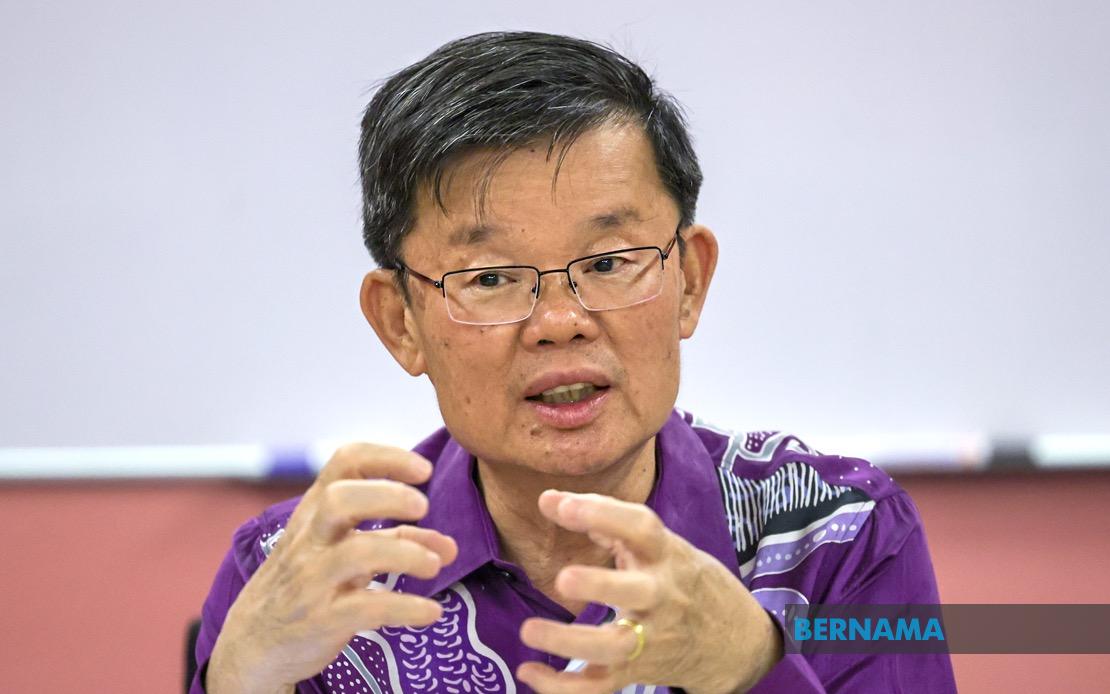
Penang's Pakatan Harapan leadership has reaffirmed its commitment to the electoral alliance forged with Barisan Nasional, announcing that the coalition will retain the BN-linked state executive councillor within the Penang administration until Malaysia's next general election. Chief Minister Chow Kon Yeow disclosed the decision following a PH leadership meeting in George Town, underscoring the coalition's intention to preserve political stability in the state even as the nation approaches its next electoral cycle.
The decision centres on maintaining Datuk Rashidi Zinol, who currently chairs the State Rural Development, Agrotechnology and Food Security Committee, as a cabinet representative of Barisan Nasional within Penang's government. This arrangement stems from the electoral pact that emerged during the 2023 state election, when PH and BN jointly secured 29 of the 40 available state assembly seats and moved to establish what became known as the Unity Government. The continued presence of a BN minister in the cabinet signals that Chow and his coalition partners view the alliance not as a temporary arrangement born of necessity, but as a strategic partnership capable of enduring through future electoral contests.
Chow's statement reflects a deliberate calculation about the political landscape ahead. He indicated that Penang PH had studied the outcomes of recent state elections in Johor and Negeri Sembilan, drawing insights into voter behaviour and shifting preferences that might inform their preparation for the 16th general election. Rather than treating these results as simple data points, PH intends to conduct comprehensive analysis of every state seat, examining electoral dynamics from multiple angles to better anticipate challenges and opportunities. This methodical approach suggests the coalition recognises that complacency poses a significant threat to its continued dominance in Penang, historically one of PH's most reliable strongholds.
Beyond the structural question of ministerial appointments, Chow outlined a broader strategy aimed at consolidating PH's political messaging and voter engagement. The coalition plans to strengthen its narrative by openly acknowledging areas where it has underperformed or fallen short of expectations, a departure from the typical political playbook of unrelenting self-promotion. Simultaneously, PH intends to amplify its presence on digital platforms, recognising that traditional media channels may no longer capture the full attention of Malaysia's evolving electorate. This dual emphasis on transparency and technological sophistication indicates a coalition attempting to adapt to changing voter expectations, particularly among younger demographics.
A notable focus of the coalition's pre-election planning involves engaging the Undi18 voter demographic—those eligible to vote at 18 years old rather than the previous minimum age of 21. This expansion of the electorate, introduced in recent years, represents a substantial pool of potential voters whose political leanings remain somewhat uncertain. Chow's emphasis on directly engaging this group suggests PH recognises that generic messaging will not suffice; the coalition must develop approaches that resonate with younger citizens and address their priorities, whether those involve employment prospects, educational opportunities, or environmental concerns.
The retention of a BN executive councillor within Penang's cabinet carries symbolic weight beyond administrative convenience. It demonstrates that the 2023 Unity Government was not merely a tactical marriage of convenience but reflects genuine commitment from both PH and BN to collaborative governance at the state level. For Malaysian politics, where coalition partnerships have historically been fragile and subject to collapse, this sustained cooperation—even as both coalitions prepare for the next electoral contest—suggests a degree of institutional maturity. It indicates that parties can compete fiercely during elections while continuing to govern cooperatively between them, a pattern that stands in contrast to the frequent breakdowns seen in other contexts.
Chow emphasised that Penang PH's confidence stems from demonstrable achievements in state governance rather than mere rhetoric. He pointed to the stability and integrity of the state administration, steady progress in economic growth, success in attracting investments, and job creation initiatives as tangible evidence of effective governance. Furthermore, he highlighted policies designed to improve living standards for ordinary Penangites as indicators of the coalition's commitment to translating electoral victory into material improvement in citizens' lives. These claims, whether fully accepted by voters or not, form the foundation of PH's argument for continued support at the ballot box.
Yet Chow tempered this confidence with a cautionary note about the volatility of public perception. He warned that voter sentiment and opinion often shift more rapidly than the underlying facts they are meant to reflect, a sobering reminder that strong administrative performance does not automatically translate into electoral success. This acknowledgement reflects an understanding that governance outcomes, while important, exist within a broader ecosystem of political communication, media narratives, and emotional responses that politicians cannot entirely control or predict. It suggests that even with solid performance in office and strategic communication improvements, PH recognises the inherent uncertainty of electoral politics.
The 2023 state election results that established the current arrangement demonstrated the relative strength of PH's component parties within the state. The Democratic Action Party secured all 19 seats it contested, Parti Keadilan Rakyat won seven seats, Parti Amanah Negara captured one seat, while Barisan Nasional gained two seats. This distribution reveals that PH's dominance in Penang rests particularly on DAP's strength in urban and semi-urban constituencies, with PKR providing additional support and Amanah contributing to the coalition's diversity. As the coalition prepares for the next election, these relative contributions will likely influence internal discussions about seat allocations and campaign strategies.
The decision to maintain the BN representative in cabinet until the next general election also signals confidence that the alliance will survive electoral competition intact. Rather than viewing the next election as an opportunity to push BN out of state-level politics, PH appears to be signalling that BN's continued participation is welcome. This approach contrasts with some previous PH rhetoric and suggests a maturation of the coalition's thinking about coalition management. It acknowledges that sustainable governance requires building relationships across political divides and that exclusive control, while attractive in theory, may prove less stable than broad-based coalitions.
For Southeast Asia's broader political context, Penang's experience with the Unity Government offers lessons about how different political coalitions might manage ongoing partnerships while remaining electorally competitive. The state has become a testing ground for models of cooperation that extend beyond single elections, and the coalition's willingness to maintain its structure through the next general election suggests that this experiment may be establishing new norms for how Malaysian politics can operate at the state level.

