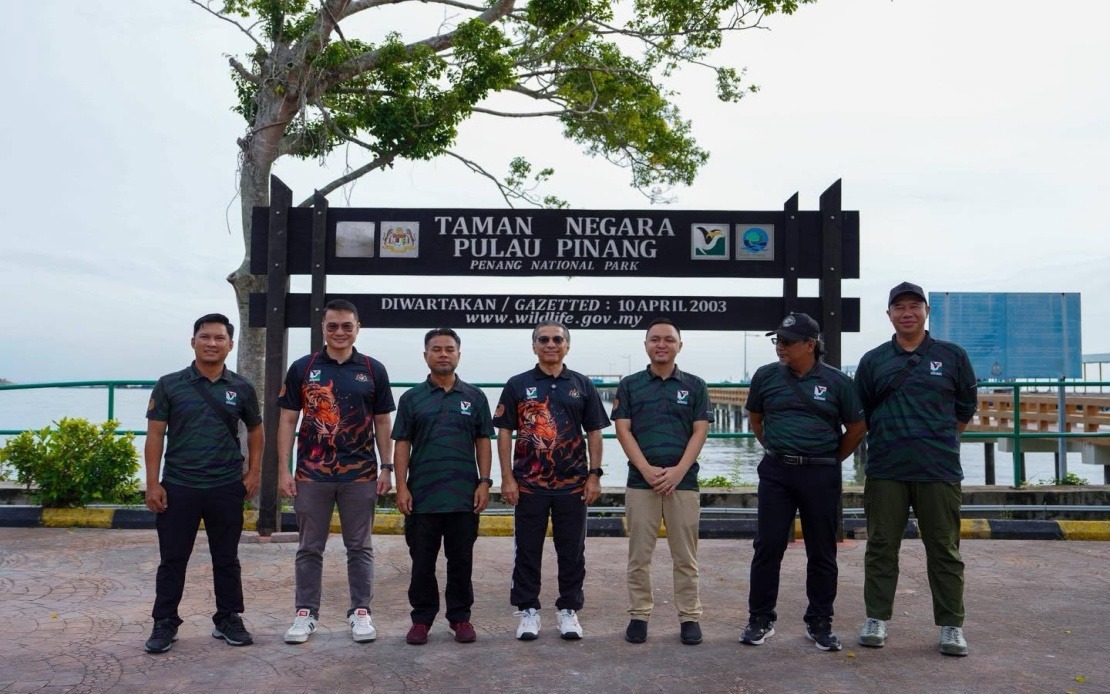
Conservation of Penang National Park demands a fundamental shift in how Malaysia approaches environmental protection—moving beyond fortress-style preservation toward models that integrate communities as custodians of biodiversity. Deputy Minister of Natural Resources and Environmental Sustainability Syed Ibrahim Syed Noh articulated this vision during a recent inspection of the Teluk Bahang reserve, underscoring that the nation's natural treasures represent a collective inheritance that demands collective stewardship.
The park itself presents a compelling case study for integrated conservation. Its ecosystems encompass lowland forests, pristine coastal stretches, and diverse wildlife corridors, culminating in a meromictic lake—a rare geological feature where distinct water layers fail to mix due to density differences. This concentration of ecological complexity within a single geographic area makes Penang National Park invaluable for understanding tropical biodiversity and the interconnectedness of environmental systems. The meromictic lake particularly illustrates how seemingly disparate natural phenomena contribute to overall ecological health, a nuance often lost in simplified conservation narratives.
Syed Ibrahim's field visit, which included briefings from Penang's Department of Wildlife and National Parks (PERHILITAN) and observations of ongoing management practices, highlighted the institutional frameworks already supporting preservation efforts. The deputy minister's inspection of Kerachut Beach's Turtle Conservation Centre revealed focused work on protecting Green Turtles and Olive Ridley Turtles—marine species facing mounting pressures from coastal development and fishing activities throughout Southeast Asia. This specialist approach demonstrates how targeted interventions at specific biodiversity hotspots can yield tangible conservation outcomes.
The philosophical underpinning of modern conservation, as articulated during the visit, emphasizes intergenerational responsibility. Rather than preserving parks as museum pieces distant from public life, contemporary environmental strategy recognises that lasting protection emerges from widespread understanding and appreciation of natural systems. This reframing has particular relevance for Malaysia, where rapid urbanisation has diminished direct contact between urban populations and wild ecosystems, potentially eroding grassroots conservation consciousness among younger Malaysians who will ultimately determine environmental outcomes.
Educational programming appears central to this community-engagement model. The deputy minister's observation of conservation initiatives at facilities such as Entopia Penang indicates recognition that interactive, experiential learning generates stronger commitment to environmental protection than passive information transfer. When citizens—particularly young people—encounter biodiversity through direct engagement rather than textbooks, they develop embodied understanding of ecological interdependence. This pedagogical approach aligns with broader regional trends in environmental education, where hands-on experiences consistently demonstrate superior outcomes in fostering pro-conservation attitudes.
Ecotourism emerges as a potentially pivotal mechanism for bridging conservation science and community participation. Responsibly managed nature tourism can generate economic incentives for protection whilst providing revenue streams that support both conservation infrastructure and local livelihoods. In Penang's context, where tourism already constitutes a significant economic sector, channelling visitor interest toward educational engagement with biodiversity creates alignment between commercial activity and environmental stewardship. However, this approach carries inherent tensions—increased visitor access inevitably stresses sensitive ecosystems, requiring careful management protocols to ensure that tourism serves rather than undermines conservation objectives.
The emphasis on grounding conservation efforts in on-the-ground realities reflects maturation in Malaysia's environmental governance. Historically, protection initiatives sometimes proceeded from top-down mandates with insufficient consideration of local contexts, economic dependencies, and community knowledge systems. The deputy minister's framing—that effective conservation must involve communities as solution-providers rather than passive beneficiaries—suggests movement toward more collaborative approaches. This paradigm shift acknowledges that sustainable protection emerges not from fortress models excluding local populations, but from arrangements where communities perceive direct benefits from conservation and possess genuine voice in management decisions.
For Malaysian policymakers and environmental practitioners, Penang National Park represents a testing ground for integrated conservation models that other protected areas might emulate. The park's geographic proximity to urban centres—particularly the George Town agglomeration—positions it as accessible for large populations, enhancing potential for meaningful public engagement. This accessibility advantage distinguishes Penang from more remote conservation zones, where community engagement necessarily takes different forms constrained by distance and infrastructure limitations.
The meromictic lake deserves particular attention in conservation discussions, as its existence within the park illustrates the singular ecological value of protected areas as repositories of natural phenomena with limited geographic distribution. Such unique features carry disproportionate conservation significance—their loss represents irreplaceable loss of biological and ecological diversity. International conservation biology increasingly recognises that protecting representative examples of all ecosystem types requires safeguarding not merely species diversity but also rare geological and hydrological phenomena.
Regional considerations amplify the importance of Penang's conservation trajectory. Throughout Southeast Asia, biodiversity hotspots face mounting pressure from development, agricultural expansion, and extractive industries. Malaysia's approach to balancing preservation with economic development influences regional environmental norms and expectations. When Malaysian authorities demonstrate commitment to integrating communities into conservation frameworks and linking biodiversity protection to sustainable economic activities, they contribute to regional environmental governance standards. Conversely, inadequate protection reinforces narratives that development inherently requires environmental compromise.
Looking forward, sustaining Penang National Park's ecosystems will require sustained commitment to community engagement alongside adaptive management protocols responsive to emerging threats. Climate change, for instance, already affects turtle nesting patterns and coastal erosion dynamics—realities demanding scientific monitoring and flexible management approaches. Communities residing near or depending upon park resources require capacity-building and support for transitioning livelihoods toward sustainable alternatives. The deputy minister's vision of preservation through participation offers a framework for these multifaceted challenges, though realising this vision demands resources, political commitment, and long-term institutional consistency.

