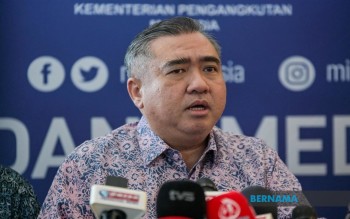
Transport Minister Anthony Loke has confirmed that the Penang International Logistics Aeropark will substantially enhance air cargo handling capabilities across Malaysia's northern corridor. Speaking at the Ministry of Transport's monthly assembly in Putrajaya on August 13, Loke outlined how the initiative represents a transformative step in positioning Penang as a regional hub for aviation logistics, marking a strategic shift in the country's approach to freight infrastructure development.
The project builds upon Penang's existing air cargo operations through a significant expansion that will create what officials describe as a comprehensive air logistics complex. Rather than simply enlarging current facilities, the initiative aims to fundamentally restructure and upgrade how the northern region processes, stores, and distributes air freight. This distinction matters for stakeholders who have long viewed Penang's logistics infrastructure as constrained relative to the scale of regional demand for such services.
Construction work has already commenced under a collaborative arrangement between Malaysia Airports Holdings Bhd (MAHB) and Penang Development Corporation (PDC). The partnership represents a notable approach to infrastructure development, with the government positioning itself primarily as a facilitator rather than direct investor. Loke emphasised that MAHB is driving the capital investment required for the expansion, while PDC and government agencies provide regulatory support and strategic coordination to expedite implementation.
The Minister disclosed that government officials had extended an invitation to the Prime Minister to formally launch the project, reflecting its perceived importance within the broader national development agenda. The new facility is being constructed immediately adjacent to Penang's current cargo hub, enabling operational synergies and allowing existing infrastructure to continue functioning during the transition to expanded capacity. This geographic proximity reduces logistical disruption and allows for phased integration of new capabilities.
Loke's remarks underscore MAHB's wider portfolio of cargo infrastructure upgrades extending beyond Penang's borders. The airport operator is simultaneously pursuing modernisation initiatives at Kuala Lumpur International Airport, suggesting a coordinated national strategy to distribute logistics capacity across major hubs rather than concentrating development in a single location. This geographical dispersal approach addresses regional disparities in freight-handling infrastructure and supports the government's broader objective of facilitating private-sector participation in critical transportation infrastructure.
The project operates under a joint venture structure formalised through PILA Sdn Bhd, established following board approvals by both PDC and MAHB in May. The companies executed a formal agreement on April 13, 2026, creating a dedicated entity to oversee the initiative's planning, construction, and eventual operations. This corporate structure provides clarity regarding ownership stakes, governance arrangements, and revenue distribution models, addressing investor concerns about long-term sustainability and operational control.
The development programme is being implemented in phases, with the first stage focusing on construction of a specialised air cargo warehouse facility designated under Malaysia's free commercial zone classification. This designation offers customs and tax advantages that enhance the facility's competitive positioning relative to regional competitors in Singapore, Thailand, and Vietnam. The warehouse is projected to become operational by 2029, providing a specific timeline for stakeholders planning supply chain investments in the region.
When fully developed by 2050, the complex is engineered to accommodate annual cargo volumes reaching 500,000 tonnes, positioning Penang to rival or exceed the freight capacity of several Southeast Asian regional hubs. The warehouse infrastructure itself will span more than two million square feet, providing extensive temperature-controlled and secure storage capabilities necessary for handling high-value goods including electronics, pharmaceuticals, and perishable products. This scaling trajectory demonstrates confidence in long-term regional demand growth and reflects demographic and economic projections for northern Malaysia and southern Thailand.
For Malaysian stakeholders, the implications extend beyond Penang's immediate economy. Enhanced air cargo capacity in the north reduces dependency on congested Kuala Lumpur facilities and creates competitive alternatives that may stimulate service quality improvements across the sector. Companies operating throughout Peninsular Malaysia's northern states gain access to modern logistics infrastructure without incurring the transportation costs and time delays associated with routing shipments through central locations. This accessibility advantage may influence corporate decisions about warehouse location and supply chain hub positioning within the region.
The project also addresses Malaysia's broader aspirations within regional aviation logistics networks. As Southeast Asian economies increasingly integrate supply chains through air freight corridors, improving infrastructure capacity becomes strategically vital. Penang's enhanced facilities position Malaysia more competitively within intra-ASEAN trade flows and potentially attract foreign logistics companies seeking strategically located regional distribution centres. The facility's free commercial zone status further enhances these competitive advantages by reducing operational costs associated with customs procedures and import duties.
Loke's emphasis on private-sector leadership in funding infrastructure reflects contemporary Malaysian policy preferences that balance fiscal constraints with development ambitions. Rather than allocating substantial government resources to capital-intensive cargo facilities, policymakers are leveraging MAHB's operational expertise and financial capacity while maintaining strategic oversight. This model, if successful at Penang, may establish a template for addressing infrastructure bottlenecks in other sectors where private entities possess the technical knowledge and investment capital necessary for modern facility development.
Looking forward, the success of this initiative will depend on several factors including construction timeline adherence, market demand materialisation, and the facility's ability to attract major cargo operators. Global supply chain dynamics continue evolving in response to geopolitical tensions and nearshoring trends, potentially creating new demand for Southeast Asian logistics hubs. Malaysia's positioning to capture these opportunities depends substantially on infrastructure readiness, making projects like the Penang International Logistics Aeropark strategically consequential for the nation's economic trajectory throughout the coming decade.

