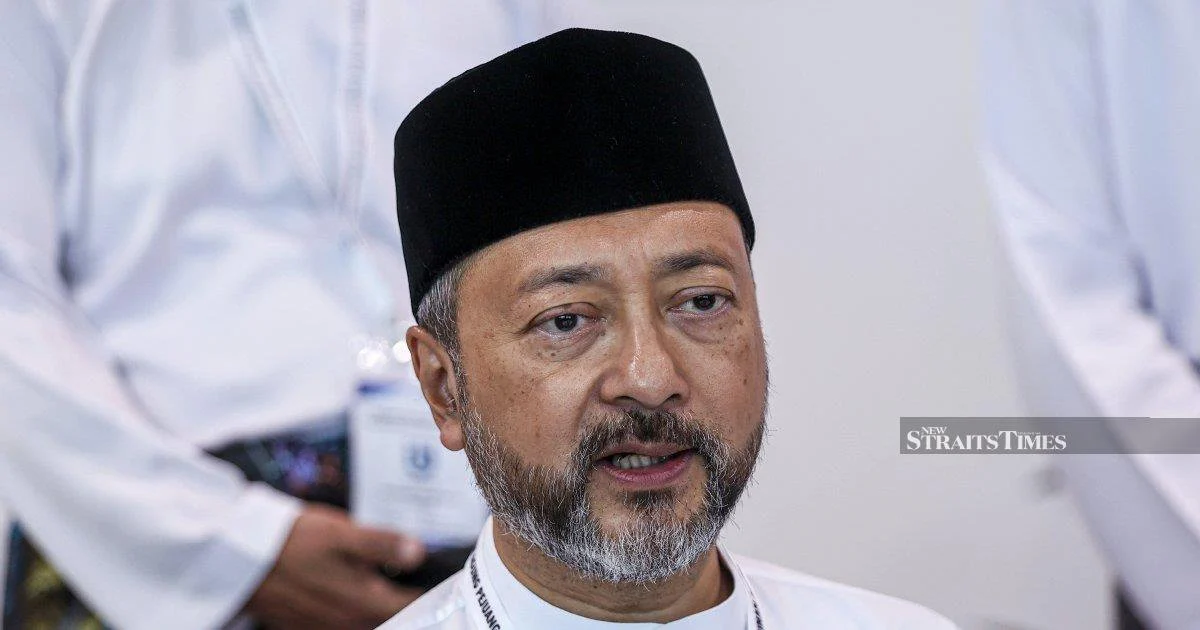
Parti Pejuang Tanah Air has formally joined Perikatan Nasional, marking a significant shift in Malaysia's fractured opposition landscape. The move represents more than a simple administrative merger between two established political entities; it signals an attempt to rebuild coalition cohesion at a time when the opposition faces mounting pressure from a strengthened government alliance. Party president Datuk Seri Mukhriz Mahathir presented the development as the first phase of a comprehensive realignment strategy designed to galvanize scattered opposition forces and create a more formidable challenge to the ruling coalition's legislative dominance.
The timing of Pejuang's accession into the PN bloc carries particular significance given Malaysia's current political trajectory. Since the 2022 general election, the opposition has struggled to present a unified front, with multiple parties pursuing separate agendas and competing for voter loyalty. This fragmentation has allowed the government coalition to consolidate power effectively, passing contentious legislation with minimal parliamentary resistance. By absorbing Pejuang into its ranks, Perikatan Nasional aims to centralize opposition strength and establish clearer leadership structures that could prove essential in upcoming state elections and the eventual federal ballot.
Mukhriz's comments underscore the pragmatic reasoning behind this political accommodation. He emphasized that the merger responds to escalating challenges confronting Malaysia, from economic pressures to governance issues that require coordinated opposition scrutiny. This framing attempts to elevate the merger beyond mere electoral calculation, positioning it instead as a response to national imperatives. Whether such rhetoric resonates with voters remains uncertain, but it establishes the intellectual foundation for why Pejuang leadership concluded that maintaining independence had become counterproductive.
The absorption of Pejuang into PN carries historical resonance within Malaysian politics. Parti Pejuang itself emerged from the political travails of the Mahathir family, founded as a vehicle for veteran politician Mukhriz following earlier institutional disappointments. Its incorporation into a larger coalition represents a significant concession of autonomy, raising questions about whether Pejuang retains meaningful organizational independence or has simply become another faction within an increasingly complex multi-party structure. The precedent matters for understanding whether this model of absorption can succeed where previous opposition merger attempts have struggled.
Perikatan Nasional's expansion comes amid its own internal complexities. The coalition comprises Perikatan Islam Se-Malaysia, Bersatu, and several smaller regional parties with sometimes conflicting agendas. Introducing Pejuang adds another layer of intra-coalition negotiation, particularly regarding seat allocation and leadership representation in parliamentary bodies. How effectively Mukhriz's party integrates into existing PN structures will test whether the coalition can manage increased membership without experiencing the factionalism that has plagued other multi-party alliances in Southeast Asia and within Malaysia itself.
For Malaysian readers and observers, this development reflects broader patterns evident across the region's democracies. Political fragmentation in opposition blocs creates governance vacuums that incumbent administrations exploit efficiently. Thailand, the Philippines, and Indonesia have all witnessed comparable scenarios where divided oppositions enable centralized executive power. Malaysia's situation follows this trajectory, though with distinct local characteristics shaped by the country's constitutional structure and ethnic political dynamics. The question facing Pejuang and PN is whether coalition consolidation can overcome the substantive policy disagreements that initially drove these entities apart.
The implications for parliamentary opposition dynamics remain significant. With Pejuang now operating within PN structures, the combined bloc gains additional parliamentary seats and increased resources for legislative scrutiny. Opposition shadow ministries can presumably become more coordinated, and coordinated parliamentary questioning could illuminate governance shortcomings more effectively than fragmented efforts. However, this benefit assumes PN maintains internal discipline, a assumption that Malaysia's recent political history suggests warrants skepticism. Internal contradictions over Islamic governance, economic policy, and leadership succession have previously undermined coalition functionality.
Mukhriz's emphasis on addressing "growing national challenges" reflects genuine substantive grievances that opposition parties can mobilize. Inflation pressures, employment concerns, and education policy issues resonate across demographic groups. Whether a unified opposition can articulate compelling alternative policy platforms better than separate entities remains an open question, particularly given the diverse constituencies within the expanded PN structure. Coalition governments must balance multiple interests, potentially constraining radical policy proposals that individual parties might champion independently.
The broader regional context illuminates why Malaysian opposition forces pursue merger strategies despite historical setbacks. Southeast Asian democracies increasingly feature dominant executives and ruling coalitions capable of implementing agendas with limited parliamentary constraint when opposition remains divided. Vietnam's constitutional structure institutionalizes single-party dominance, but Thailand, the Philippines, and Cambodia demonstrate that democratic institutions can function with severely constrained opposition efficacy. Malaysia retains more robust checks and balances than regional comparators, but opposition fragmentation threatens these institutional safeguards by rendering them functionally irrelevant.
Forward momentum for this merger depends significantly on how Perikatan Nasional manages internal communication regarding Pejuang's role. Rival PN factions may perceive the new entrant as a threat to existing power arrangements or resource distribution. Mukhriz's political experience and Pejuang's parliamentary representation might position the party advantageously within coalition hierarchies, but such advancement inevitably generates friction among existing members with their own leadership ambitions. The next test will arrive when seat negotiations commence for upcoming electoral contests.
Mukhriz's public positioning emphasizes unity and national interest rather than factional advantage, a rhetorical strategy calculated to distinguish this merger from previous opposition reorganizations driven by personality conflicts or patronage disputes. Whether this messaging penetrates public consciousness depends on sustained demonstration that the expanded coalition can function coherently. Early evidence from parliamentary proceedings will prove decisive in either validating or undermining claims about renewed opposition effectiveness.
Ultimately, Pejuang's integration into Perikatan Nasional represents a calculated gamble that opposition strength derives from numerical consolidation rather than ideological clarity or programmatic distinctiveness. The merger succeeds tactically if it prevents government bills from passing unanimously, funds opposition research and communication activities more adequately, and provides PN members with practical parliamentary resources. Whether it succeeds strategically—by offering Malaysians a compelling alternative government platform—remains far from certain and will likely determine its durability beyond the next electoral cycle.