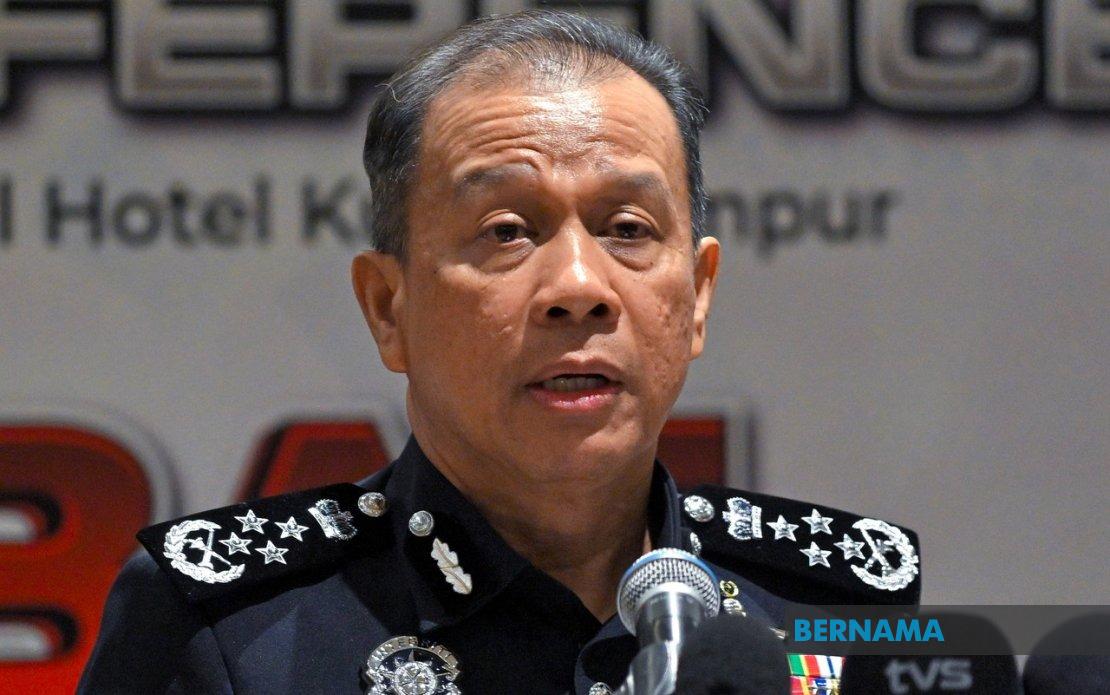
The Royal Malaysia Police (PDRM) has committed to a significant expansion of its role in securing Malaysia's aviation sector, following a Cabinet decision to integrate police personnel directly into Airport Security (AVSEC) operations nationwide. The deployment represents a strategic response to emerging security vulnerabilities and reflects heightened concerns about the potential misuse of aviation infrastructure by criminal networks, particularly following the recent detention of a Malaysian pilot in Indonesia on suspected drug trafficking charges. Inspector-General of Police Tan Sri Mohd Khalid Ismail confirmed the force's readiness to participate fully in this institutional restructuring, signalling police backing for what is being positioned as an immediate and essential strengthening of security protocols across Malaysia's air transport system.
The implementation of this initiative will be a coordinated effort spanning multiple government bodies, with the PDRM working alongside the Home Ministry (KDN), the Ministry of Transport (MOT), and various other relevant agencies to establish operational frameworks. These discussions are currently focused on defining the precise contours of the arrangement, including determining which specific duties police officers will assume, identifying the airports and terminals where deployment will occur, calculating the number of personnel required, clarifying which aspects of security responsibility will fall under police authority, and establishing effective communication channels between the police and existing AVSEC structures. This planning phase is critical to ensuring seamless integration rather than duplication or jurisdictional confusion.
According to Tan Sri Mohd Khalid, the injection of police resources into aviation security is expected to yield tangible improvements in the country's ability to detect and prevent threats before they materialise. The police force brings particular strengths in intelligence gathering and analysis, allowing for the identification of emerging patterns or individuals of concern. Additionally, police involvement would facilitate more rapid and coordinated responses to security incidents, ensuring that enforcement action can be taken swiftly when violations or suspicious activities occur. The PDRM's criminal investigation capabilities could also strengthen the ability to follow leads that emerge from airport screening procedures, creating a more complete investigative chain.
This enhanced security architecture is envisioned as part of a broader, multi-layered defensive system designed to make it substantially more difficult for criminal actors to exploit aviation pathways. Beyond the addition of police personnel, the comprehensive approach encompasses stricter management of who gains access to secure airport zones, more rigorous passenger and baggage screening protocols, enhanced verification procedures, and systematic evaluation of potential risks at multiple checkpoints. The overarching philosophy is to create redundancy and interconnection in security measures, so that a weakness in any single area is compensated for by overlapping controls elsewhere in the system.
Intelligence-led security represents a key innovation in the proposed framework. Rather than relying solely on standardised procedures applied uniformly to every traveller and piece of baggage, the system will increasingly attempt to identify genuine threats through analysis of accumulated information and behavioural indicators. This targeted approach is theoretically more efficient than blanket measures, potentially reducing unnecessary delays for the vast majority of travellers whilst directing intensive scrutiny toward genuinely suspicious activities or individuals. For Malaysia, a country heavily dependent on air transport for regional connectivity and tourism, this balance between security and operational efficiency carries significant economic and reputational weight.
The catalyst for this security enhancement—the detention of a Malaysian pilot suspected of involvement in drug smuggling—underscores the reality that aviation vulnerabilities extend beyond passenger terminals to include crew members and aircraft operators. The integration of police into AVSEC teams creates an opportunity to extend security culture throughout the aviation ecosystem, from ground personnel to flight crews, reinforcing the message that all participants in air transport are subject to the same standards and scrutiny. This comprehensive approach aims to eliminate the perception that any sector of aviation is beyond regulatory reach.
Tan Sri Mohd Khalid's statement emphasized the police commitment to subordinating this new security mandate to the ultimate goals of protecting flight safety and safeguarding Malaysia's international borders. These twin objectives reflect the dual nature of aviation security in the contemporary context—protecting people in the air whilst preventing the aviation system from being weaponised for transnational criminal activity. The language used by the police leadership also conveyed a tough stance, with explicit reference to the determination that aviation will not become a conduit for organised crime, signalling that violations will face serious consequences.
Meanwhile, MADANI Government spokesman Datuk Seri Fahmi Fadzil framed the police deployment as an immediate tactical response to urgent security concerns, even as longer-term structural improvements are being contemplated. This distinction between immediate emergency measures and comprehensive systemic reform is important, as it acknowledges that some elements of the new security posture can be implemented within weeks whilst others may require months or years of coordination, training, and infrastructure investment. The urgency conveyed by both police and government leadership reflects genuine alarm at recent events and a political determination to prevent similar incidents.
For Malaysian aviation stakeholders—airports, airlines, and security contractors—the police integration will require operational adjustments and potentially significant reconfiguration of command structures and information-sharing protocols. Airports such as Kuala Lumpur International Airport (KLIA) and its satellite facility KLIA2 will need to accommodate additional personnel, possibly redesign some operational workflows, and establish new liaison channels. Airlines operating from Malaysian hubs will need to familiarise crew and ground staff with expanded police presence and new security procedures. These organisational transitions, whilst necessary, inevitably create transitional friction and require careful change management.
The regional dimension of this security enhancement deserves consideration. Malaysia's aviation sector serves not only domestic travellers but also passengers transiting through Southeast Asia, and aircraft that cross multiple borders. The police-AVSEC integration sends a message to neighbouring countries and international aviation authorities that Malaysia is taking criminal exploitation of its aviation sector with utmost seriousness. For an aviation hub like Malaysia, projecting competent, professional security oversight is essential to maintaining confidence among international carriers and passengers, and to preserving Malaysia's strategic role in regional air transport networks.
Looking ahead, the success of this initiative will depend substantially on the quality of coordination achieved between police and existing AVSEC personnel, who may view their new colleagues with initial wariness or may struggle with unfamiliar enforcement philosophies. Training programmes will be essential, both to ensure that police understand aviation-specific security protocols and to familiarise AVSEC professionals with police investigative and enforcement methods. The PDRM's Tan Sri Mohd Khalid appears confident in the force's capacity to master these requirements, but the practical reality will emerge only once deployment begins and the integrated teams begin operating under real conditions.
The broader trajectory suggested by this decision is one of increasing professionalisation and militarisation of aviation security in Malaysia, consistent with global trends in the wake of various aviation-related security crises. The police role is essentially an upgrading of the security tier, introducing law enforcement and investigative capacity to complement the technical screening and procedural aspects previously handled by dedicated AVSEC personnel. Whether this enhancement proves proportionate to the actual threat level, or whether it represents an overcorrection to a singular incident, will become clearer as implementation unfolds and statistical data on detected threats emerges in coming months.

