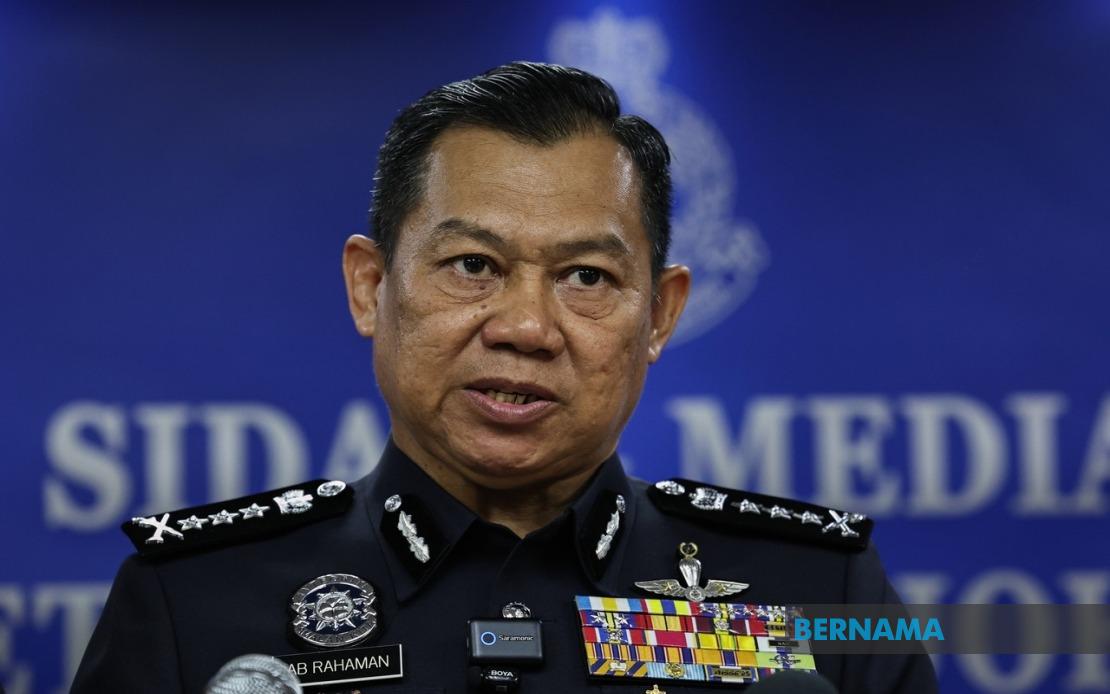
The Royal Malaysia Police has committed substantial resources to safeguard the Johor State Election, announcing a deployment strategy encompassing 11,926 officers and personnel stationed across the polling period. Johor Police Chief Datuk Ab Rahaman Arsad outlined the comprehensive security framework at a press briefing held at the Johor Police Contingent Headquarters, emphasising that personnel placement would remain flexible to respond to emerging operational requirements as voting activities unfold across the state.
The deployment architecture follows a phased approach structured across the entire electoral cycle. This systematic distribution reflects standard police practice during major electoral exercises in Malaysia, where security protocols intensify during registration periods, campaign phases, the day of polling, vote counting procedures, and the transition to results certification. By segmenting deployment across these five distinct phases, the PDRM can concentrate resources precisely where public order management and electoral integrity protection prove most critical at each stage.
Operational adaptability remains central to the security plan's philosophy. Datuk Ab Rahaman underscored that troop movements and personnel allocation would adjust dynamically depending on ground-level intelligence and incident reports. This responsiveness acknowledges that election-related tensions can escalate unpredictably in particular constituencies, requiring rapid redeployment to trouble spots. The Johor Police Contingent thus maintains reserve capacity rather than static positioning, enabling swift mobilisation should flashpoints emerge during campaign activities or at polling stations.
Beyond regular police personnel, the security apparatus has been reinforced through inter-agency cooperation involving the Internal Security and Public Order Department. This coordination mechanism brings specialised units into the operational perimeter, expanding the security footprint beyond conventional patrol officers. The General Operations Force, predominantly trained in crowd management and tactical response, provides crucial capability for handling potential large-scale disruptions. Similarly, the Federal Reserve Unit, the PDRM Air Unit, and the Marine Police Force each contribute domain-specific expertise that elevates the overall readiness posture.
The supplementary contingent comprises 54 officers and 701 personnel drawn from these specialist units. While numerically smaller than the core police deployment, these reinforcements serve as a rapid-response backbone capable of escalating intervention measures should routine policing prove insufficient. The inclusion of air and marine components suggests planning for contingencies extending beyond urban polling centres, potentially addressing security concerns in rural or water-adjacent constituencies across Johor's geographically diverse landscape.
For Malaysian voters and observers, the announcement signals institutional commitment to electoral administration meeting international standards for impartiality and safety. Large-scale police presence at elections carries dual significance: it projects state authority capable of preventing disruption, yet simultaneously invites scrutiny regarding the balance between security and voter intimidation. The PDRM's emphasis on phased deployment and operational flexibility suggests awareness that heavy-handed policing during elections carries political costs, particularly in contested constituencies where opposition support runs strong.
Johor's electoral importance amplifies the security operation's significance. As Malaysia's second-largest state by population and a historically marginal battleground between ruling coalitions, Johor state elections attract intense political attention. Previous contests have witnessed heated campaigns and occasional sporadic incidents. The scale of this deployment indicates police assessment that election-related tensions remain material risks requiring substantial preventive investment. The 11,926-strong contingent represents roughly one officer per 200 Johor residents, a density reflecting seriousness about maintaining polling-day order.
The inter-agency coordination framework also reflects bureaucratic maturation in Malaysian election management. Rather than the PDRM acting unilaterally, the integration of federal specialist units demonstrates whole-of-government approach to electoral security. This institutional arrangement distributes responsibility and prevents any single agency from monopolising election-day control, theoretically promoting checks on unilateral power exercise. However, centralised command structures remain essential for effectiveness, requiring careful calibration between coordination benefits and decisive decision-making.
Regional implications extend across Southeast Asia, where election security remains contested terrain balancing democratic norms against state control. Malaysia's sustained reliance on large police deployments contrasts with some regional peers experimenting with lighter-touch approaches. The PDRM strategy implicitly reflects confidence in professional institutional culture capable of managing electoral security without systematic bias, though opposition political actors continue registering concerns about police impartiality during voting periods. The Johor deployment announcement thus projects both institutional capability and persistent underlying anxieties about electoral administration credibility.
Operationally, the five-phase structure reflects lessons from preceding Malaysian elections and contemporary international practice. Early deployment phases focus on deterring pre-election violence and protecting candidate security during campaigns. Mid-cycle phases manage registration and nomination processes where disputes occasionally escalate into confrontations. Polling-day positioning concentrates on voting centre protection and crowd management. Post-voting phases address the sensitive counting period when tensions occasionally peak as provisional results emerge. This temporal granularity acknowledges that election-related security challenges manifest differently across the electoral calendar.
For Johor residents, the deployment announcement carries practical implications regarding movement and daily activity during voting periods. Police checkpoints may proliferate, vehicular searches increase, and public assembly permissions face tighter scrutiny. While security-conscious citizens likely welcome disorder prevention, others experience such measures as burdensome restrictions on routine conduct. Balancing security effectiveness against everyday life disruption represents a perpetual challenge in election administration globally. The PDRM's flexibility commitment suggests some recognition that excessive friction between security operations and civilian activity breeds backlash undermining electoral legitimacy.
Looking forward, the Johor election security deployment establishes operational precedent influencing subsequent federal and state elections across Malaysia. If this election proceeds smoothly with the 11,926-person contingent, future elections may adopt similar scale frameworks as standard practice. Conversely, should incidents occur despite heavy deployment, pressure will mount to intensify future police presence or deploy military assistance, incrementally militarising electoral administration. The outcome of this election's security operations thus carries consequences extending well beyond Johor's immediate political result.