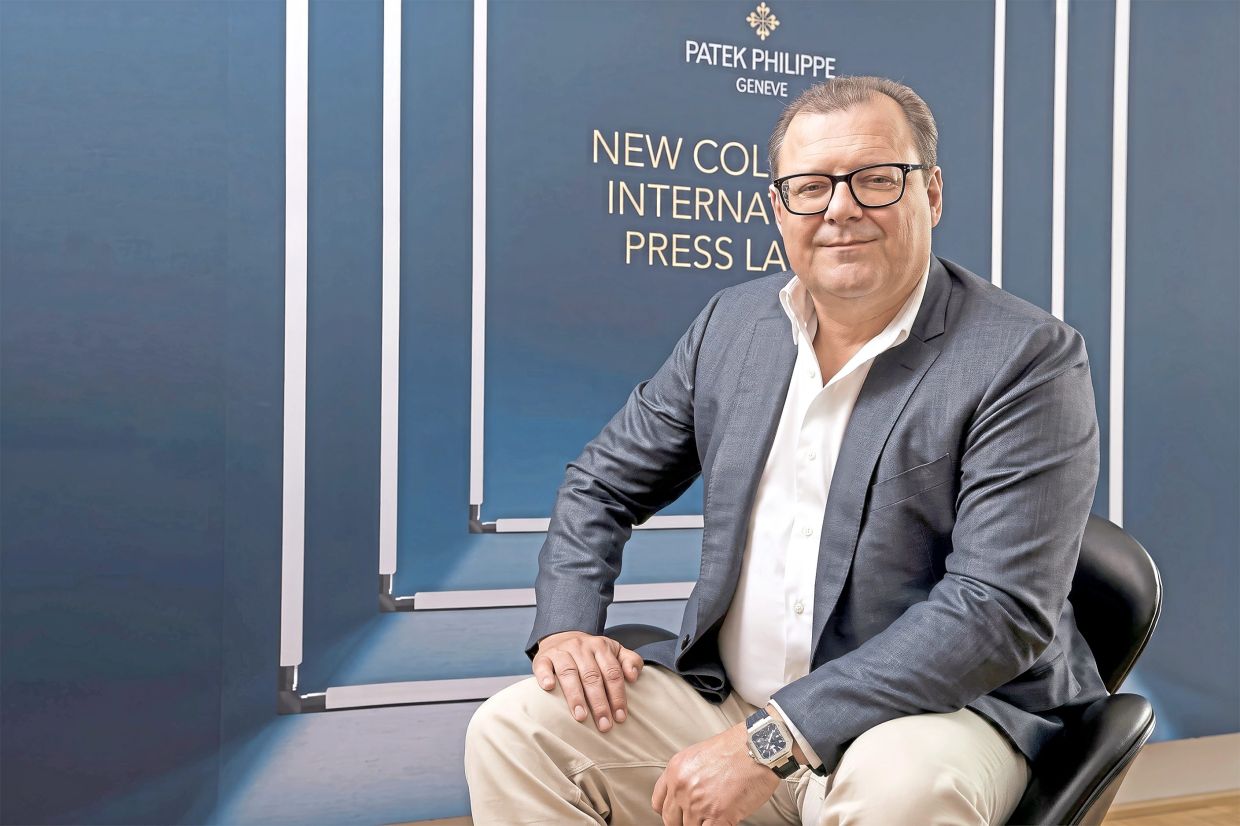
At the helm of one of Switzerland's most storied watchmaking dynasties, Thierry Stern eschews the polished corporate rhetoric typically associated with luxury leadership. Instead, the 55-year-old president of Patek Philippe speaks with the unbridled enthusiasm of someone genuinely captivated by mechanical timekeeping—a distinction he considers fundamental to his role. During an interview at Watches and Wonders 2026 in Geneva, Stern articulated a philosophy that runs counter to conventional business wisdom: technical expertise and sharp intellect, while necessary, are insufficient to guide a heritage watch brand without an authentic emotional connection to the product itself.
Stern's conviction stems from a straightforward observation about the sophisticated clientele that patronizes ultra-luxury timepieces. Wealthy collectors and discerning customers accumulate decades of horological knowledge; they can readily distinguish between a leader motivated by profit margins and one genuinely captivated by the intricacies of mechanical watchmaking. "The client knows a lot," Stern explained. "He will feel it if you don't enjoy what you are doing." This observation carries particular weight in the context of heritage brands operating in highly competitive markets, where authenticity has become as valuable a commodity as technical innovation. For Malaysian and Southeast Asian collectors who increasingly participate in the global luxury watch ecosystem—whether through acquisition, investment, or passionate collecting—understanding the philosophy guiding these institutions illuminates why certain brands command such loyalty and sustained demand.
The fourth-generation steward's perspective on leadership reflects lessons absorbed during his formative years in the business. His father, Philippe Stern, who previously led the company, instilled in young Thierry an ethos centered on understanding client needs through direct engagement. The elder Stern's guidance—that constant travel and attentive listening to retailers and end consumers were indispensable to learning the craft—shaped an approach to stewardship fundamentally different from detached executive management. This orientation toward understanding market dynamics and customer sentiment from ground level helps explain Patek Philippe's sustained position among the world's most prestigious watch manufacturers, a status the brand shares with only Rolex, Cartier, Audemars Piguet, and Omega among Swiss luxury peers.
The practical application of Stern's philosophy becomes particularly evident in the brand's strategic approach to innovation and heritage preservation. Rather than pursuing flashy mechanical complications that might impress horologists, Patek Philippe's measured risk-taking reflects a deeper understanding of what sustains desirability across generations. Stern emphasizes that remaining static—refusing to evolve and innovate—represents a misguided form of conservatism that ultimately undermines legacy. "If I don't take risks, I'm not evolving," he states. However, these calculated gambles are neither impulsive nor disconnected from the brand's foundational identity. The introduction of the Aquanaut in the late 1990s exemplifies this philosophy: the model provided a sportier, younger-oriented alternative to the iconic Nautilus while maintaining Patek Philippe's commitment to refinement and durability.
The 50th anniversary of the Nautilus in 2026 offers an instructive case study in how Stern navigates the tension between honoring legacy and embracing measured innovation. When Gerald Genta's revolutionary design debuted in 1976, with its porthole-inspired case and integrated bracelet, the watch scandalized traditionalists who perceived it as excessively industrial and fundamentally at odds with Patek Philippe's refined heritage. The criticism was vociferous and widespread, yet Stern dismisses those early detractors with wry humor: "Everybody who was complaining in 1976—and believe me, there were many—is long gone." Today, the Nautilus has transcended its status as a controversial experiment to become arguably the most coveted sports watch globally, with waiting lists spanning years and auction prices that routinely exceed rational valuation metrics.
For the milestone anniversary, Patek Philippe has unveiled three limited-edition Nautilus iterations, including white gold and platinum versions, alongside an accompanying desk clock drawing inspiration from the famous model. Rather than introducing a complicated tourbillon or other mechanically sophisticated complication—moves that might seem obvious for a milestone celebration—Stern deliberately chose restraint. "We have to watch out not to push too far," he explained. "For me, the Nautilus is an hour-and-minute watch. That's really its DNA." This commitment to preserving the design's essential character, even while refreshing it through precious metals and refined proportions, demonstrates how passion for the product actually constrains design choices rather than unleashing them.
The technical execution of the anniversary models reflects the meticulous engineering that Stern considers non-negotiable. Ultra-thin cases measuring just 6.9 millimeters house the historic micro-rotor Calibre 240, a movement that exemplifies Patek Philippe's commitment to refinement over ostentation. The redesigned case and bracelet required several years of development work to achieve the precise ergonomics Stern deemed essential. This investment of time in seemingly incremental improvements—the difference between good and exceptional watch design—illustrates why passion matters operationally. Without genuine commitment to horological excellence, such refinements might seem like unnecessary expenses; with it, they become non-negotiable prerequisites for maintaining the brand's position.
Stern's framework for leadership carries implications beyond Patek Philippe's immediate corporate structure, offering insights into how heritage luxury brands maintain relevance in rapidly evolving markets. The watchmaking industry has confronted existential challenges from digital timekeeping and smartphone ubiquity, yet mechanical watches have experienced remarkable resurgence among affluent consumers globally, including increasingly in Southeast Asia. This revival has occurred not through technological disruption but through the opposite: a conscious embrace of analog precision and mechanical artistry as expressions of craftsmanship and values fundamentally at odds with disposable consumer culture. Stern's insistence that leadership must authentically embody these values suggests that brands which maintain genuine passion for their products—rather than merely exploiting nostalgia or heritage marketing—are best positioned to sustain multi-generational appeal.
The broader organizational culture at Patek Philippe, shaped by Stern's philosophy, reflects his conviction that competence without passion creates hollow institutions. Succession planning at family-controlled luxury brands frequently encounters friction when professional managers with strong credentials but limited emotional investment in the brand's essence clash with heritage imperatives. By establishing passion as a foundational requirement rather than a desirable attribute, Stern attempts to ensure that future leaders will approach stewardship with the same commitment to horological excellence that has defined the institution across four generations. For investors, collectors, and enthusiasts across Malaysia and Southeast Asia monitoring the luxury watch market, this philosophical positioning helps explain why Patek Philippe commands premiums and loyalty that exceed what technical specifications alone would justify.
Stern's emphasis on passionate leadership also addresses a fundamental tension in contemporary luxury marketing: the challenge of maintaining exclusivity and authentic prestige while operating global businesses requiring sophisticated supply chains, sophisticated distribution strategies, and constant performance metrics. Lesser brands resolve this tension by cynically deploying heritage imagery while prioritizing shareholder returns above product integrity. Stern's approach suggests a different resolution: that authentic commitment to the product actually serves financial interests by building irreplaceable brand equity that transcends market cycles and economic disruptions. The Nautilus's ascent from derided newcomer to most-coveted sports watch demonstrates how products genuinely reflecting the vision of passionate creators ultimately triumph over time, regardless of initial skepticism.
Looking forward, Stern's framework faces significant tests as Patek Philippe navigates contemporary challenges including supply chain vulnerabilities, counterfeit proliferation, and generational shifts in wealth and consumption patterns. The brand's expansion into Southeast Asian markets—including through increased retail presence in Malaysia and Singapore—will require balancing controlled scarcity necessary for maintaining prestige with sufficient availability to serve growing demand from regional collectors. Stern's commitment to understanding end-consumers and retailer needs, inherited from his father, positions the brand to navigate these transitions thoughtfully. Yet the fundamental conviction remains unchanged: that watches—and by extension, the institutions stewarding their creation—ultimately derive their significance from human passion for mechanical excellence, not from marketing narratives or financial engineering. In a business landscape increasingly dominated by algorithm-driven decision-making and quarterly earnings obsessions, Stern's insistence that passion remains non-negotiable represents an increasingly countercultural—and increasingly compelling—leadership philosophy.

