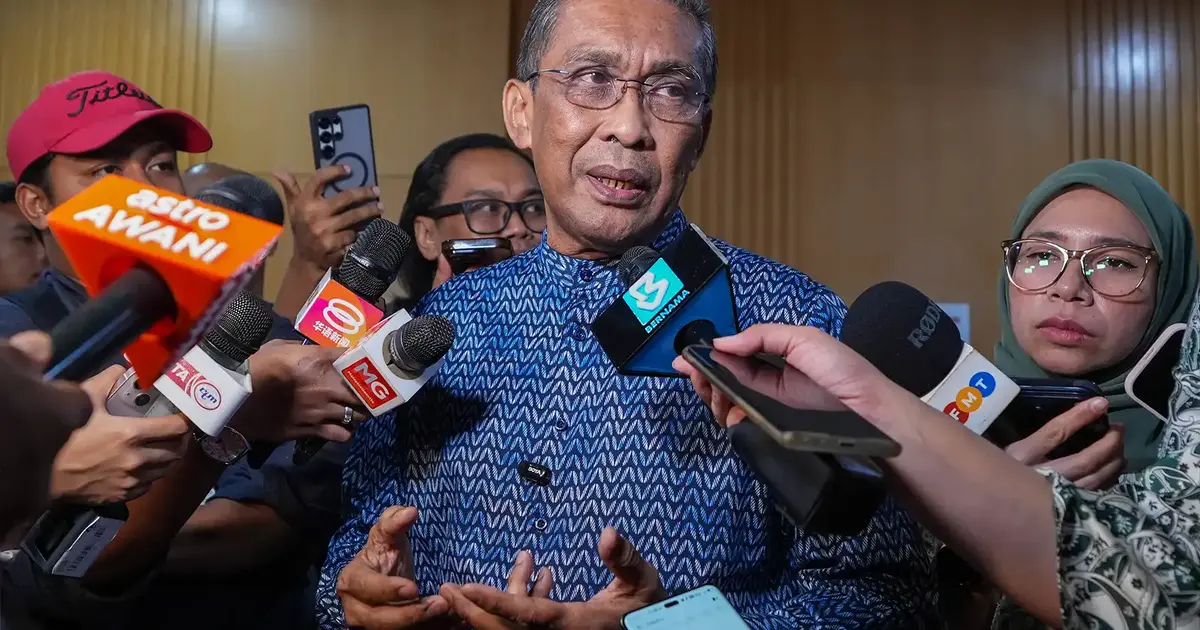
The Islamic Party of Malaysia will formally introduce a motion addressing its working relationship with Umno when party delegates convene for the annual congress, according to the organisation's secretary-general Takiyuddin Hassan. The anticipated presentation signals ongoing deliberation within PAS regarding its strategic partnership with the United Malays National Organisation, reflecting broader conversations about consolidated Muslim political representation in the Malaysian landscape.
Takiyuddin's confirmation indicates that questions surrounding PAS-Umno cooperation have ascended the agenda of party leadership sufficiently to warrant formal discussion at the muktamar, the party's highest deliberative body where grassroots members exercise considerable influence over directional matters. The decision to table such a motion publicly acknowledges internal conversations that have likely occupied party structures at various levels, particularly given the evolving political dynamics between the two major Muslim-dominated parties.
Beyond the immediate question of bilateral cooperation, Muslim unity represents another substantive theme anticipated in muktamar proceedings. This broader framing indicates that PAS delegates will examine not only the mechanics of their relationship with Umno but also their positioning within a wider ecosystem of Islam-aligned political movements across Malaysia. The elevation of Muslim unity to congress-level debate suggests party leadership recognises that doctrinal and organisational cohesion among Islam-focused parties carries significant implications for both electoral competitiveness and governance capacity.
The timing of this formal discussion carries particular weight given Malaysia's contemporary political configuration. The relationship between PAS and Umno has historically shifted according to electoral cycles and leadership transitions, with periods of alliance alternating with episodes of competitive tension. By instituting formal debate at the muktamar, PAS creates space for delegates to express preferences regarding strategic direction while simultaneously generating clarity for external observers about the party's institutional priorities.
For Malaysian political analysts, the substance of the cooperation motion will provide valuable insight into how PAS internally reconciles its Islamic ideological foundation with practical considerations of electoral mathematics and governance participation. Muktamar discussions frequently reveal tension between grassroots preferences for ideological purity and leadership calculations regarding political viability, particularly when alliances involve parties with different organisational cultures and membership compositions.
The emphasis on Muslim unity in debate frameworks reflects a continuing preoccupation within Malaysian Islamic political movements regarding their collective capacity to influence national direction. This concern has intensified periodically over recent years, particularly when secular-oriented or multi-ethnic coalitions have demonstrated electoral strength. By making Muslim unity a muktamar theme, PAS acknowledges that individual party performance cannot be evaluated in isolation from the broader sectarian positioning that Malaysian voters increasingly utilise when determining support.
Umno's perspective on such discussions remains consequential, as the party's own internal dynamics regarding cooperation with PAS will influence whether any muktamar-endorsed framework for partnership receives reciprocal institutional endorsement. Previous attempts at formalised cooperation between the two parties have sometimes foundered when grassroots members of either organisation perceived inadequate protection of institutional interests or ideological distinctiveness. The public announcement of a PAS motion may therefore signal an effort to establish mandate for negotiating positions that Umno leadership would need to seriously contemplate.
Regional observers will monitor these developments closely, given that PAS-Umno dynamics have ramifications extending beyond Malaysia's borders. The relationship between Malaysia's two largest Muslim-majority parties influences perceptions of Islamic political governance throughout Southeast Asia and provides substantive material for ongoing debates regarding the compatibility of Islam-based political parties with democratic institutional frameworks. Strengthened or clarified cooperation could either reinforce or challenge international characterisations of such movements.
For Malaysian voters, the muktamar outcomes regarding PAS-Umno cooperation will ultimately determine the political battlefield during forthcoming electoral cycles. Voter preferences have shown some fluidity regarding which Muslim-aligned party commands their support, suggesting that clarity about institutional relationships and cooperative frameworks influences electoral decision-making. The formal discussion at congress level therefore carries implications extending well beyond party internal management into the practical matter of how Malaysian voters will encounter these organisations during campaign periods.
The decision to prioritise this motion reflects PAS's recognition that questions about its strategic positioning require periodic reaffirmation through institutionalised party processes. Rather than allowing cooperation frameworks to develop through ad hoc decision-making by leadership circles alone, the muktamar approach distributes legitimacy across the broader membership, potentially generating stronger organisational commitment to whatever directions congress delegates endorse regarding future engagement with Umno and the wider Muslim political ecosystem.

