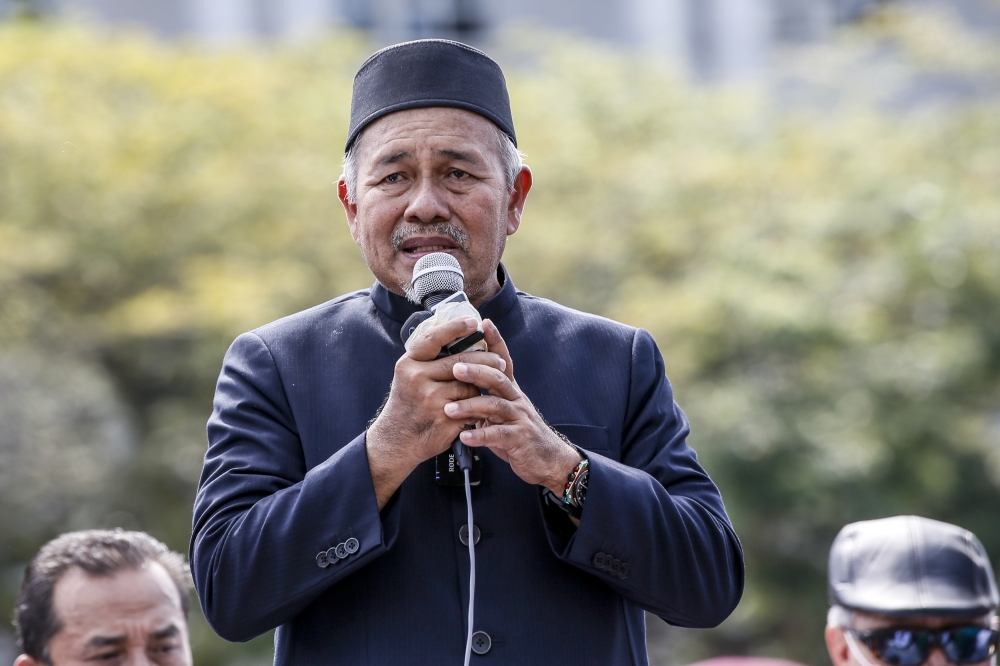
The Islamic party PAS has signalled a willingness to engage in substantive discussions about widening the scope of its cooperative arrangement with both Barisan Nasional and Perikatan Nasional, potentially extending the partnership beyond its current geographic and administrative boundaries. This development comes amid ongoing efforts to consolidate Malaysia's fragmented political landscape and reflects growing momentum toward larger coalition frameworks that could reshape power dynamics across multiple governance levels.
The prospect of extended cooperation holds significant implications for Melaka, a state that has experienced considerable political volatility since the collapse of the Pakatan Harapan government nationally. A BN-PN alliance at state level would create a formidable parliamentary majority, effectively sidelining Pakatan Harapan opposition representation. For Melaka voters, this would mark another chapter in the state's turbulent coalition politics, following the 2020 political upheaval that saw rapid shifts in executive authority. The consolidation would stabilise the state government under unified coalition leadership, though it raises questions about political choice and voter representation in future state elections.
At the federal level, the implications are even more consequential. Malaysia's parliamentary system has functioned under the current Anwar Ibrahim-led government with a coalition that spans multiple parties including Pakatan Harapan and several independents and smaller groups. Any formal integration of PAS into a broader BN-PN framework at the national level would substantially reconfigure the governing coalition's ideological composition and policy direction. This would represent a fundamental shift from the current administration's secular-leaning governance approach, introducing stronger conservative Islamic influence into executive decision-making on matters ranging from education policy to social legislation.
The BN-PN cooperation itself has already demonstrated resilience and pragmatism in several states. Their existing arrangements have created stable administrations in places where either bloc might struggle independently. By extending this model to Melaka and potentially federally, both coalitions would be consolidating their respective support bases while potentially creating an alternative governing option should electoral circumstances change. For PAS, participation in such expanded arrangements provides pathway to genuine executive power and policy influence at levels beyond the states where it currently holds strong positions.
Regionally, these developments signal Malaysia's political parties are moving toward larger, more coherent blocs rather than the fragmented multi-party system that has characterised recent decades. This consolidation may reduce political instability and create clearer voter choices in future elections. However, it also concentrates significant power and raises concerns about one-party dominance in particular regions. The trend mirrors broader patterns in Southeast Asian politics where coalition-building around ideological and organisational lines is reshaping competitive landscapes.
PAS's explicit openness to dialogue suggests the party views expanded cooperation as strategically advantageous rather than an imposition. The party leadership evidently believes that participation in larger governing coalitions, whether at state or federal level, better serves its interests and Islamic constituency concerns than remaining in opposition or limiting itself to existing arrangements. This calculation reflects confidence in PAS's ability to maintain organisational identity and policy influence even within broader frameworks.
For Barisan Nasional, particularly its dominant component UMNO, the prospect of formalising partnership with PAS addresses longstanding succession and coalition-building challenges. The traditional BN structure has struggled to maintain voter support without incorporating other major players. By actively engaging PAS in expanded cooperation discussions, BN addresses internal pressures to remain competitive while preserving institutional legitimacy. The arrangement offers mutual benefit through vote pooling in elections and shared governance responsibility across multiple administrative levels.
Melaka specifically has served as testing ground for BN-PN cooperation, demonstrating feasibility of the partnership in challenging contexts. The state's political history—marked by shifting allegiances and narrow majorities—makes it an ideal laboratory for coalition arrangements. Success in Melaka could provide confidence for similar arrangements elsewhere, while failure would prompt recalibration. The stakes are therefore higher than typical state-level politics might suggest, as outcomes could influence thinking about federal-level configurations.
The timing of these discussions also reflects Malaysia's ongoing democratic evolution. With the next general election potentially years away, political parties are engaging in strategic positioning and alliance-building based on contemporary power assessments. These conversations occur within a relatively stable governance environment where experimentation with coalition structures carries manageable risks. By contrast, such discussions during pre-election periods would carry greater immediacy and electoral pressure.
PAS's readiness to discuss extended cooperation should not necessarily be interpreted as commitment to any particular arrangement. Rather, it reflects the party's engagement in serious political negotiations about Malaysia's future governance structures. The actual outcome will depend on detailed discussions about power-sharing, portfolio allocation, policy priorities, and electoral arrangements. These technical details often determine whether broad coalition aspirations translate into functioning partnerships.
Ultimately, this signal from PAS underscores Malaysia's ongoing political recalibration in the post-2018 period. The question is no longer whether major coalitions will cooperate—they demonstrably do—but rather how comprehensively, at what administrative levels, and with what policy consequences such cooperation will be structured. The willingness to discuss federal-level arrangements suggests PAS envisions potential pathways to greater national influence than the party's electoral strength alone might otherwise provide.

