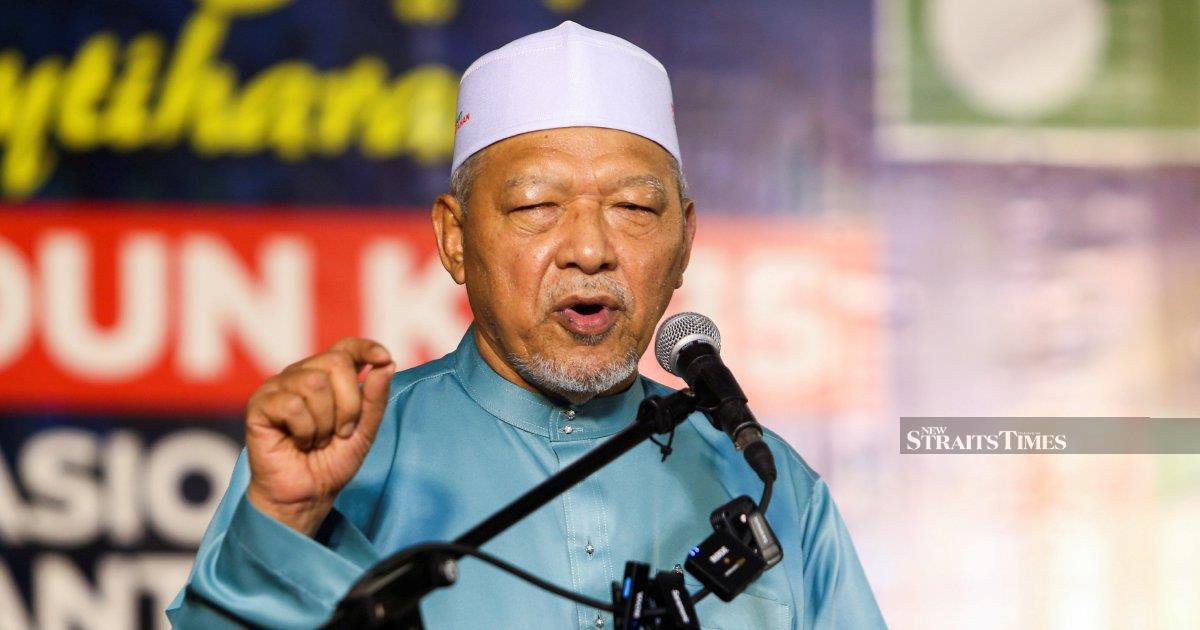
PAS president Tan Sri Abdul Hadi Awang has thrown his support behind a series of electoral arrangements with Barisan Nasional, extending across multiple state contests and positioning the Islamic party for closer coordination in federal elections. The decision, announced in Tumpat, signals a strategic recalibration for PAS as it navigates what party leadership views as a serious destabilising force in Malaysia's political landscape.
The agreements encompass forthcoming elections in Johor and Negri Sembilan, along with subsequent contests in Melaka, creating a framework for coordinated candidacies across these electoral battlegrounds. For Malaysian voters tracking coalition politics, this development represents a significant shift in how the Islamic party intends to compete at both state and national levels. The arrangement reflects PAS's assessment that electoral cooperation with the long-established BN machinery offers strategic advantages in fragmented multi-cornered contests.
Hadi's characterisation of the political environment as presenting a "dangerous" challenge provides insight into the party's calculus. While specific details of the purported threat remain circumscribed in his public statements, the language reflects genuine concern within PAS leadership about competitive pressures or ideological challenges they perceive as existential to the party's electoral viability. This framing has become common among Malaysian political leaders when justifying coalition-building decisions to their respective bases.
The timing of these arrangements carries significance for Southeast Asia's largest Muslim-majority democracy. Malaysia approaches critical electoral cycles that will determine not only state administrations but potentially reconfigure federal parliament composition. PAS, which commands substantial support in rural constituencies and among religiously conservative voters, brings substantial organisational capacity and a loyal voter base to any electoral partnership. Its decision to formalise cooperation with BN rather than pursue independent candidacies or alternative alliances reflects confidence in this joint arrangement's competitive potential.
From a governance perspective, closer PAS-BN alignment may reshape policy priorities in affected states. Both Johor and Negri Sembilan have histories of competitive electoral contests, and a unified BN-PAS front could substantially alter outcome probabilities. Melaka, despite its smaller size, carries symbolic weight in Malaysian politics and has recently experienced significant political volatility. The promise of coordinated approaches in these contests suggests both parties believe they can achieve better collective results than through competition.
The arrangement also carries implications for opposition political positioning. With PAS aligning more closely with BN, opposition coalitions face redefined competitive terrain. Parties opposing these alliances must now contend with enhanced coordination between traditionally separate political machines, requiring tactical adjustments in how they mobilise supporters and allocate campaign resources across contested seats.
Historically, PAS has oscillated between independent positioning, opposition partnerships, and BN cooperation. The current move toward formalised BN cooperation continues a pattern visible in recent years, particularly following PAS gains in the 2023 general election. Hadi's willingness to commit to multiple electoral cycles simultaneously suggests the party views this partnership as more durable than previous tactical arrangements, though Malaysian political history demonstrates such commitments remain subject to shifting circumstances and internal party dynamics.
The "major threat" Hadi references warrants closer examination within Malaysia's current political context. Whether this alludes to specific competitive challenges, ideological concerns about other parties' trajectories, or concerns about demographic and electoral shifts remains largely interpretive without additional elaboration from PAS leadership. Malaysian political leaders frequently invoke abstract threats to justify partnership decisions to their supporters, and the vagueness here may be intentional, allowing different party factions to project their own concerns onto the characterisation.
For Malaysian voters and observers, these arrangements represent a consolidation of established political patterns rather than dramatic innovation. Coalition building before elections remains standard practice, though formalising agreements across multiple state contests simultaneously demonstrates enhanced coordination ambitions. The explicit involvement of PAS in such arrangements contrasts with periods when the party maintained greater autonomy, suggesting shifts in either party preferences or competitive necessities that have made joint planning more attractive.
International observers of Malaysian politics note these developments within broader regional contexts. Southeast Asian democracies increasingly feature complex coalition arrangements, and Malaysia's particular configuration of ethnically and religiously structured political competition creates distinct imperatives for alliance building. PAS's role in any governing arrangement carries implications for religious policy and minority protections that extend beyond purely electoral mathematics.
Looking forward, the success or durability of these BN-PAS arrangements will depend substantially on execution. Electoral cooperation requires navigating seat allocation disputes, managing candidate selection controversies, and maintaining party discipline across campaign periods. Previous initiatives involving PAS have sometimes fractured when such practical challenges emerged, and observers will monitor whether current arrangements prove more resilient.
The agreement also positions PAS strategically for potential federal-level negotiations following general elections. By demonstrating reliable cooperation capacity at state level, the party potentially strengthens its hand in post-election coalition negotiations that determine which coalition forms federal government and what ministerial portfolios and policy concessions accrue to participating partners. This longer-term strategic calculus likely influenced Hadi's support for the arrangement alongside immediate competitive considerations.

