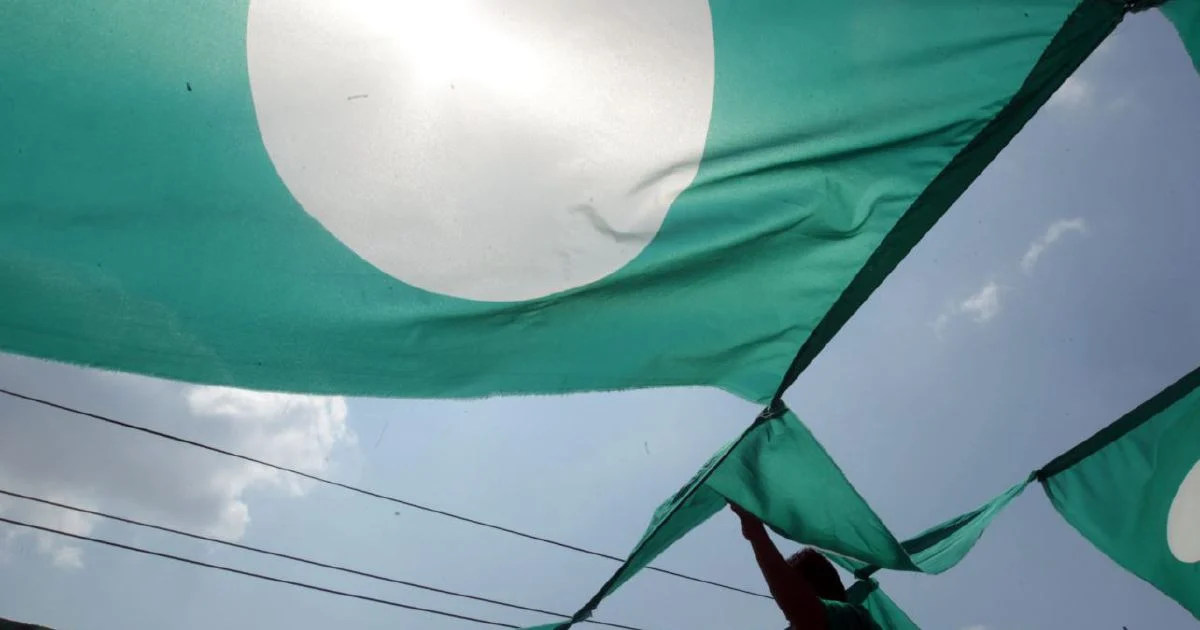
The Malaysian Islamic Party (PAS) convened a significant gathering of opposition parliamentarians at its Kuala Lumpur headquarters on Jalan Raja Laut, underscoring the escalating discord between the Islamist party and its erstwhile coalition partner Bersatu. The pre-council meeting of opposition members of parliament marked a pivotal moment in the country's evolving political landscape, where the careful alliances constructed following the 2022 general election continue to fracture under mounting internal pressures and strategic divergences.
The timing of this gathering carries considerable weight, arriving at a juncture when the opposition bloc faces critical decisions about its structural coherence and electoral positioning. PAS, which had successfully repositioned itself as a significant parliamentary force, finds itself navigating the delicate balance between maintaining its Islamist credentials and accommodating the broader opposition coalition that once promised to challenge the government's parliamentary majority. The meeting signals that party leadership recognises the need to address internal concerns and chart a clear path forward amid deteriorating relations with Bersatu, the party founded by former Prime Minister Mahathir Mohamad.
The deteriorating relationship between PAS and Bersatu reflects deeper philosophical and strategic fault lines within Malaysia's opposition ecosystem. While both parties have positioned themselves as alternatives to the Pakatan Harapan coalition and Barisan Nasional, their approaches to coalition-building, religious symbolism, and governance philosophy have proven increasingly incompatible. Bersatu's multi-ethnic, centrist positioning contrasts sharply with PAS's explicit Islamist agenda and its emphasis on Malay-Muslim priorities, creating inherent tensions that have simmered beneath surface-level cooperation.
For Malaysian political observers, this divergence carries implications extending well beyond inter-party squabbles. The opposition's fragmentation diminishes its collective bargaining power and complicates the construction of alternative governing coalitions. With the government maintaining its parliamentary majority through careful management of coalition partners, a weakened and divided opposition serves primarily to entrench the status quo. The PAS gathering thus represents not merely an internal party matter, but a broader symptom of opposition instability that could reshape Malaysia's political trajectory.
PAS's recent moves suggest the party may be reconsidering its strategic alliances and preparing to stake out independent political territory. The party's Islamic credentials have consistently resonated with its core voter base across the northern and east coast states, where it has built formidable strongholds. However, its efforts to expand influence in urban areas and Peninsular regions have required a more accommodating posture toward secular and multi-ethnic concerns. This contradiction becomes increasingly difficult to manage when partnership with Bersatu generates more friction than benefit.
The opposition MPs pre-council meeting provides an opportunity for PAS to consolidate its parliamentary contingent and articulate a coherent legislative agenda. With some 43 opposition members holding seats in the Dewan Rakyat, the opposition retains sufficient numbers to table motions, sustain debates, and maintain pressure on government policies. However, such parliamentary influence becomes meaningful only when coordinated effectively across competing partisan interests. The gathering likely addresses how opposition MPs should coordinate on critical votes and policy positions in the coming parliamentary session.
Bersatu's position in this dynamic has weakened considerably since the 2022 election, when it and PAS together appeared poised to lead a major political realignment. The party's inability to retain either Mahathir's leadership gravitas or broad-based appeal has forced it into increasingly subordinate roles within opposition frameworks. Mahathir's departure from active politics and the party's limited organisational reach outside peninsular areas have constrained its negotiating position vis-à-vis PAS, which boasts deeper grassroots networks and more disciplined party machinery.
The regional dimension adds further complexity to this opposition realignment. PAS's influence extends to significant communities in Thailand's Muslim-majority southern provinces and Indonesian Islamic circles, providing the party with transnational political leverage that Bersatu simply cannot match. Such regional positioning has become increasingly valuable as Southeast Asian states grapple with questions of religious identity, demographic change, and geopolitical realignment. PAS leaders may view their party's Islamic credentials and regional networks as assets more valuable than continued partnership with Bersatu.
For the government, opposition fragmentation presents both opportunities and challenges. While a fractured opposition reduces the likelihood of a coordinated challenge to the administration's parliamentary majority, it also creates unpredictability in legislative dynamics. Individual opposition MPs or smaller party groupings become more susceptible to incentives for switching allegiance or abstaining on critical votes. The government has historically exploited such divisions to engineer legislative victories and consolidate parliamentary control.
The broader implication for Malaysian democracy centres on whether the opposition can eventually construct a coherent, stable alternative to the current government. Successive electoral cycles have failed to produce decisive outcomes, leaving Malaysia with fragmented political coalitions lacking clear mandates or unified visions. PAS's gathering suggests the party believes its future lies in more independent political positioning rather than subordination within broader opposition frameworks dominated by secular or centrist players.
Looking ahead, the trajectory of PAS-Bersatu relations will significantly influence opposition dynamics in the lead-up to the next general election. Should the rift become irreparable, each party will pursue distinct electoral strategies, further fragmenting the opposition vote and potentially benefiting the government. Conversely, if both parties can articulate complementary rather than competitive roles within the opposition spectrum, they might yet reconstitute a credible counterweight to the current administration.
The PAS gathering ultimately reflects Malaysian politics' continuing volatility and the challenges inherent in constructing stable, ideologically coherent coalitions in a demographically diverse democracy. Whether this meeting signals the beginning of opposition restructuring or merely another moment of temporary adjustment remains to be determined, but its implications will reverberate through Malaysia's political establishment for months to come.