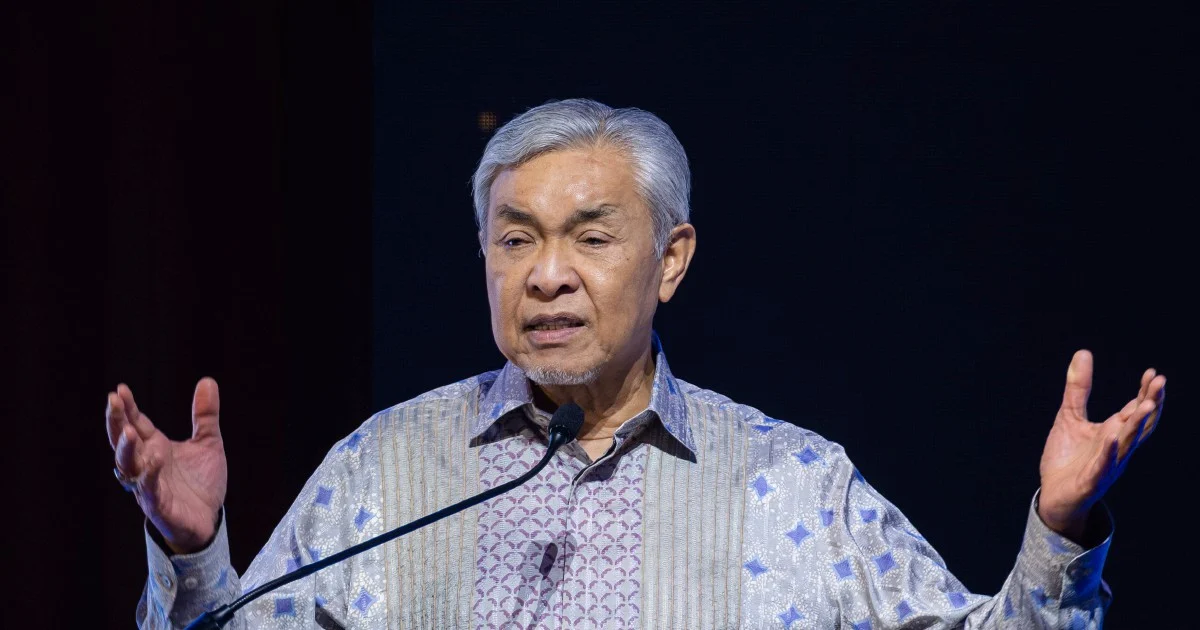
Deputy Prime Minister Ismail Sabri Yaakob has struck a cautious note regarding the potential electoral impact of PAS's recent guidance to its supporters, warning that the Islamist party's campaign against Pakatan Harapan should not be interpreted as guaranteeing votes for Barisan Nasional in the forthcoming Johor state election. Speaking in Kota Tinggi, the coalition's de facto leader emphasised that political dynamics on the ground remain fluid and that organisational directives do not necessarily translate into uniform voting behaviour across constituencies.
The cautionary stance reflects deeper complexities within Malaysia's evolving political landscape, where coalition arrangements and electoral strategies have become increasingly multifaceted. PAS, a longstanding player in Malaysian politics, has positioned itself as a counterweight to Pakatan Harapan's secular governance model, yet its influence over voter behaviour—particularly in rural and semi-urban areas where religious messaging resonates—cannot be assumed to operate as a simple, mechanical advantage for its coalition partners. Zahid's remarks suggest an awareness that voter sentiment operates independently of party apparatus instructions, and that the Johor electorate may respond to multiple competing narratives rather than a single coordinated directive.
Understanding the context of PAS's move requires examining the fractious relationship between the Islamist party and Pakatan Harapan's leadership. PAS has long maintained that the opposition coalition's secular orientation and embrace of religious pluralism fundamentally conflicts with its own Islamic governance philosophy. By explicitly discouraging its supporters from backing Pakatan candidates, PAS is attempting to consolidate its position as the sole legitimate representative of Malay-Muslim interests in the political arena. However, whether this messaging penetrates effectively to the grassroots level, and whether voters automatically redirect their support to Barisan candidates, remains an empirical question that Zahid's comments implicitly acknowledge cannot be taken for granted.
The Johor election holds particular significance for national politics, given the state's economic importance and its traditional role as a political bellwether. As one of Malaysia's most developed and populous states, Johor's electoral outcome often signals broader shifts in voting behaviour that extend beyond regional boundaries. A strong Barisan performance could strengthen the coalition's narrative of resilience and continued relevance after years of electoral setbacks, whilst a fragmented result could indicate that traditional coalition politics are giving way to more localised, issue-driven voting patterns.
Zahid's measured assessment suggests that Barisan cannot rely passively on PAS's anti-Pakatan campaigning to secure victory. Instead, the coalition must mount its own compelling ground campaign, articulate clear policy positions on issues affecting Johor voters—such as economic development, employment, and infrastructure investment—and demonstrate administrative competence that resonates beyond party loyalties. The implicit message is that electoral success depends on active engagement and positive messaging rather than simply benefiting from opponents' weaknesses.
The political arithmetic underlying coalition politics in Peninsular Malaysia has shifted substantially in recent years. Previous assumptions about predictable voting blocs and reliable party machinery have proven fragile when confronted with voter preferences for change, perceived government performance failures, or localised grievances. The rise of independent candidates and swing voting, particularly among younger and urban constituencies, has complicated the traditional calculations that relied on demographic and religious segmentation. In this environment, a PAS directive—however forcefully communicated—cannot guarantee electoral outcomes without parallel efforts to inspire positive voter enthusiasm.
For Barisan, the challenge lies in converting any split in the anti-Barisan vote into actual seat gains. In Malaysian electoral mathematics, a three-way contest between Barisan, Pakatan Harapan, and fragmented opposition votes can either benefit or harm the coalition depending on how votes are distributed geographically. If PAS supporters transfer to Barisan, this concentrated support in particular constituencies could prove decisive; conversely, if voter behaviour remains fragmented or if some PAS supporters abstain rather than shift allegiance, the anticipated advantage may evaporate.
Zahid's comments also reflect internal coalition dynamics. Barisan comprises multiple components beyond PAS, including UMNO, MIC, and MCA, each with distinct voter bases and territorial strongholds. The coalition must balance maintaining its various components' autonomy and electoral viability whilst presenting a unified front against Pakatan Harapan. Overreliance on PAS's anti-Pakatan messaging could undermine the coalition's ability to articulate its own positive agenda and vision for Johor's future.
The Johor election ultimately represents a test of whether traditional political formations remain viable in Malaysia's increasingly complex electoral environment. Zahid's prudent acknowledgment that external factors—such as PAS's campaign directives—cannot be mechanically translated into electoral victory suggests a leadership recognising that successful politics in 2024 and beyond requires active engagement with voters on substantive issues, effective campaign execution, and authentic connection with community concerns beyond abstract coalition mathematics or inter-party positioning.
For Malaysian voters and observers, the Johor contest will provide valuable insights into whether electoral behaviour continues to follow predictable patterns based on coalition affiliations and religious identity, or whether voter sophistication has matured to privilege governance quality, policy substance, and individual constituency performance. Zahid's cautious framing hints that Barisan's strategists are already contemplating this possibility and preparing accordingly.

