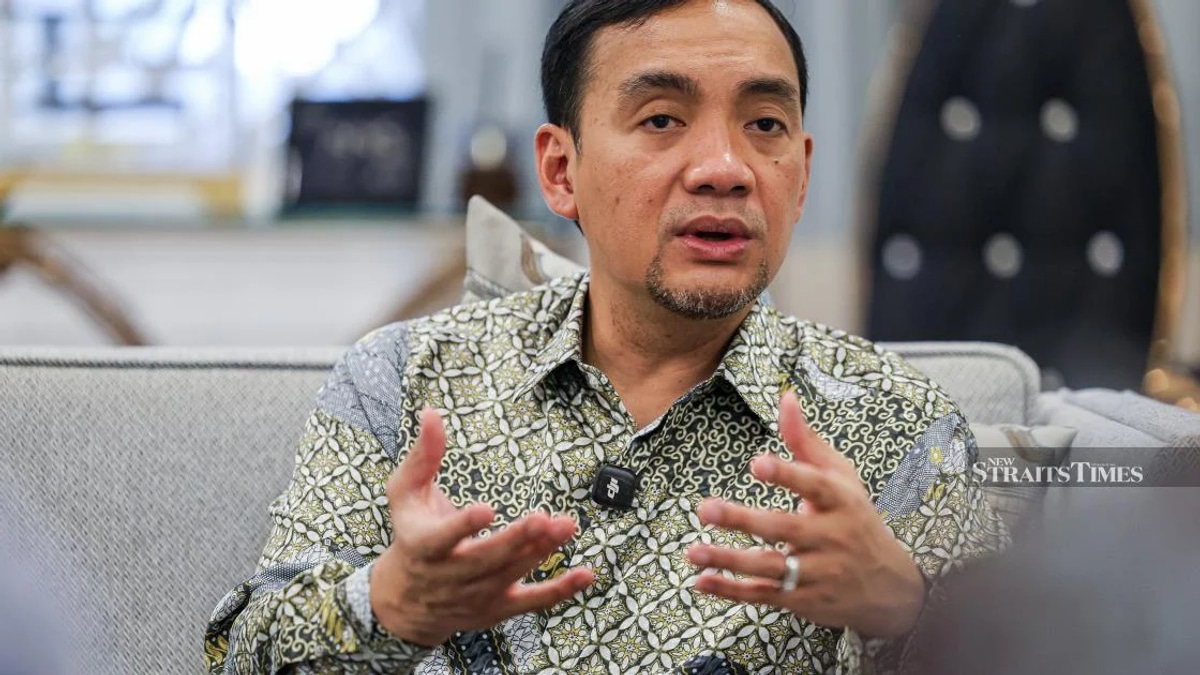
PAS treasurer Iskandar Abdul Samad has projected confidence that his party would emerge stronger than Bersatu should the two Islamic-leaning coalitions face off at the ballot box, signalling underlying tensions within Malaysia's Perikatan Nasional (PN) alliance despite their continued partnership in federal government.
The assertion reflects a calculated assessment within PAS leadership about the relative organisational strength and grassroots support both parties command among conservative Muslim voters who form the backbone of PN's electoral base. Iskandar's confidence underscores PAS's understanding of its deeper institutional penetration in rural constituencies, particularly across the northeastern peninsula states where the party maintains traditional strongholds spanning decades of political organising.
PAS's position within PN has evolved significantly over recent years. The party emerged as the dominant force in the 2022 general election, winning 43 parliamentary seats compared to Bersatu's 31, establishing it as the coalition's numerical heavyweight. This disparity in parliamentary representation translates into tangible advantages in resource allocation, nomination power, and the ability to shape coalition strategy—advantages that Iskandar's statement implicitly recognises and confidently asserts would favour PAS in any direct electoral competition.
The treasurer's remarks carry particular weight given PAS's recent electoral trajectory. Beyond federal parliament, the party has consolidated control over several state governments, most notably in Kelantan and Terengganu where it maintains unassailable majorities rooted in decades of grassroots mobilisation and religious institutional networks that extend from mosques to local community organisations. These subnational power bases provide PAS with organisational infrastructure and voter loyalty that can be mobilised with significant efficiency.
Bersatu, by contrast, occupies a more precarious position within PN. The party led by Muhyiddin Yassin entered the alliance relatively recently and has faced persistent internal organisational challenges, defections, and questions about its long-term viability as an independent political force. Its parliamentary representation, while substantial, remains concentrated in specific constituencies rather than distributed across the geographically diverse base that PAS enjoys, potentially limiting its resilience in a fragmented electoral contest.
The underlying dynamic reflects broader anxieties about PN's coherence as a ruling coalition. Public expressions of competitive confidence between alliance partners typically signal underlying resource competition, ideological friction, or strategic positioning ahead of potential internal realignments. Iskandar's statement, ostensibly about hypothetical electoral scenarios, simultaneously serves as a reminder to PN's political leadership and ordinary members about the relative power dynamics that govern coalition relationships and decision-making processes.
For Malaysian voters and observers assessing PN's stability, such declarations merit careful interpretation. While political partners frequently express loyalty to their alliances in public forums, statements about electoral superiority over coalition colleagues inevitably raise questions about the durability of collaborative arrangements. In Malaysia's fluid political environment, where coalition formations and dissolutions have repeatedly reshaped the electoral landscape, expressions of internal confidence can function as subtle positioning ahead of potential strategic shifts.
The comparison also highlights divergent pathways to political legitimacy within PN. PAS derives substantial authority from its religious credentials and institutional networks within Islamic constituencies, allowing it to claim authentic representation of conservative Muslim interests. Bersatu, lacking equivalent institutional depth in these domains, has relied more heavily on its association with Muhyiddin's personal political brand and its control of specific regional strongholds. This structural difference partly explains why PAS leadership might confidently project electoral superiority.
Regionally, PAS's confidence reflects the party's demonstrated capacity to mobilise voters in multiple election cycles across different socioeconomic and demographic contexts. The party has successfully navigated Malaysia's complex federal system, maintaining and expanding control in state governments while simultaneously performing credibly in federal elections. This track record of electoral consistency provides empirical foundation for the treasurer's assertion, distinguishing it from mere rhetorical posturing.
Iskandar's comments also implicitly address concerns among PAS supporters about the party's role within PN. By asserting that PN voters would ultimately favour PAS in direct competition, the treasurer reassures the party's base that their political investment in PN membership remains strategically sound and that PAS leadership maintains confidence in its organisational capacity. This internal audience messaging function proves just as important as any external signal to rival parties.
Looking forward, such statements warrant monitoring as potential indicators of PN's internal health. Malaysia's recent political history demonstrates that coalition fractures frequently emerge gradually through seemingly minor public disagreements before culminating in structural realignments. Whether Iskandar's confidence reflects genuine optimism about PN's longevity or instead foreshadows emerging fissures will become clearer as the coalition navigates upcoming electoral cycles and the complex negotiation of shared power at both federal and state levels.