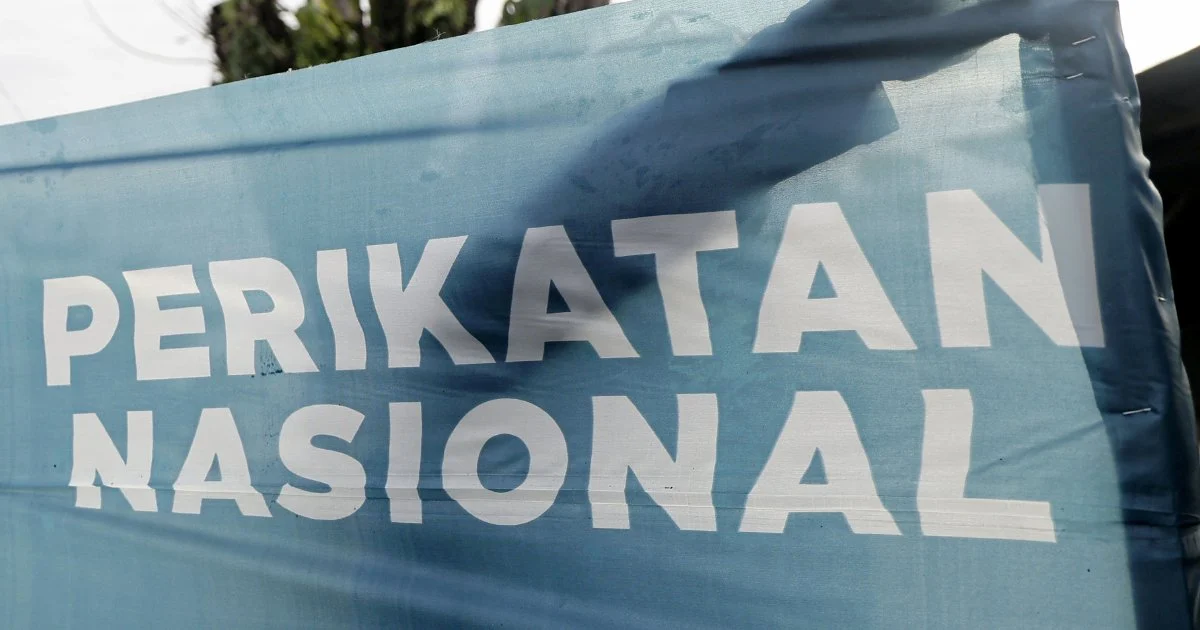
The Islamic Party of Malaysia (PAS) moved swiftly to distance itself from suggestions that it is actively campaigning in support of Bersatu during the Johor state election, drawing a sharp distinction between organizational arrangements and on-the-ground political collaboration. In a statement from its headquarters in Kota Baru, party officials clarified that while PAS remains committed to seat allocations negotiated under the broader Perikatan Nasional coalition umbrella, this structural commitment does not translate into coordinated campaign efforts or shared political messaging with Bersatu in the state contest.
The denial carries significant weight given the increasingly complex nature of coalition politics in Malaysia's eastern seaboard, where PAS has consolidated considerable influence. For years, PAS and Bersatu have existed as nominal partners within the PN framework, yet their grassroots activities and campaign strategies have often operated independently. This latest clarification from PAS suggests that the party intends to project its own distinct political identity in Johor rather than risk diluting its appeal by appearing as a junior partner to Bersatu, whose political trajectory has become notably turbulent following leadership changes and defections at the federal level.
The timing of PAS's statement reflects broader tensions within the PN coalition that have simmered beneath the surface of official unity proclamations. Bersatu, which entered the political arena more recently but with significant initial momentum, has struggled to maintain its early appeal and party cohesion. Meanwhile, PAS has positioned itself as the true custodian of conservative Malay-Muslim interests, particularly in states like Johor where its organizational network remains robust. By explicitly rejecting the notion that it is working hand-in-glove with Bersatu, PAS is essentially signalling to its supporters that it stands on its own merits rather than depending on an unstable coalition partner.
From a Malaysian electoral perspective, this distinction between seat allocation and active cooperation matters considerably. Voters in Johor will likely encounter separate PAS and Bersatu campaign machinery, distinct messaging, and potentially different policy emphasis, despite both parties technically being part of the PN alliance. This reality underscores how Malaysia's multi-party system frequently disguises internal fractures behind the facade of formal coalitions. Seat allocations function as marriages of convenience rather than expressions of ideological alignment, especially when older-established parties like PAS maintain deep historical roots in their constituencies while newer entrants like Bersatu lack comparable organizational depth.
The practical implications of PAS's position extend to voter behaviour and campaign dynamics across Johor. Constituents may perceive PAS as the primary vehicle for PN representation in their areas, with Bersatu playing a secondary role or even appearing irrelevant to local political contests. This could advantage PAS by allowing it to capture credit for any PN electoral success while simultaneously distancing itself from Bersatu's liabilities should the party face voter backlash. Such tactical positioning is not unusual in Malaysian politics, where coalition partners frequently manage their individual brand identities even while maintaining formal alliances.
PAS's statement also reflects calculations about its standing relative to other opposition and government-aligned forces contesting in Johor. The party recognizes that appearing overly dependent on Bersatu might alienate segments of its support base, particularly traditional PAS voters who associate the party with decades of Islamist activism and organizational independence. By emphasizing that seat allocations represent merely technical arrangements within a coalition framework rather than substantive political coordination, PAS preserves its narrative as an autonomous force pursuing its own vision for the state.
The broader context of this clarification involves the ongoing reconfiguration of Malaysia's political landscape following the 2022 general election and subsequent federal government formation. The PN coalition, which initially emerged as a powerful alternative during the 2020 electoral cycle, has since lost momentum and internal coherence. Bersatu's role in that coalition has become increasingly ambiguous following leadership disputes and the defection of key figures to other parties. PAS, by contrast, has maintained relatively stable internal dynamics and has focused on consolidating its grip over certain regions and demographic segments.
For Southeast Asian observers tracking Malaysian politics, PAS's position on cooperation with Bersatu exemplifies a broader pattern where electoral coalitions in the region frequently mask significant internal divisions and competing interests. Such arrangements allow parties to pool resources and coordinate campaign efforts at critical junctures while preserving organizational autonomy and distinct political identities. This hybrid approach enables smaller parties to remain relevant and larger parties to maintain flexibility in their alliance strategies.
The Johor election itself represents a critical test for the PN coalition's viability as a coherent political force. The state has historically served as a battleground where different political movements contest for influence, and results there often signal broader national trends. If PAS performs well while Bersatu struggles, it may further entrench the perception that PN functions primarily as a vehicle for PAS's ambitions rather than as a genuinely integrated coalition. Conversely, strong results for either party might reshape calculations about future cooperation arrangements and seat allocations.
PAS's denial of active cooperation with Bersatu ultimately reveals the pragmatic calculations underlying Malaysian coalition politics. Formal alliances serve important functions in distributing constituencies and coordinating candidacies, but they do not necessarily imply synchronized campaign strategies or unified political messaging. By making this distinction explicit, PAS signals both to voters and to potential coalition partners that it remains the master of its own electoral destiny, constrained only by pre-arranged seat allocations rather than by deeper ideological or organizational bonds with Bersatu. This approach allows PAS to maintain maximum flexibility while appearing to honor its coalition commitments.

