PAS president Hadi Awang has launched a pointed accusation against the Pakatan Harapan coalition and its Chinese-majority partner, the Democratic Action Party, claiming they deliberately exploited Islamophobic messaging to manipulate voter sentiment during recent electoral campaigns. The assertion represents an escalation in rhetorical tensions between Malaysia's Islamist-led opposition bloc and the broader political establishment, reflecting deep-seated anxieties about how religious identity intersects with electoral competition in the country.
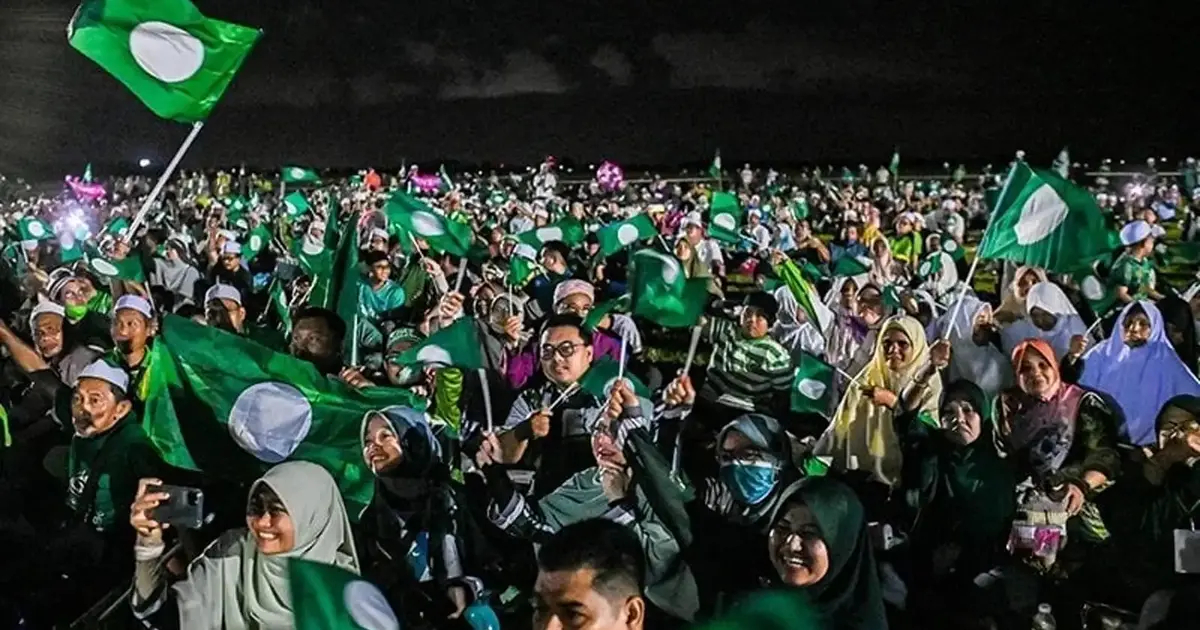
At the heart of Hadi's complaint lies the characterisation of PAS's political resurgence as a 'green wave'—a phrase laden with religious symbolism that the PAS leader contends has been weaponised to demarcate his party and its supporters as fundamentally other, potentially dangerous, and out of step with Malaysia's pluralistic values. The term, while ostensibly neutral in describing a surge in electoral support, carries implicit undertones that Hadi argues conflate Islamic political engagement with extremism or religious intolerance, thereby poisoning public discourse around legitimate ideological competition.
This accusation emerges within a broader Malaysian political context where religion has become an increasingly potent electoral variable. Stakeholders across the political spectrum have recognised that appeals to religious identity and concerns about communal security can mobilise significant voter blocs, particularly among the Malay-Muslim majority who constitute roughly two-thirds of the electorate. The charge that opposition parties have instrumentalised Islamophobia suggests Hadi believes the coalition has crossed ethical lines in pursuing electoral advantage by stoking unfounded fears about Islamic governance and Muslim political organisation.
PAS's grievance also reflects the party's historical positioning as a target of secular-leaning competitors who have cast it as theologically rigid or incompatible with liberal democratic norms. Throughout Malaysian political history, during periods when PAS or similar Islamist movements have gained ground, establishment actors have frequently raised alarm about the implications for religious minorities, women's rights, and constitutional secularism—concerns that, while sometimes substantive, have also served tactical purposes in delegitimising rival parties among urban, educated, and non-Muslim voters.
The 'green wave' framing exemplifies how electoral language itself becomes contested terrain. By deploying colourful, symbolically charged terminology, political communicators attempt to shape voter perception before substantive debate occurs. Hadi's objection signals PAS's awareness that terminology choices influence whether voters perceive his party's electoral strength as a natural democratic expression or as a threatening phenomenon requiring defensive action from established institutions.
However, the distinction between legitimate criticism of a political party's platform and Islamophobic rhetoric remains genuinely contested in Malaysian discourse. Critics of PAS often point to the party's documented positions on hudud law implementation, LGBTQ rights, and religious minorities as grounds for concern rather than Islamophobic bias. From this perspective, describing voter anxieties about these policy positions as 'Islamophobic' risks immunising PAS from accountability regarding specific governance proposals by reframing scrutiny as religious prejudice.
The accusation carries particular weight in the Malaysian context given the country's constitutional commitment to protecting Islam's special position, affirmative policies favouring Malays, and ongoing tensions around religious authority boundaries. The inversion whereby Hadi portrays his party as victimised by religious fear-mongering exists in tension with PAS's own mobilisation strategies, which have frequently emphasised Islamic identity and religious governance as differentiating factors from secular-oriented alternatives.
For Malaysian voters navigating these claims, the central challenge involves distinguishing between legitimate policy critique, communal concern about governance directions, and actual Islamophobic prejudice. The political discourse would benefit from greater precision in language—allowing space for serious discussion of specific policy positions while simultaneously protecting against ethnic and religious stereotyping that serves no analytical purpose beyond delegitimisation.
The broader implication for Malaysia's democratic development hinges on whether major political players can engage in substantive competition around governance, economic management, and resource distribution without recurring to identity-based fear campaigns. As Southeast Asia's most diverse large economy grapples with economic pressures, religious nationalism across multiple communities has gained political currency, making the management of identity-based messaging increasingly consequential for social cohesion.
Hadi's intervention also occurs within a regional context where similar tensions manifest across Southeast Asia. From the Philippines to Thailand to Indonesia, the question of how Islamic political movements navigate majoritarian electoral systems alongside commitments to democratic pluralism remains contentious, with international observers frequently framing such competitions as struggles between democratic values and religious authoritarianism—framings that domestic actors from diverse positions contest as misrepresenting their own motivations and concerns.
Moving forward, Malaysian political discourse might benefit from establishing clearer boundaries around acceptable campaign rhetoric while maintaining genuine space for ideological contestation. This requires political maturity from all sides: opposition players must engage PAS's substantive positions critically without recourse to religious stigmatisation, while PAS itself must articulate its governance vision with specificity that allows voters to assess policy implications rather than relying on identity signalling to mobilise supporters.
The controversy ultimately reveals how Malaysia's political system continues struggling with foundational questions about the proper relationship between religious identity, electoral competition, and democratic legitimacy—questions that, despite decades of independence and constitutional development, remain unresolved in ways that invite strategic manipulation by actors across the political spectrum.

