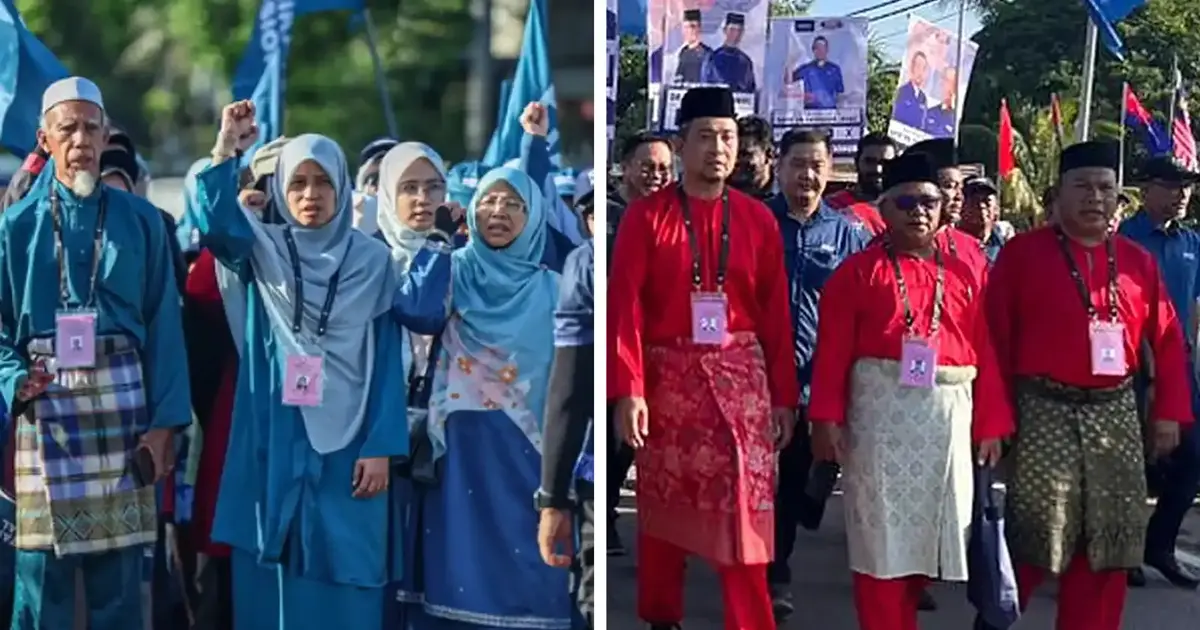
An ongoing schism between PAS and Bersatu has prompted political strategists to express concern that the two parties' independent campaign efforts in Johor may fundamentally damage their electoral credibility among voters, particularly if Perikatan Nasional fails to present a unified front in the state contest.
The fragmentation within Perikatan Nasional—the coalition that brought these parties together—threatens to undermine the electoral messaging both organisations have sought to cultivate. When major political allies run separate campaigns rather than coordinated efforts, constituencies become confused about where the coalition actually stands on key policy issues. This confusion translates directly into voter hesitation, as electorates struggle to identify a coherent alternative to the ruling coalition.
For PAS, which has traditionally relied on religious and grassroots networks to mobilise supporters, a divided Perikatan campaign complicates its ability to leverage these institutional advantages. The party has built significant presence in many Johor constituencies through Islamic organisations and community structures. However, this influence becomes diluted when voters perceive the parent coalition as dysfunctional or internally contested. Voters who might otherwise respond positively to PAS messaging may instead feel uncertain whether investing political support in the party represents a genuine attempt to form stable governance.
Bersatu faces a different but equally damaging challenge. The party entered Perikatan positioning itself as a reform-minded alternative to established political structures. Yet continued tensions with PAS—its primary coalition partner—suggest that Bersatu's reform agenda may clash fundamentally with the Islamist priorities that define PAS governance philosophy. This contradiction becomes particularly pronounced during campaign season, when both parties must make concrete promises about policy direction. Voters observing this friction reasonably conclude that a government formed from such partners might face paralysis over fundamental governance questions.
The broader context of Malaysian electoral politics makes this concern especially acute. Johor has traditionally served as a kingmaker in national politics, and the state's voting patterns significantly influence calculations about coalition viability at the federal level. When Perikatan appears fractured at the state level, it signals to national audiences that the coalition itself may lack the cohesion necessary for stable governance at any tier. This perception extends beyond Johor voters to encompass the broader Malaysian electorate, which increasingly demands political stability and clear governance mandates.
Analysts also note that independent campaigns by PAS and Bersatu create practical inefficiencies that reduce their competitive effectiveness. Campaign resources become duplicated across overlapping constituencies rather than concentrated in genuine battleground areas. Campaign messaging becomes inconsistent, with each party emphasising different priorities or attacking different opponents depending on local political calculations. This operational fragmentation means voters in key marginal constituencies may receive contradictory information about coalition priorities, making genuine voter engagement more difficult.
The historical performance of fragmented coalitions in Southeast Asian elections provides instructive precedent. When major political alliances present divided messaging to voters, the electoral punishment typically falls heaviest on the coalition itself rather than on unified opponents. Undecided voters who might gravitate toward coalition partners often shift toward the ruling coalition by default, reasoning that at least the incumbent government demonstrates organisational unity. This dynamic has repeated itself across the region whenever major opposition groupings have attempted to campaign while nursing significant internal fractures.
For Johor specifically, the stakes involve not merely state-level political positioning but also questions about who controls critical federal resources and appointments. Johor's size, economic importance, and role as a swing state mean that electoral outcomes carry consequences for national political balance. Perikatan's weakness in Johor directly benefits the ruling coalition, which can point to electoral results as validation of its governance approach. This reinforces the analytical concern that PAS-Bersatu divisions represent a strategic gift to the incumbent government.
The religious and ideological dimensions of the PAS-Bersatu relationship add additional complexity. PAS's Islamic framework and Bersatu's more secular-oriented approach have historically created tension within Perikatan. When these tensions become visible during campaigns—through competing policy announcements or differing responses to emerging issues—they expose the coalition's underlying structural fragility. Voters attuned to these ideological differences may conclude that the coalition represents merely a temporary convenience rather than a genuine political partnership built on shared vision.
Looking forward, analysts suggest that resolution of the PAS-Bersatu division requires more than cosmetic unity during the campaign period. Substantive discussion about governance priorities, policy frameworks, and power-sharing arrangements must precede any credible campaign effort. Without such foundation-building, both parties risk appearing to voters as though they are simply using each other to access electoral machinery, rather than pursuing coherent political objectives. This perception, once established, proves remarkably difficult to reverse during campaign cycles.
The broader implication extends to how Malaysian voters increasingly evaluate coalition viability. Rather than accepting traditional narratives about opposition unity, contemporary electorates demand evidence that coalition partners can actually work together on substantive governance matters. The PAS-Bersatu situation provides a real-time case study of what happens when coalition partners campaign without addressing fundamental structural questions about their ability to govern cooperatively. Unless Perikatan can transform its internal divisions into genuine unity—not merely for campaign purposes but for actual governance—voter confidence will likely remain depressed, regardless of how vigorously individual parties campaign in Johor.

