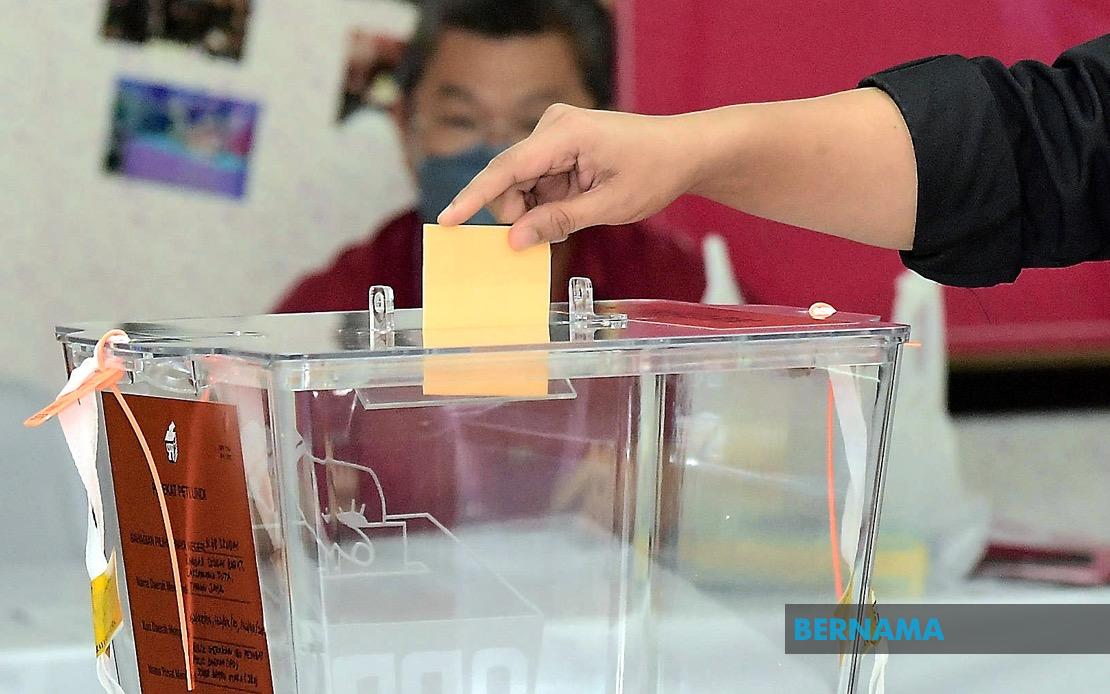
The Johor state election has concluded with the ruling Barisan Nasional securing a decisive mandate, prompting contrasting responses from the various parties that contested the 56-seat race. PAS, which campaigned as part of the Perikatan Nasional coalition, has moved swiftly to accept the verdict, signalling that the Islamic party remains committed to its broader electoral alliance despite failing to improve its position in Malaysia's southern economic powerhouse.
Datak Dr Mahfodz Mohamed, the Johor PAS commissioner, released a statement emphasising his party's respect for democratic principles and the choices made by local voters. Rather than dwell on any disappointing outcome, the senior PAS figure extended congratulations to Barisan Nasional and Menteri Besar Datuk Onn Hafiz Ghazi for securing sufficient seats to form a stable state government. This measured response reflects a pragmatic approach by PAS, which appears intent on maintaining party unity and coalition discipline ahead of the 16th General Election scheduled within the coming months.
PAS framed its continued participation within Perikatan Nasional not as a retreat but as a renewed commitment to its foundational principles. According to Dr Mahfodz's statement, the party views its ongoing struggle as focused on defending religious interests, promoting the rights of the Malay-Muslim community, and advancing public welfare. This positioning allows PAS to maintain narrative consistency with its supporters and grassroots base, even when electoral results prove unfavourable. The party's emphasis on preparation for the federal election underscores a strategic calculation that state-level setbacks should not overshadow its longer-term ambitions at the national level.
Within Perikatan Nasional itself, the broader coalition appears to have received a clear signal from voters regarding their electoral preferences. The results reveal that despite the Malay-Muslim alliance's combined efforts, the traditional Barisan Nasional retained its dominance in Johor, a state where it has held substantial control for decades. This dynamic suggests that voters in Johor, despite potential grievances or policy disagreements, continue to place confidence in the BN-led model of governance at the state level, even as the national political landscape has become more fluid and competitive.
Meanwhile, Bersatu, another component of Perikatan Nasional, took a different analytical approach to the Johor results. The party's secretary-general Datuk Seri Mohamed Azmin Ali indicated that Bersatu would undertake a thorough examination of the election outcome to extract lessons and develop more effective political strategies going forward. This commitment to detailed post-election analysis suggests internal recognition that the coalition's appeal requires refinement if it is to improve performance in future contests. Bersatu's approach implies a willingness to critically assess campaign messaging, candidate selection, and grassroots engagement mechanisms.
The most striking outcome concerned Parti Bersama Malaysia, led by Datuk Seri Rafizi Ramli, which fielded candidates across the state but achieved a complete shutout. All fifteen Bersama candidates failed to retain their election deposits—a financial penalty imposed when a contestant fails to garner the minimum threshold of votes required by electoral law. For a political party only fifty-two days old at the time of the Johor election, such a result represents a sobering introduction to Malaysian electoral realities. The scale of the defeat left no room for ambiguity about the party's initial market penetration among voters.
Rafizi's public response demonstrated maturity in handling organizational failure. Rather than attributing the poor outcome to external factors or questioning electoral fairness, he acknowledged the need for comprehensive reassessment of Bersama's approach to winning voter confidence. His Facebook statement framed the election campaign primarily as a learning opportunity for an infant political organization still establishing its identity, message coherence, and operational capacity. This candid acknowledgment of shortcomings, while politically risky, may help Bersama establish credibility if the party demonstrates genuine improvements in subsequent contests.
The broader implications of the Johor results merit consideration for Malaysian and Southeast Asian political observers. The resounding Barisan Nasional victory suggests that in this state, traditional institutions and established governance arrangements retain substantial legitimacy despite years of political upheaval at the national level. Barisan's capacity to secure 29 of 56 seats represents unambiguous control and reflects either effective political management or electorate preferences that have stabilized following the turbulent period from 2018 to 2022. The result defies any narrative suggesting that Malaysian voters across all contexts have rejected establishment politics.
For Perikatan Nasional as a broader coalition, however, the Johor outcome presents strategic challenges. The alliance between PAS, Bersatu, and other components failed to dislodge Barisan Nasional or demonstrably improve its collective position in a state where Malay-Muslim voters constitute a substantial proportion of the electorate. This raises questions about whether the coalition can effectively mobilize its supposed core constituency, or whether existing divisions within that constituency remain difficult to overcome. The result complicates Perikatan's messaging ahead of the federal election, where it must confront the reality that electoral preference even among potentially sympathetic voters has not shifted decisively in its favour.
Packtan Harapan's minimal performance in Johor, securing just two seats, underscores the continuing regional fragmentation of Malaysian electoral politics. The opposition coalition has struggled to establish comparable appeal in this state relative to its stronger performance in other regions, suggesting that state-level peculiarities in voter preference, campaign intensity, and organizational capacity continue to shape outcomes more significantly than broad national trends. This fragmentation complicates any unified opposition narrative and highlights the persistence of localized political dynamics.
The complete failure of newer political movements including MUDA, Parti Orang Asli Malaysia, Parti Sosialis Malaysia, and independent candidates to win any seats demonstrates the formidable barriers facing political organizations outside the established coalitions. Malaysian electoral dynamics continue to advantage organized parties with substantial resources, established networks, and recognized brands. The threshold effects embedded in Malaysia's first-past-the-post electoral system make breakthrough outcomes exceptionally difficult for nascent movements, effectively preserving the dominance of established players despite voter frustration with political establishments.
Looking forward, the post-election statements from both Perikatan Nasional components and the emerging Bersama party signal continued organizational commitment to the electoral process rather than disengagement or fundamental strategic reassessment. Both PAS and Bersatu appear determined to learn from the Johor experience and adjust tactics accordingly. For Bersama, the critical challenge involves demonstrating that the party can translate internal learning into improved performance before voter skepticism about its viability becomes entrenched. The coming months will reveal whether these post-election commitments to strategic review translate into meaningful organizational changes that might alter trajectory in future contests.

