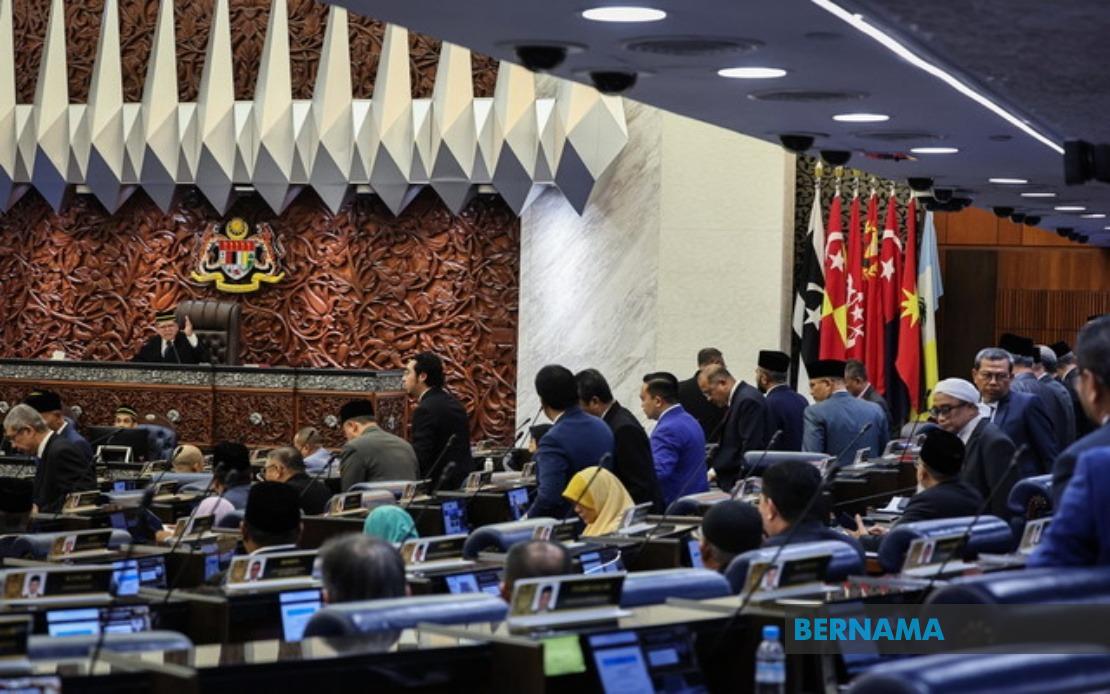
Opposition Members of Parliament belonging to Perikatan Nasional staged a walkout from the Dewan Rakyat during what should have been a crucial debate on the Tabung Haji (TH) Royal Commission of Inquiry report, with party leaders including Opposition Leader Hamzah Zainudin, PN Chief Whip Takiyuddin Hassan and PN Chairman Samsuri Mokhtar all leaving the chamber in protest. The parliamentary exodus was triggered by the absence of Prime Minister Anwar Ibrahim and Deputy Prime Minister Fadillah Yusof, both currently receiving medical treatment, prompting Takiyuddin to call for an adjournment of the special sitting entirely.
The walkout decision has sparked considerable debate about the effectiveness and appropriateness of using Parliament as a platform for political demonstrations. According to Universiti Sains Malaysia Professor Datuk Dr Sivamurugan Pandian, while the move generated immediate headlines and symbolised the Opposition's displeasure with leadership absenteeism, it may have ultimately undermined the very cause the MPs claimed to champion. The gesture conveyed that procedural objections took precedence over substantive engagement with matters affecting millions of depositors who have entrusted their savings to the Islamic pilgrimage fund.
The timing and substance of the TH debate carried significant weight in Malaysian political discourse. The RCI report, publicly released on July 29 after the government determined its findings warranted public knowledge, represented an important document for parliamentary scrutiny and accountability. The special sitting provided lawmakers with a rare opportunity to systematically examine the commission's findings, raise questions directly on the parliamentary record, and propose concrete solutions to address systemic issues that had affected countless Malaysians. By vacating their seats, the Opposition forfeited the chance to embed their criticisms and alternative proposals into official parliamentary documentation.
Pandian emphasised that a fundamental tension exists between symbolic protest and substantive legislative action. Walkouts undoubtedly generate publicity and visibly communicate displeasure to the public and media observers. However, this form of protest lacks the enduring force of recorded parliamentary debate. In a system premised on checks and balances, having arguments, statistics, and policy proposals formally entered into Hansard—the official parliamentary record—carries legal and political weight that a gesture of absence simply cannot replicate. The Opposition's departure meant that whatever concerns they harboured about the TH situation would not be permanently documented as part of parliamentary discourse.
Notably, the Opposition bloc itself demonstrated internal disagreement over the walkout strategy, with some PN-affiliated MPs choosing to remain in the chamber despite the leadership's decision to leave. This fracture within the Opposition raised questions about the consensus underpinning the protest. When party discipline visibly breaks down, it suggests uncertainty about whether the chosen tactic truly serves the party's stated objectives. The divergence also muddied the political message the Opposition intended to send, weakening its coherence and potentially confusing both colleagues and constituents about the principled reasoning behind the action.
The absence of the Prime Minister and Deputy Prime Minister, while genuine due to health considerations, created a legitimate grievance about the symbolic importance of executive presence during parliamentary proceedings of national consequence. Policymakers and depositors alike might reasonably expect the highest elected officials to personally engage with matters of such magnitude as the future governance and financial stability of Tabung Haji. Pandian acknowledged that this concern possessed genuine merit and warranted political acknowledgment. However, he questioned whether abandoning the parliamentary arena represented the most effective channel for expressing and acting upon that concern.
Alternative strategies remained available to the Opposition within parliamentary rules and conventions. By remaining seated and actively participating in debate, Opposition MPs could have raised detailed questions about specific RCI findings, demanded clarification on implementation timelines, proposed amendments to recommended reforms, and forced government members to defend their positions on the record. This approach would have occupied the same amount of parliamentary time but with substantially greater substantive output. The publicity generated by a vigorous, well-articulated parliamentary assault on government weaknesses often rivals or exceeds the attention garnered by a walkout, particularly when the debate itself contains compelling revelations or confrontational exchanges.
From the perspective of Tabung Haji depositors—the ultimate stakeholders in this matter—the walkout presented a complicated legacy. On one hand, it signalled that the Opposition rejected any attempt to downplay the significance of the debate through executive absence. On the other hand, it meant that the Opposition squandered an opportunity to formally document its assessment of the RCI's adequacy, propose alternative solutions, and establish clear policy positions that could guide future legislative action or electoral campaigns. Depositors seeking reassurance that Parliament took their interests seriously witnessed their representatives exit rather than engage, a message potentially read as indifference cloaked in procedural objection.
The incident illuminates a broader tension in parliamentary democracy regarding the proper uses of protest mechanisms. Democratic systems require the capacity for lawmakers to express dissent and register objection to executive action or inaction. Yet that same system depends on sustained engagement and debate to function effectively as a check on executive power. A parliament filled with symbolic walkouts but empty of substantive argument becomes theatre rather than governance, and citizens—particularly those with concrete grievances like TH depositors—derive little practical benefit from mere theatrical gestures.
Pandian's analysis suggested that a more potent strategy would have combined both elements: MPs could have walked out to register their objection to the Prime Minister's absence, generating initial media attention, but then returned to the chamber with prepared statements, questions, and proposals ready for deployment. This two-stage approach would have captured publicity while preserving the substantive record. Alternatively, Opposition leaders might have articulated in advance that their absence itself constituted a statement, while explicitly committing to submit detailed written responses to the RCI report for official parliamentary consideration. Such hybrid approaches bridge the gap between symbolic protest and substantive accountability.
The walkout also raised questions about parliamentary culture and expectations regarding executive attendance at critical debates. If the absence of senior leadership becomes normalized or accepted without robust parliamentary response, it risks establishing a precedent that weakens Parliament's ability to compel executive engagement on matters deemed important by members. Conversely, if every absence triggers an automatic walkout, Parliament risks transforming into an institution where form consistently trumps substance. Finding equilibrium between these extremes requires sophisticated judgment about which circumstances truly justify exceptional responses, and which are better addressed through sustained legislative work.
Moving forward, the TH debate episode offers instructive lessons for Malaysian parliamentarians across party lines. The most effective opposition—the kind that genuinely advances citizen interests—combines visible, dramatic signals of disagreement with meticulous, detailed, documented critiques. For Tabung Haji specifically, the depositors deserve nothing less than Parliament's full analytical capacity deployed on their behalf, regardless of which party occupies the opposition benches or how executive leaders choose to schedule their time. The walkout may have won a tactical point in the perpetual game of parliamentary theatre, but the strategic advantage belonged to whoever came best prepared to translate outrage into specific, actionable proposals for reform.

