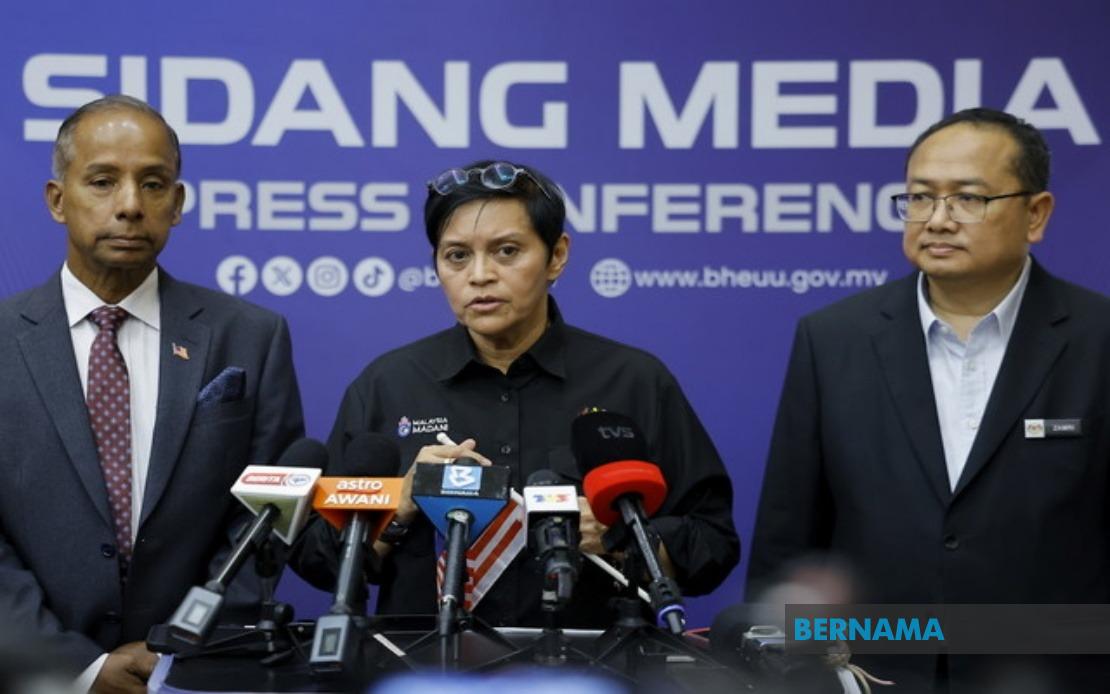
Malaysia's proposed Freedom of Information Bill 2026 will face formal Parliamentary scrutiny beginning tomorrow when a Select Committee convenes for its inaugural session to establish how the landmark transparency legislation should be evaluated. Datuk Seri Azalina Othman Said, Minister in the Prime Minister's Department (Law and Institutional Reform), announced the schedule after a department gathering in Putrajaya, indicating the government intends to move swiftly through the committee process before the measure reaches the full Parliament.
The Select Committee, which Azalina will lead, represents a strategic decision to allow wider deliberation beyond the traditional government-dominated legislative passage. The approach incorporates bipartisan participation, suggesting the administration recognises the political sensitivity surrounding access-to-information frameworks in Malaysia's current governance landscape. This methodology mirrors international practices where transparency legislation receives cross-party examination before parliamentary votes, lending credibility to the eventual outcome regardless of which coalition controls the chamber.
Tomorrow's agenda focuses entirely on finalising the committee's terms of reference—essentially establishing the scope, timeline, and criteria by which members will assess the Bill. This procedural foundation matters considerably because it will determine whether the committee conducts a narrow legalistic review or undertakes broader examination of implementation practicalities, international comparisons, and constitutional implications. The decision shapes whether subsequent parliamentary debates will encounter well-developed critiques or primarily rehash initial government positions.
The government has explicitly committed to incorporating diverse stakeholder viewpoints into the committee's deliberations. Non-governmental organisations, professional bodies, and civil society groups have already submitted commentary, with many advocating for substantially broader provisions than the current draft encompasses. This tension between the government's cautious initial proposal and stakeholder demands for expansive access rights will likely dominate tomorrow's discussions and subsequent committee meetings.
The Bill establishes a foundational mechanism allowing Malaysian citizens aged eighteen and above to submit written applications requesting access to information held by public authorities. While this represents the first systematic national framework for such requests, it remains considerably constrained by existing secrecy legislation. Notably, any information classified under the Official Secrets Act 1972 remains exempt, as do documents protected under other written laws, meaning substantial categories of government records remain inaccessible regardless of the Bill's passage.
This preservation of existing secrecy provisions reflects longstanding Malaysian governmental approaches to information control, where national security, internal government deliberations, and commercial sensitivities typically justify withholding vast document collections. The tension between transparency principles and security protections will substantially occupy committee discussions, particularly given international experience demonstrating that exemption clauses often expand during implementation to cover increasingly broad categories of materials.
The committee's timeline aims for recommendations before Parliament's next sitting, indicating the government seeks relatively rapid legislative passage without extended deliberation. This compressed schedule contrasts with transparency legislation processes in comparable democracies, where multi-year consultations often precede parliamentary votes. The Malaysian approach suggests the administration views the Bill's passage as significant for international standing and domestic governance reform, but not sufficiently contentious to warrant extended delay.
For Malaysian citizens and regional observers, this legislation carries implications extending beyond procedural transparency. Access-to-information frameworks fundamentally reshape citizen-state relationships by establishing enforceable rights rather than discretionary administrative practices. Effectively implemented, such laws generate public information pools enabling civil society scrutiny, journalistic investigations, and academic research that might challenge government narratives. Conversely, poorly designed frameworks with expansive exemptions function primarily as political theatre, creating appearance of transparency while preserving governmental information monopolies.
The committee's bipartisan composition suggests opposition parties will participate in shaping the legislation's final form, potentially moderating some government preferences while gaining institutional credibility for whatever emerges. This collaborative approach differs markedly from partisan legislative battles where majority coalitions impose measures against minority opposition, instead positioning the resulting Bill as reflecting broader Parliamentary consensus. For stakeholders arguing the current draft proves insufficiently expansive, committee participation offers advocacy opportunities though success remains uncertain given the administration's apparent comfort with exemption-heavy frameworks.
Regional context matters considerably here. Singapore, Thailand, and Indonesia maintain varying transparency regimes, with Singapore notably restrictive and Indonesia relatively open compared to current Malaysian proposals. The Bill's scope and implementation will position Malaysia within regional transparency hierarchies, potentially affecting foreign investor confidence, international governance rankings, and civil society organisational work. Countries perceived as genuinely improving transparency access often experience enhanced reputational benefits beyond the specific information released.
Azalina's leadership of the Select Committee indicates the Prime Minister's Department views this legislation as significant institutional priority requiring ministerial-level attention rather than delegation to junior parliamentary officials. Her previous involvement in similar parliamentary processes suggests she understands the political sensitivities, suggesting the committee may navigate stakeholder demands more skilfully than initially apparent. However, the minister's comments acknowledging concerns about the Bill's narrowness suggest government willingness to consider modifications, though determining whether such openness extends to fundamental scope expansion or merely superficial amendments remains unclear.
The coming weeks will reveal whether the Select Committee functions as genuine deliberative body integrating stakeholder input into substantially revised legislation, or as procedural mechanism legitimising predetermined government positions. Malaysian civil society groups have invested considerable effort articulating detailed critiques and alternative proposals, making committee performance measurable against their specific recommendations. The extent to which Azalina's committee incorporates such feedback will indicate whether transparency legislation in Malaysia genuinely advances citizen access to government information or primarily signals reform without delivering meaningful institutional change.

