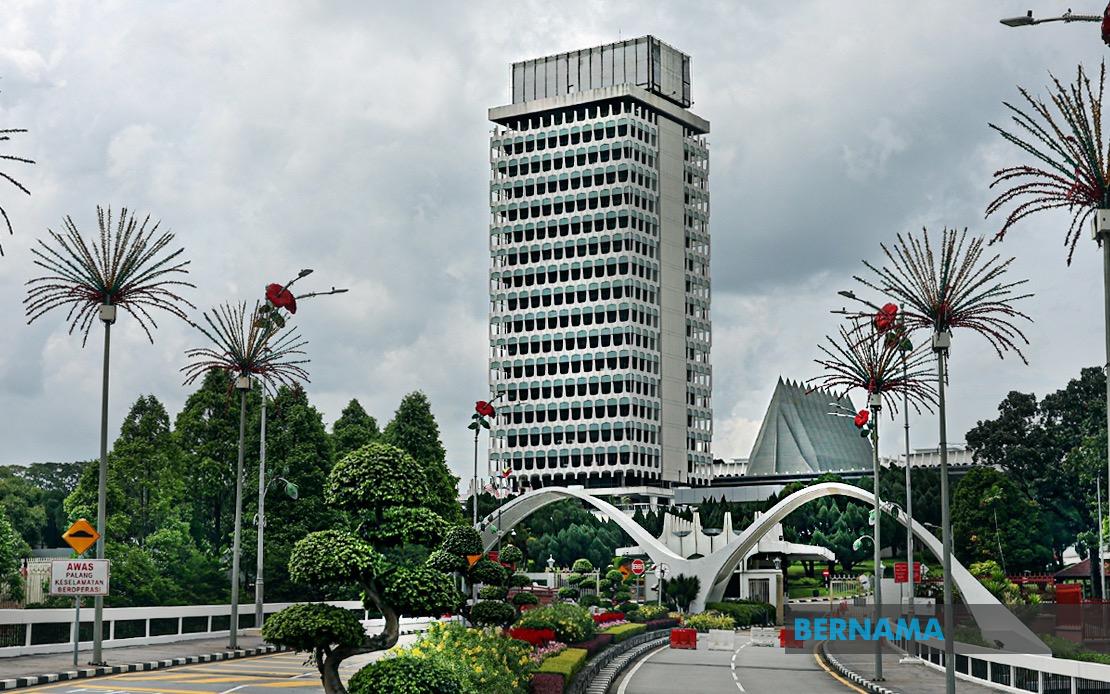
The Dewan Rakyat will convene today to examine three substantive policy matters that reflect mounting concerns across infrastructure planning, consumer protection, and digital regulation in Malaysia. The parliamentary session, which extends through July 16, has scheduled discussions on water resource expansion in Johor, the operational capacity of the Malaysia Competition Commission (MyCC) to police housing market conduct, and the government's approach to verifying user ages on social media platforms. These three distinct agenda items collectively signal Parliament's engagement with infrastructure vulnerability, market competition dynamics, and the regulatory challenges posed by digital platforms.
Water security remains among Malaysia's most pressing long-term infrastructure challenges, particularly in Johor, which serves as a critical economic zone and residential hub. Suhaizan Kaiat (PH-Pulai) will direct the Energy Transition and Water Transformation Minister to articulate the government's comprehensive strategy for augmenting Johor's water resource capacity during Question Time. The inquiry specifically invites elaboration on planned dam construction, the expansion of water treatment facilities, and the integration of recycled water systems to accommodate rising consumption patterns. Johor's water demand has intensified due to rapid urbanization and industrial expansion, making strategic planning essential for averting supply constraints that could undermine both economic productivity and residential stability.
Recycled water initiatives represent an increasingly vital component of water security frameworks across Southeast Asia. As freshwater reserves face mounting pressure from demographic growth and climate variability, engineered recycling systems offer a complementary supply source, reducing dependence on conventional reservoirs and groundwater extraction. The Malaysian government has invested in wastewater reclamation projects, yet their integration into mainstream supply chains remains uneven. Johor's particular geography and existing infrastructure present both opportunities and obstacles for scaling recycled water programs, which explains why parliamentary scrutiny on this dimension carries practical significance for regional water planning.
The second focus area concerns the Malaysia Competition Commission's capacity to investigate and deter anti-competitive behaviour in the housing sector. Datuk Seri Ismail Abd. Muttalib (PN-Maran) will ask the Domestic Trade and Cost of Living Minister what measures the ministry intends to adopt for fortifying MyCC's surveillance capabilities in tracking residential property pricing strategies and bundled packages. This inquiry acknowledges longstanding complaints from consumers and advocacy groups regarding alleged price coordination among developers and suspected market manipulation in residential real estate. Housing affordability has become a flashpoint in Malaysian politics, with rising property prices outpacing income growth for many households, particularly younger buyers.
The housing market's resistance to competitive pressure stems partly from structural factors—land scarcity, regulatory frameworks, and the concentration of development rights among major players—yet also reflects enforcement gaps. MyCC operates within defined statutory powers, and questions regarding its effectiveness in combating collusive practices or detecting price-fixing mechanisms in property markets touch on institutional resource allocation and investigative methodology. Stronger oversight mechanisms could theoretically deter anti-competitive practices, though implementation requires coordination between MyCC, the Ministry of Domestic Trade, state authorities managing land matters, and local councils overseeing approvals. The parliamentary inquiry will pressure the government to clarify its commitment to deploying regulatory tools more assertively.
Social media age verification represents the third thematic strand, reflecting global regulatory trends toward protecting minors in digital environments. Syahredzan Johan (PH-Bangi) will ask the Communications Minister to explain the government's rationale for mandating age verification on licensed social media platforms and to elaborate on safeguards protecting user privacy during the verification process. Specifically, he will seek assurances that licensed service providers receive only limited and proportionate personal data, and that collected information is deleted once verification purposes are served. This line of questioning balances child protection imperatives against the legitimate privacy concerns of users and the practical challenges of designing age verification systems that avoid creating invasive personal data repositories.
Age verification technologies present genuine technical and privacy trade-offs. Verification methods range from document-based systems requiring identity disclosure to behavioural and biometric approaches, each with distinct privacy implications. Malaysia's communications regulator and platform operators must navigate competing objectives: protecting minors from harmful content exposure, respecting user privacy, preventing data misuse, and ensuring that verification mechanisms do not inadvertently create surveillance infrastructure or consolidate personal information across government and private sector entities. The parliamentary discussion will likely highlight these tensions and press the government to establish clear guardrails around data handling, retention periods, and oversight mechanisms.
These three questions also reflect broader parliamentary engagement with institutional capacity and regulatory coherence. Water management, competition policy, and digital regulation each require sustained oversight, adequate resourcing, and coordination across multiple agencies. The Dewan Rakyat's parliamentary questions serve as public accountability mechanisms, compelling ministers to articulate their government's strategic intentions and to respond to substantive critiques from backbenchers across the political spectrum. The questioning of Suhaizan Kaiat (PH), Datuk Seri Ismail Abd. Muttalib (PN), and Syahredzan Johan (PH) indicates that these policy domains command cross-party concern, even if opposition and government lawmakers may differ on specific remedies.
Water security, housing affordability, and digital governance represent interconnected challenges shaping Malaysia's trajectory toward 2030 and beyond. Urbanization, climate variability, technological adoption, and consumer expectations all converge on these policy areas. Parliamentary scrutiny, while not directly producing legislative change, establishes evidentiary records, exposes implementation gaps, and creates political pressure for executive action. The 16-day sitting affords Parliament extended opportunity to debate substantive matters beyond routine government business, with these three questions exemplifying the range of constituencies whose interests intersect with state capacity and regulatory performance.