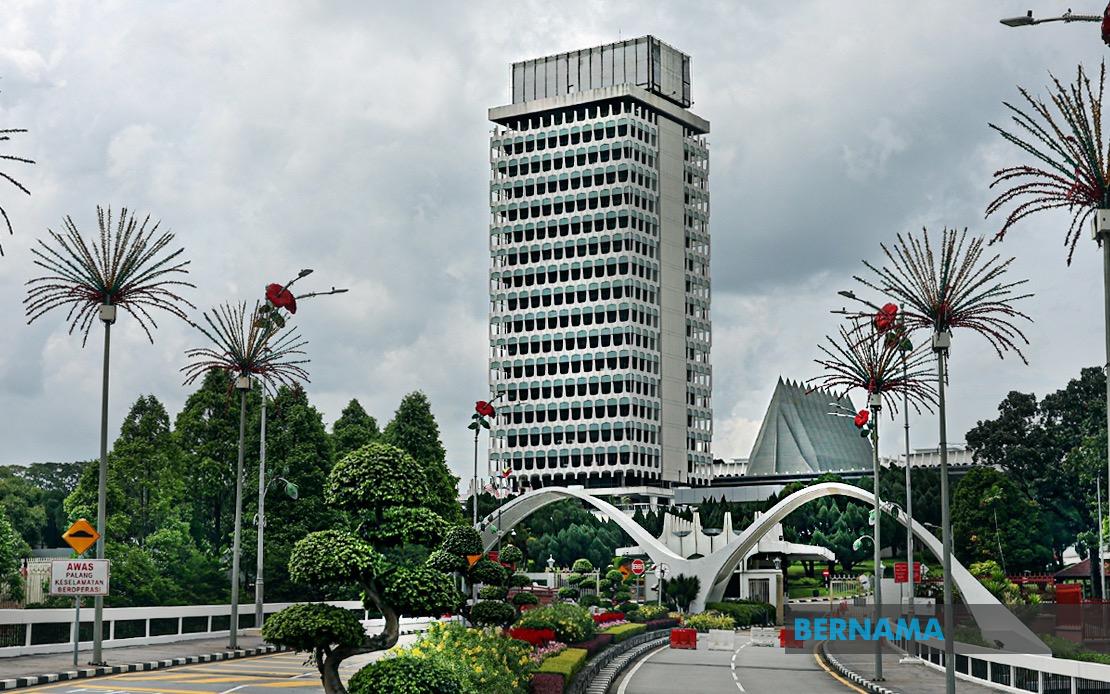
Parliament is set to scrutinise critical policy implementation across digital regulation, education safety and economic resilience today, with lawmakers raising questions spanning the rollout of Malaysia's landmark Online Safety Act 2025 and its supporting framework, the protection of students within school premises, and targeted aid for micro-entrepreneurs struggling with logistics inflation triggered by the West Asia conflict.
Among the most anticipated exchanges will centre on the Online Safety Act 2025 (Act 886), which introduces comprehensive digital governance mechanisms for the nation. Rodziah Ismail, the Ampang representative from Pakatan Harapan, will press the Communications Minister for granular details on ten subsidiary instruments—encompassing regulations, guidelines and operational directives—that sit beneath the primary legislation. Her questions will seek clarity on the regulatory intent underpinning each instrument, their substantive provisions, jurisdictional scope and the current completion timeline for each component. This line of questioning reflects growing parliamentary interest in how abstract legislative intent translates into workable enforcement machinery, a concern particularly acute in technology-focused legislation where technical standards and definitions carry enormous practical weight.
The subsidiary instruments framework represents a deliberate government approach to embedding flexibility within the Act's architecture. Rather than encoding every detail in primary legislation—which requires full parliamentary amendment to adjust—the government has opted to house operational specifications in secondary instruments capable of faster revision as digital threats and technological capability evolve. Nonetheless, this structure has drawn scrutiny from MPs and civil society observers concerned about adequate transparency and parliamentary oversight during the regulations development phase. Malaysia's experience with previous digital legislation, including the Personal Data Protection Act, has demonstrated that subsidiary instrument details often determine whether legislation achieves its stated protective purpose or instead creates unintended compliance burdens on businesses and individuals.
Education safety will form a second major focus, with Roslan Hashim from Perikatan Nasional's Kulim Bandar Baharu constituency raising comprehensive questions to the Education Minister regarding pupil security across Malaysia's school network. Beyond the headline concern of preventing fatal accidents, Hashim will probe institutional measures designed to combat bullying—a persistent problem in Malaysian schools documented in multiple academic studies and parental complaints—and broader threat mitigation. The question signals renewed parliamentary attention to school governance following several high-profile incidents in recent years. School safety encompasses physical infrastructure, staff training, mental health support systems, and reporting mechanisms for incidents, suggesting that Hashim's inquiry will likely elicit discussion of whether current resource allocation and policy frameworks adequately address these interconnected dimensions.
The West Asia crisis's economic spillover effects form a third parliamentary priority. Andi Muhammad Suryady Bandy, representing Kalabakan under Barisan Nasional, will ask Finance Minister for immediate relief mechanisms targeting hawkers, small traders and MSMEs experiencing acute stress from elevated logistics costs and fractured supply chains. The regional instability has disrupted shipping routes, elevated insurance premiums and extended delivery timelines—particularly affecting Malaysia's substantial informal economy and small retail sector that typically operate on thin margins and lack hedging capacity available to larger corporations. This question reflects a pragmatic recognition that while Malaysia's economy is globally integrated and resilient, discrete population segments—particularly those in food and beverage retail, informal trade and small manufacturing—face disproportionate hardship from supply shocks originating beyond national borders.
Transport infrastructure will also feature, with Wee Ka Siong, the Ayer Hitam member from Barisan Nasional, seeking an implementation update on the Johor Elevated Autonomous Rapid Transit (E-ART) project. This megaproject represents a significant technological bet on autonomous transit systems, and parliamentary monitoring of its progress serves both accountability and information-sharing functions, particularly relevant for the wider Johor business and residential community planning around transport assumptions.
Cybersecurity policy intersects with social media regulation in another question from Independent representative Riduan Rubin of Tenom, who will ask the Home Affairs Minister to assess national cybersecurity implications of potentially implementing a minimum age requirement of 16 for social media platform access. This question touches a sensitive intersection of child protection and national security: while age restrictions aim to shield younger users from harmful content and predatory behaviour, implementing and enforcing such rules across foreign-controlled platforms raises complex questions about data verification, compliance monitoring and potential cyber vulnerabilities created by age-gating infrastructure.
The Competition (Amendment) Bill 2026 will simultaneously proceed to second reading, enabling lawmakers to debate whether proposed amendments to Malaysia's competition framework adequately address contemporary market dynamics, digital platform dominance, and cross-border trading patterns. The tabling of this amendment bill during the current parliamentary sitting will permit substantive examination of whether existing competition provisions remain fit for purpose in an economy increasingly shaped by technology giants, e-commerce integration and regional trade arrangements.
The current parliamentary sitting, forming the Second Meeting of the Fifth Session of the 15th Parliament, is scheduled to extend for 16 consecutive sitting days concluding on July 16. This extended calendar permits thorough examination of complex policy matters and legislative texts without compression that might otherwise truncate debate. The diversity of topics on today's order paper—spanning digital regulation, school administration, small business welfare, transport infrastructure, social media policy and competition law—reflects the broad portfolio of government responsibilities and the parliament's expanding engagement with technology-inflected policy challenges that cut across traditional sectoral boundaries. For Malaysian stakeholders in commerce, education, digital rights and regional supply chains, the parliamentary exchanges today will provide early signals regarding implementation timelines and policy priorities that will shape their regulatory environment and operational conditions in coming months.

