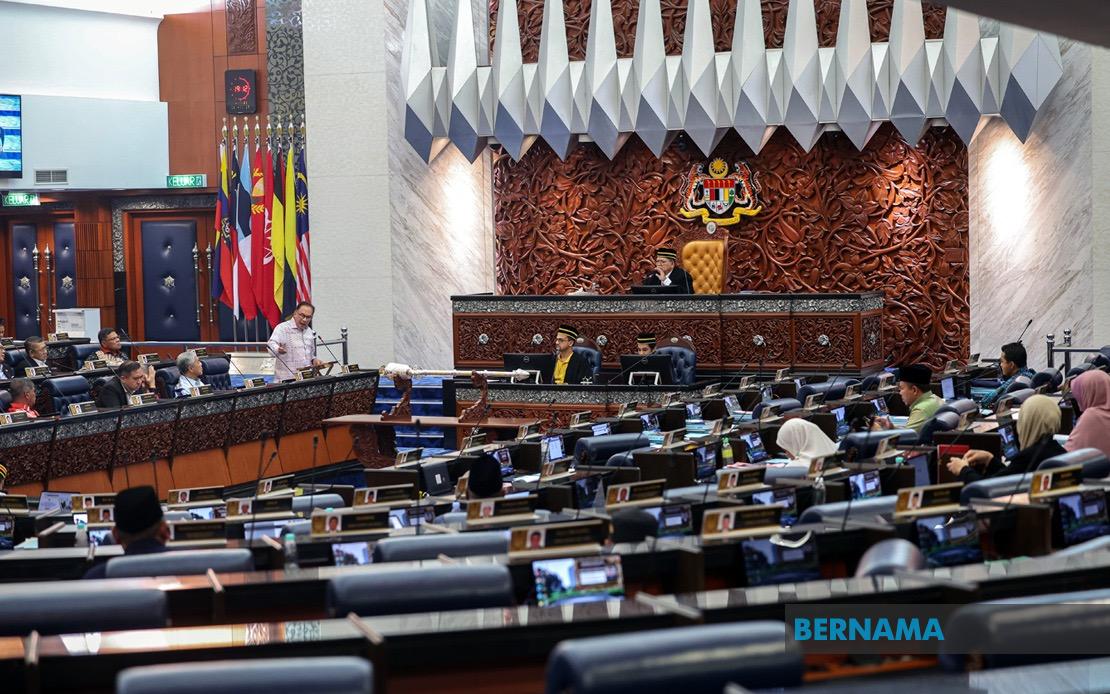
Legislators in the Dewan Rakyat have coalesced around the need for sweeping improvements to Malaysia's response to child sexual crimes, signalling rare consensus on protecting minors from exploitation. During parliamentary debate on the Sexual Offences Against Children (Amendment) Bill 2026, representatives from both government and opposition benches outlined proposals to strengthen enforcement, close legal gaps, and ensure perpetrators cannot evade justice regardless of where they commit offences.
The thrust of parliamentary sentiment reflected growing concern that Malaysia's current legal and administrative frameworks contain vulnerabilities that sophisticated offenders exploit, particularly those operating across borders. Abd Ghani Ahmad from PN-Jerlun emphasized that reliance on existing tools like the Mutual Legal Assistance mechanism and extradition protocols remains insufficient without deliberate expansion of these frameworks. His intervention highlighted how transnational child predators calculate the risk of prosecution when selecting jurisdictions, suggesting that Malaysia's perceived enforcement gaps make it an attractive location for crimes that would face harsher consequences elsewhere.
Coordination among domestic agencies emerged as a critical failure point that multiple speakers identified. The fragmented nature of Malaysia's response—spread across the Royal Malaysia Police, Immigration Department, Attorney-General's Chambers, Department of Social Welfare, hospitals and schools—creates delays and lost evidence opportunities. Doris Sophia Brodi from GPS-Sri Aman proposed consolidating these scattered efforts through a dedicated task force focused specifically on digital sexual crimes against children. This specialization represents a significant shift in thinking, acknowledging that online exploitation requires investigators versed in digital forensics and technological grooming tactics, skills often peripheral to traditional criminal investigation training.
The digital dimension of child exploitation received sustained attention throughout debate, reflecting the reality that internet-facilitated abuse now constitutes a substantial and growing portion of offences. Brodi's call for embedding digital safety education within school curricula and equipping parents with knowledge of grooming warning signs signals recognition that prevention must reach beyond law enforcement into educational institutions and family units. This upstream intervention approach acknowledges that detection and prosecution, while necessary, arrive too late for children already victimized.
Victim rehabilitation emerged as a notably underfunded and fragmented component of the system. Mas Ermieyati Samsudin from PN-Masjid Tanah articulated a gap that extends beyond legal punishment into the realm of recovery and reintegration. Her proposal for a specialized prosecution unit targeting child sexual offences, coupled with expanded access to child psychology experts in public facilities and a dedicated victim support fund, suggests that Malaysia's current victim assistance falls short of addressing psychological trauma, legal expenses and extended recovery needs. This vision positions victim welfare not as incidental to justice but as integral to it.
A National Child Sexual Offender Registry with controlled access emerged as another focal proposal, with Young Syefura Othman from PH-Bentong advocating for mechanisms preventing convicted offenders from obtaining positions near children. Her call for mandatory background screening across welfare homes, nurseries, kindergartens, tahfiz centres and community organizations reflects evidence that repeat offenders often deliberately seek employment or volunteering opportunities providing access to vulnerable populations. The institutional landscape she identified—encompassing religious institutions and sports clubs alongside schools—underscores how child sexual abuse transcends single sectors and demands sector-wide vigilance.
The amendment to the Sexual Offences Against Children Act 2017 directly addresses jurisdictional constraints that currently allow Malaysia-domiciled individuals to commit offences abroad without facing domestic prosecution. This extraterritorial expansion closes a significant loophole where perpetrators exploit differences in enforcement intensity between countries, committing crimes in jurisdictions with weaker law enforcement then returning home. The proposition recognizes that geographical borders should not insulate Malaysian nationals from accountability, a principle requiring legislative backing and mutual recognition agreements with trading and neighbouring nations.
RSN Rayer's emphasis on strengthening the investigative workforce highlights resource constraints that undermine existing legal frameworks. Even with enhanced laws, investigation teams handling child sexual crimes typically lack specialized training and remain understaffed relative to caseloads. This speaks to a broader budgetary reality where child protection, despite political rhetoric, often receives peripheral resource allocation compared to other law enforcement priorities. Expanding investigative capacity requires sustained political will to fund recruitment and training, not merely legislative gestures.
The 26 MPs participating in debate across parliamentary benches demonstrated that child protection commands cross-party support in Malaysia, a rare convergence on a values issue that transcends typical political divisions. This consensus likely reflects constituent pressure and recognition that child abuse crosses socioeconomic, ethnic and religious boundaries, affecting voters across all demographics. Such alignment, however, must translate into budget appropriations and administrative capacity-building—areas where political commitment often falters after legislative sessions conclude.
Implementing the cumulative proposals from parliament would require coordinated action spanning law enforcement, victim services, education and international diplomacy. Malaysia's success depends not merely on amending legislation but on building specialized human capital, securing funding streams, and establishing inter-agency protocols that prioritize evidence preservation and victim welfare. Regional cooperation will prove equally essential, as child exploitation networks routinely cross Southeast Asian borders, necessitating harmonized legal standards and information-sharing mechanisms with Thailand, Indonesia, Singapore and other neighbouring states.
The amendment represents Malaysia's acknowledgment that current protections remain inadequate against evolving exploitation methods and transnational offender networks. Parliamentary debate signals political readiness to strengthen frameworks, yet the transition from rhetorical consensus to operational reality requires sustained attention to implementation challenges that extend beyond lawmaking into budgets, training, technology and institutional culture—areas where parliamentary oversight and public accountability become essential to ensuring promises translate into protection.

