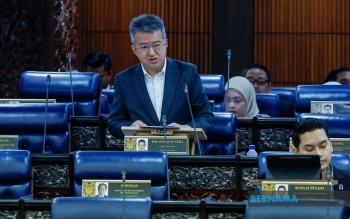
Malaysia's parliament has given its approval to landmark legislation designed to overhaul the governance and operational structure of the National Trust Fund, commonly known as KWAN. The measure, advanced by Deputy Finance Minister Liew Chin Tong in the Dewan Rakyat on July 16, represents a significant recalibration of how Malaysia manages intergenerational wealth accumulation. The passage of the National Trust Fund Bill 2026 follows extended parliamentary debate and securing support from the majority of legislators who weighed its implications for the nation's fiscal stewardship and future economic resilience.
The legislative framework addresses persistent structural weaknesses that have characterised the fund's operation since its inception nearly four decades ago. When KWAN was established in 1988, the architects envisioned a mechanism to set aside resources for future generations, yet the actual mechanics relied entirely on the voluntary goodwill of contributors. This discretionary arrangement created chronic instability, with fund inflows contingent on government budgetary priorities and corporate philanthropy rather than established legal obligation. Petronas, the national petroleum company, has been the fund's sole meaningful contributor throughout its existence, channeling RM13.5 billion into reserves over the intervening years as of the close of 2024.
The fund's accumulated assets presently stand at RM22.43 billion, a substantial sum that nonetheless reflects inconsistent stewardship. The absence of coherent withdrawal protocols and clear governance structures became painfully apparent during the 2021 episode, when RM5 billion was extracted from the fund in circumstances that generated considerable public scrutiny and raised uncomfortable questions about the adequacy of existing safeguards. That incident crystallised the need for systematic reform and prompted policymakers to contemplate legislative intervention that would embed discipline into the fund's operational mechanics and insulate long-term savings imperatives from short-term fiscal pressures.
Liew's remarks during the parliamentary winding-up underscored the philosophical foundation underpinning the reform agenda. The Bill establishes a mandatory contribution threshold fixed at 0.1 per cent, functioning as a floor rather than a ceiling for future appropriations. This statutory obligation represents a fundamental departure from the voluntary paradigm that has governed contributions historically. By anchoring contributions to legislation rather than discretionary appropriations, the framework attempts to depoliticise savings accumulation and shield the fund from cyclical budgetary pressures that might otherwise compromise its growth trajectory. The emphasis on consistency across fiscal cycles reflects recognition that intergenerational obligations transcend any single government's tenure or budgetary circumstances.
Crucially, the legislative architecture incorporates an amendment mechanism that shifts power back to parliament itself should any government wish to alter contribution rates. This provision serves as a democratic safeguard against executive overreach and ensures that any modification to the fund's financial parameters must survive full parliamentary scrutiny rather than proceeding through administrative channels. The requirement that governments return to the Dewan Rakyat for such amendments establishes a constitutional brake on the discretion that previously allowed contributions to fluctuate according to ministerial preferences or prevailing economic conditions. For Malaysian voters and civil society observers, this transparency requirement offers tangible reassurance that critical infrastructure supporting long-term fiscal stewardship remains subject to democratic oversight and public accountability.
The passage of the Bill follows debate involving 15 Members of Parliament, indicating broad engagement with the legislation's substantive provisions and underlying policy rationale. Parliamentary deliberation of this scope suggests that legislators recognised the significance of establishing durable mechanisms for intergenerational resource management. The multiple speakers who participated in the debate likely ventured beyond mere procedural formalities, instead engaging with substantive questions about how Malaysia balances immediate fiscal needs against future obligations, how much savings constitute appropriate reserves for emergencies or structural challenges, and whether statutory contributions at the proposed 0.1 per cent rate strike an optimal equilibrium between conservation and current spending requirements.
For the broader Southeast Asian context, Malaysia's legislative movement toward strengthened sovereign wealth management carries instructive implications. The region comprises nations wrestling with similar intergenerational equity challenges, as commodity-dependent and resource-rich economies confront the imperative to convert temporary resource windfalls into durable intergenerational assets. Singapore's Government Investment Corporation and Temasek Holdings have long operated under frameworks emphasising professional governance and transparency, establishing regional benchmarks for how sophisticated fund management ought to function. Malaysia's codification of clearer contribution discipline and governance structures positions the nation more closely aligned with international best practice and potentially catalyses comparative institutional learning across the ASEAN community.
The Bill's emphasis on disciplined disbursement mechanisms addresses another recurrent governance vulnerability. Previously, the absence of explicit withdrawal constraints meant that fund resources remained theoretically available for deployment against whatever contingency circumstances or political imperatives emerged. This structural vulnerability created perpetual uncertainty about the fund's effective reserve capacity and undermined long-term financial planning. The new legislative framework introduces systematic constraints on withdrawal authority, establishing that resources cannot be accessed through ad-hoc ministerial decision-making but instead require explicit legislative justification aligned with predetermined criteria and governance protocols. Such discipline has proven instrumental in preserving the integrity of other sovereign wealth funds across the globe that have weathered fiscal crises without compromising their long-term mission.
Modern governance provisions embedded within the Bill similarly represent a substantial departure from previous arrangements. The legislation appears designed to establish independent oversight mechanisms, transparent reporting requirements, and professional management standards that align the fund's operational conduct with contemporary international standards governing institutional asset stewardship. These governance enhancements serve multiple constituencies simultaneously: they provide assurance to potential contributors that their resources will be managed according to transparent criteria and professional standards; they offer Malaysian taxpayers confidence that public resources directed toward intergenerational savings will be deployed judiciously; and they establish the institutional credibility necessary to attract potential co-contributors beyond Petronas.
The passage of this legislation arrives at a consequential juncture in Malaysia's fiscal trajectory. The nation confronts rising expenditure pressures across health, education, and infrastructure while tax revenues face structural headwinds from economic transition dynamics. Simultaneously, Malaysia's status as a developed nation aspirant creates imperatives to invest in future-oriented capabilities while maintaining fiscal sustainability. The National Trust Fund, properly structured and adequately capitalised, offers one mechanism through which current generations can ringfence resources for future challenges while signalling commitment to intergenerational equity principles increasingly central to how voters and investors evaluate governmental competence.
The Bill's passage also reflects evolving parliamentary sophistication regarding the relationship between legislative architecture and policy outcomes. Rather than relying on executive goodwill to honour intergenerational commitments, the legislation embeds incentive structures and procedural requirements that make discretionary abandonment of the fund's mission substantially more difficult. This legalistic approach acknowledges that governance outcomes depend not merely on the beneficence of office-holders but rather on institutional design features that shape behaviour and constraint discretion. As Malaysia continues navigating complex fiscal challenges and demographic transitions, such institutional innovations that anchor long-term policy objectives within robust legal frameworks increasingly constitute essential infrastructure for sustaining national development momentum across successive government administrations.

