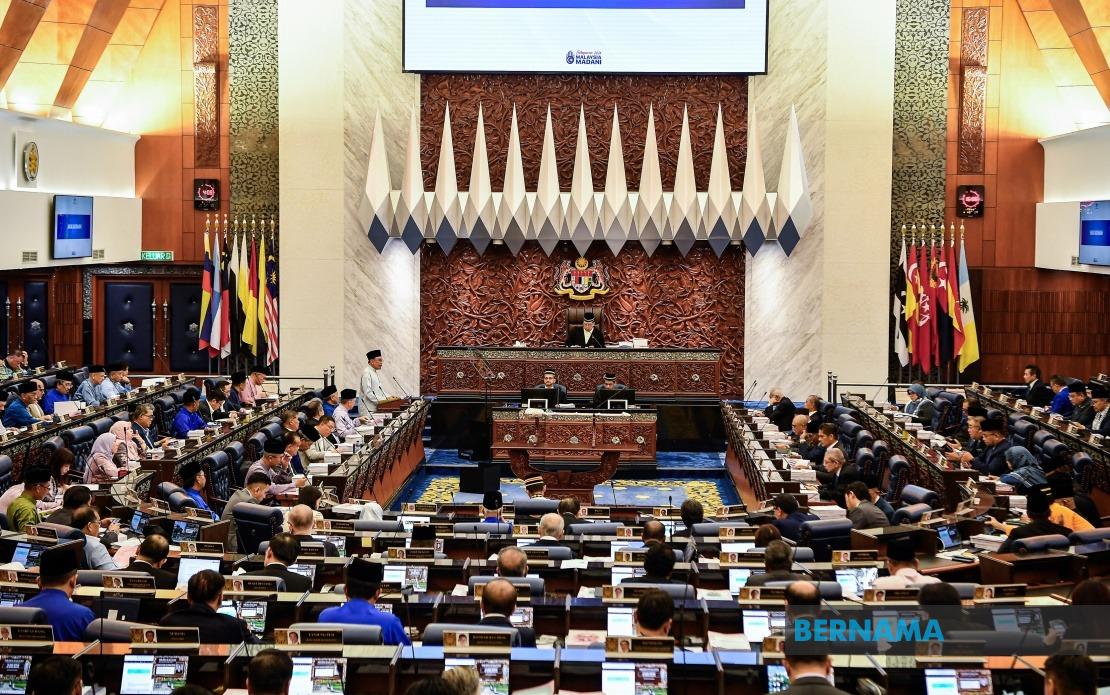
Parliament has given its backing to the Malaysian Communications and Multimedia Commission (Amendment) Bill 2026, marking a significant milestone in strengthening the nation's regulatory framework for the communications and multimedia sector. The Dewan Rakyat approved the legislation through a majority voice vote on July 15 following substantive deliberation involving 14 MPs from both government and opposition parties, signalling broad parliamentary consensus on the need to modernise the MCMC's operational capabilities.
Deputy Communications Minister Teo Nie Ching articulated the bill's core rationale in her closing remarks, emphasising that the amendments aim to sustain MCMC's relevance as Malaysia navigates an increasingly complex digital communications landscape. At its heart, the legislation addresses longstanding provisions that have governed the commission since 1998, updating them to reflect contemporary challenges and opportunities in telecommunications, broadcasting, and digital services regulation. The minister underscored that ministerial appointments of the MCMC chairman and commissioners remain grounded in statutory criteria encompassing professional qualifications, personal integrity, industry experience, and demonstrated leadership capacity.
A particularly noteworthy revision embedded in the amendments concerns conflict-of-interest safeguards. The bill now mandates that the MCMC chairman cannot simultaneously serve as a member of any legislative body—a restriction designed to insulate the regulator from political pressure and ensure decision-making proceeds free from divided loyalties. This measure directly addresses longstanding concerns about regulatory capture and the appearance of political influence over technical communications matters, an issue that resonates across Southeast Asia where media regulators often face scrutiny regarding their independence.
The most immediately consequential change involves expanding MCMC's financial procurement authority. The amendment lifts the commission's contract approval threshold from RM5 million to RM50 million, a tenfold increase that reflects current economic realities and regulatory practice across comparable federal statutory bodies. Minister Teo explained this adjustment aligns with the Finance Ministry's Procurement Regulations for Federal Statutory Bodies WP7.5, which permit fully internally-funded agencies to approve acquisitions exceeding RM499 million. The government, however, exercised prudent restraint by capping MCMC's authority at RM50 million, treating this as an appropriate interim level for an agency whose thresholds had remained frozen for nearly three decades.
Inflation, technological advancement, and escalating labour and material costs have fundamentally altered the economics of communications infrastructure and regulatory operations. When the previous RM5 million ceiling was established in 1998, it represented a meaningful constraint; today, it impedes efficient procurement of modern network monitoring systems, spectrum management platforms, and cybersecurity capabilities essential to contemporary regulation. By raising this threshold, parliament acknowledges that the MCMC must command sufficient purchasing flexibility to acquire sophisticated technologies without repeatedly seeking ministerial dispensation for routine operational expenditures.
Opposition voices raised substantive concerns during the debate, though these largely focused on governance transparency rather than rejecting the bill outright. Dr Halimah Ali, representing Perikatan Nasional, advocated for strengthening the commission's institutional independence by importing appointment mechanisms comparable to those governing the Human Rights Commission of Malaysia (SUHAKAM). Her proposal envisioned a more transparent selection process centred on demonstrated expertise, professional standing, and credibility rather than ministerial discretion alone. This constructive critique reflects a sophisticated understanding that regulatory legitimacy depends partly on perceived procedural fairness in commissioner selection, a principle increasingly recognised across the region.
Mas Ermieyati Samsudin advanced complementary recommendations emphasising enhanced accountability mechanisms, particularly surrounding the Universal Service Provision (USP) Fund—a mechanism designed to ensure telecommunications access in underserved communities. She advocated for strengthened parliamentary oversight of USP fund utilisation, periodic reporting requirements, and clearer procedures governing ministerial directions to the commission. These suggestions, while not incorporated into the bill, signal parliamentary interest in deepening governance visibility and creating more robust checks on executive discretion in communications policy.
Dr Richard Rapu characterised the amendments as foundational improvements equipping MCMC to discharge increasingly complex responsibilities within Malaysia's digital economy. His assessment highlights how communications regulation has evolved from managing traditional broadcast and telephony sectors toward overseeing convergent digital platforms, spectrum allocation amid 5G deployment, and cybersecurity governance. The structural and financial modifications embedded in the bill aim to position MCMC as a more agile, professionally capacitated institution capable of sophisticated technical analysis and strategic policy development.
For Malaysian stakeholders, the amendments carry several practical implications. Telecommunications operators and service providers may experience smoother procurement interactions as MCMC gains greater contractual authority, potentially accelerating infrastructure investments and network modernisation. Technology companies expanding into Malaysia's digital services market will interact with a regulator operating under modernised legal parameters. However, the retained ministerial appointment authority—despite opposition requests for more transparent selection—preserves executive influence over regulatory personnel, an outcome that civil society observers and transparency advocates may view with mixed enthusiasm.
Regionally, Malaysia's experience reflects broader Southeast Asian challenges in calibrating regulatory independence against democratic accountability. Countries across the region grapple with balancing bureaucratic insulation from political interference against ensuring that technical regulators remain answerable to elected representatives. The MCMC amendments strike a particular bargain: accepting ministerial appointment power while imposing conflict-of-interest restrictions and, implicitly, expecting professional norms to constrain politicisation. Whether this equilibrium proves sustainable will depend on implementation culture and the integrity of successive appointments.
The bill's passage also reflects Malaysia's commitment to managing technological disruption through adapted regulatory frameworks rather than wholesale institutional overhauls. By modernising existing legislation rather than establishing novel agencies, parliament has chosen institutional continuity paired with incremental capability enhancement—an approach potentially more politically feasible than structural reorganisation yet sufficient to address pressing operational constraints. As digital convergence accelerates and network demands intensify, the MCMC will operate under considerably expanded financial and operational authority, though fundamental questions about regulatory independence and political influence persist beyond the amendment's scope.
Looking forward, implementation will prove decisive. The amendments create legal space for MCMC to operate more efficiently, but realising those efficiencies requires resourced staff, professional procurement practices, and commissioners appointed on merit. The coming years will test whether ministerial appointments result in leadership decisions consistent with technical excellence or whether political considerations systematically compromise regulatory judgment—a tension unresolved by parliamentary legislation alone.

