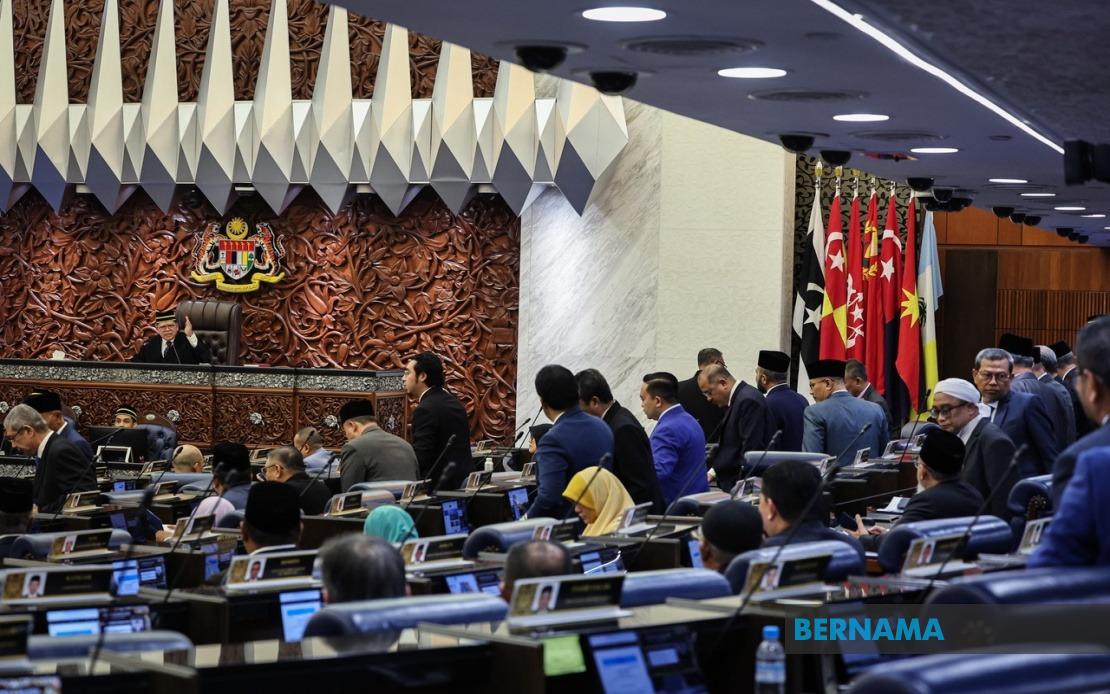
Parliament convened in extraordinary session to facilitate comprehensive debate on the Royal Commission of Inquiry report concerning Lembaga Tabung Haji, the Islamic pilgrimage savings institution, underscoring the government's commitment to governance transparency. Speaker Tan Sri Johari Abdul confirmed that the special sitting, held pursuant to Standing Order 11(3) of Parliament's procedural rules, was convened following a formal request from Prime Minister Datuk Seri Anwar Ibrahim, demonstrating the executive's willingness to subject the inquiry's outcomes to parliamentary scrutiny across party lines.
The decision to hold the special sitting reflects an important shift in how Malaysia's government handles sensitive institutional matters. Rather than confining discussion to closed committees or ministerial briefings, the move places the RCI's key findings squarely in the public domain, where elected representatives can interrogate the evidence and recommendations on behalf of their constituents. This approach signals that despite the often-contentious nature of parliamentary proceedings, lawmakers from the government and opposition benches alike will have genuine opportunity to voice concerns, ask challenging questions, and contribute to the national conversation about the pilgrimage fund's governance failures and remedial measures.
The Tabung Haji inquiry itself emerged from mounting public concern about the institution's financial mismanagement and the experiences of Malaysian Muslims who depend on it to fulfil one of Islam's Five Pillars. The RCI's investigation presumably uncovered systemic issues requiring legislative or administrative correction, and Parliament's involvement validates the democratic principle that the people's representatives, not merely bureaucratic or judicial processes, must weigh in on corrective action. This parliamentary engagement is particularly significant given that Tabung Haji operates with implicit public trust and manages savings from millions of ordinary Malaysians planning their Hajj pilgrimage.
Speaker Johari emphasized that his role obliged him to facilitate the sitting once the Prime Minister's formal notice arrived, highlighting the constitutional mechanisms that permit Parliament to override standard sitting schedules when circumstances demand urgent public deliberation. Standing Order 11(3) exists precisely to enable such flexibility, ensuring that Parliament remains capable of responding to matters of substantial national importance without waiting for the ordinary legislative calendar. The invocation of this procedure carries symbolic weight, signalling to citizens that their Parliament takes accountability seriously and possesses the procedural tools to demand swift, transparent examination of institutional governance.
The framing of the debate as serving "the public interest" and advancing "greater transparency in governance" reflects broader global trends in which democracies increasingly view public scrutiny as essential to institutional legitimacy. For Malaysian readers accustomed to governance decisions being announced through ministerial channels or media statements, the spectacle of Parliament formally debating an RCI report on live television or through official records represents a concrete expression of democratic accountability. Opposition MPs gain platform and legitimacy to critique government-related institutions, while government backbenchers can demonstrate their own commitment to oversight rather than blind party loyalty.
The timing and orchestration of the special sitting also merit consideration. By positioning the parliamentary debate immediately before the minister's substantive briefing on the RCI's findings, the government created a sequence that allows MPs to establish key questions and set the analytical agenda before receiving the official response. This ordering grants Parliament genuine agenda-setting power rather than merely rubber-stamping conclusions already formulated by the executive. Lawmakers can shape how the public understands the inquiry's implications and establish baseline expectations for any corrective measures the government plans to announce.
For Southeast Asian governance observers, Malaysia's approach offers instructive contrast to neighbouring jurisdictions where similar inquiries might remain confined to closed institutional channels or executive-level deliberation. The willingness to throw open parliamentary debate on a sensitive matter involving significant public assets and institutional failures demonstrates that Westminster-derived parliamentary systems can function as genuine accountability mechanisms when political leadership chooses to invoke them. The fact that Datuk Seri Anwar Ibrahim, as Prime Minister, initiated this transparency rather than resisting it suggests confidence in both the RCI's professionalism and Parliament's capacity to engage substantively with complex institutional issues.
The special sitting also carries implications for Malaysian Muslims and the broader hajj-performing community. Those who have entrusted their savings to Tabung Haji or plan to do so gain reassurance that Parliament is actively engaged in ensuring the institution's integrity. Public debate about governance failures, properly channeled through legitimate institutions, can paradoxically strengthen public confidence by demonstrating that the system contains self-correcting mechanisms rather than concealing problems. This is especially important for an institution tied to a fundamental religious obligation, where public trust and legitimacy are not merely administrative conveniences but essential to the institution's moral authority.
The RCI report itself presumably contains detailed findings about what went wrong, who bore responsibility, and what remedial steps are necessary. Parliament's role now involves not simply receiving this information but subjecting it to rigorous questioning. Government MPs may defend officials or institutional decisions; opposition MPs may demand stronger accountability measures or deeper systemic reforms. The ensuing debate creates a public record that shapes not only immediate policy responses but also establishes precedent for future institutional accountability in Malaysia. When citizens and future policymakers review what occurred, they will encounter Parliament's collective judgment, not merely bureaucratic conclusions.
The Speaker's explicit affirmation that he acted to comply with constitutional procedure, rather than exercising discretionary judgment about what debates Parliament "should" hold, subtly reinforces rule-of-law principles. By framing his decision as compelled by Standing Orders, Johari suggests that the decision to hold the sitting was not politically contingent but rooted in Parliament's established procedures. This formulation strengthens the institution's legitimacy and suggests that any future Prime Minister, regardless of political affiliation, could similarly trigger parliamentary debate on matters of public importance using identical procedural mechanisms.
Looking forward, the special sitting on the Tabung Haji RCI report may establish valuable precedent for how Parliament addresses future institutional inquiries. If this exercise of special sitting procedures proves constructive and produces substantive parliamentary engagement with complex governance issues, it could normalize greater parliamentary involvement in institutional accountability rather than leaving such matters to executive or judicial channels alone. For Malaysian governance, this represents a potentially significant step toward strengthening legislative oversight as a routine instrument of democratic accountability rather than an exceptional measure invoked only in extreme circumstances.

