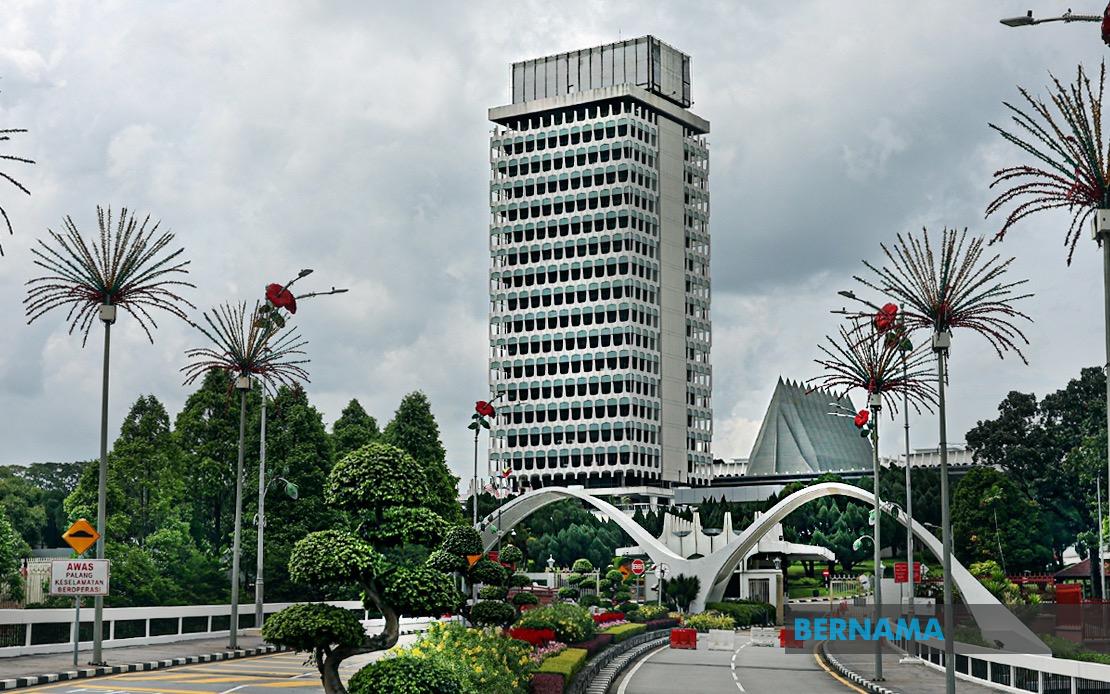
Parliament reconvened this week with two substantive policy matters dominating the legislative agenda: proposed reforms to the Human Rights Commission of Malaysia's operational framework and mounting public concern about the widening gap between official inflation statistics and the tangible cost-of-living pressures experienced by ordinary Malaysians. These issues reflect ongoing tensions between institutional capacity on one hand and the lived economic reality of households on the other, underscoring the government's attempt to address both governance and economic anxieties that have accumulated in recent months.
The proposed amendments to the SUHAKAM Act 1999 centre on a fundamental question of institutional sustainability. As raised by Teresa Kok Suh Sim of the Seputeh constituency, the focus is whether Malaysia's human rights watchdog should be permitted to develop alternative revenue streams through training programmes and educational courses. Currently, SUHAKAM operates entirely on government budget allocations, a dependency that some argue limits operational independence and institutional flexibility. Should the commission gain authority to generate supplementary income, it would theoretically reduce reliance on annual parliamentary appropriations and create a more autonomous operational model. This represents a broader move across many democracies to strengthen the capacity of independent institutions through diversified funding mechanisms.
The implications of such reforms extend beyond administrative convenience. A financially self-sustaining human rights body could theoretically pursue investigations and advocacy with less concern about budgetary constraints or political pressure tied to appropriations cycles. However, implementing such reforms requires careful design to ensure that revenue-generating activities do not compromise the commission's core mandate or create conflicts of interest. The parliamentary question signals that government leadership is at least considering structural changes that could enhance institutional effectiveness, though the actual scope and design of any amendment remain to be detailed.
Paralleling these institutional concerns is a more immediate and politically sensitive issue: the gap between official inflation measurements and the actual financial pressures experienced by Malaysian households. Mohd Syahir Che Sulaiman has posed a direct question to the Economy Minister about how government assesses this discrepancy and what metrics it employs to ensure that economic growth translates into genuine improvements in household purchasing power. This touches on a persistent source of public frustration. While government statistics may show single-digit inflation, consumers report substantially higher increases in prices for essential goods including food, transport, and utilities.
This disconnect reflects a methodological reality: official inflation indices are constructed using weighted baskets of goods and services that may not align with the consumption patterns of lower and middle-income households. A household spending most of its income on food, petrol, and electricity may experience inflation rates substantially higher than the national average, even when other categories experience price stability or deflation. For Malaysian readers particularly conscious of household budgeting pressures, this gap represents a critical failure of policy communication and targeting. The government's response to this parliamentary question could signal whether it intends to adjust its inflation measurement frameworks, targeted subsidies, or direct cash transfers to better address actual vulnerability.
A third parliamentary matter addresses environmental governance and urban planning. V. Ganabatirau has sought an update on the review of land transfers involving flood retention ponds in Kuala Lumpur. This question reflects ongoing concerns about urban resilience, particularly in a climate where heavy rainfall events have become more frequent and damaging. The review's scope—examining how land designated for flood mitigation has been transferred or repurposed—speaks to potential conflicts between urban development pressures and public safety infrastructure. For residents in flood-prone areas and property developers alike, clarity on how retention ponds are being managed carries direct implications for both safety and investment viability.
Education and workforce development also feature in the week's parliamentary agenda. Ku Abd Rahman Ku Ismail has asked the Higher Education Minister for data on the proportion of students enrolled in STEM disciplines versus other fields, along with target numbers for engineers across specialisations needed to support high-technology industries. This reflects a persistent anxiety across Southeast Asia about whether education systems are producing sufficient skilled labour for advanced manufacturing, semiconductor production, and technology sectors where regional competition is intensifying. Malaysia's capacity to attract and retain tech-intensive industries depends partly on having an adequate pipeline of appropriately trained graduates. The question suggests parliament recognises a potential mismatch between education supply and industry demand.
The parliamentary calendar also includes the second reading of the Cybercrime Bill 2026, a significant legislative measure that touches on digital rights, law enforcement authority, and the balance between security and privacy. While not detailed in this week's focus items, its presence signals that digital governance remains a priority area as online crime, fraud, and security threats proliferate across the region. Malaysia's approach to cybercrime legislation will likely influence enforcement practices and potentially set precedents for other Southeast Asian nations monitoring similar legislative pathways.
The Second Meeting of the Dewan Rakyat for the Fifth Session of the 15th Parliament will continue through mid-July, providing a 16-day window for debate and legislative action on these items. For Malaysian stakeholders—from civil society organisations concerned with human rights protections to consumers anxious about living costs to businesses dependent on skilled labour—the outcomes of these parliamentary exchanges will offer signals about government priorities and the likelihood of substantive policy or structural change. The breadth of issues under discussion reflects the complexity of contemporary governance, where institutional reform, economic management, environmental protection, and skills development all demand simultaneous attention within a constrained fiscal and political environment.
The convergence of these three distinct policy areas—institutional independence, economic measurement, and skills development—within a single parliamentary session suggests that government leadership recognises interconnected governance challenges. How parliament engages with these questions and what solutions emerge from the debates will shape Malaysia's trajectory across human rights protections, household economic resilience, and competitiveness in technology-driven regional competition.

