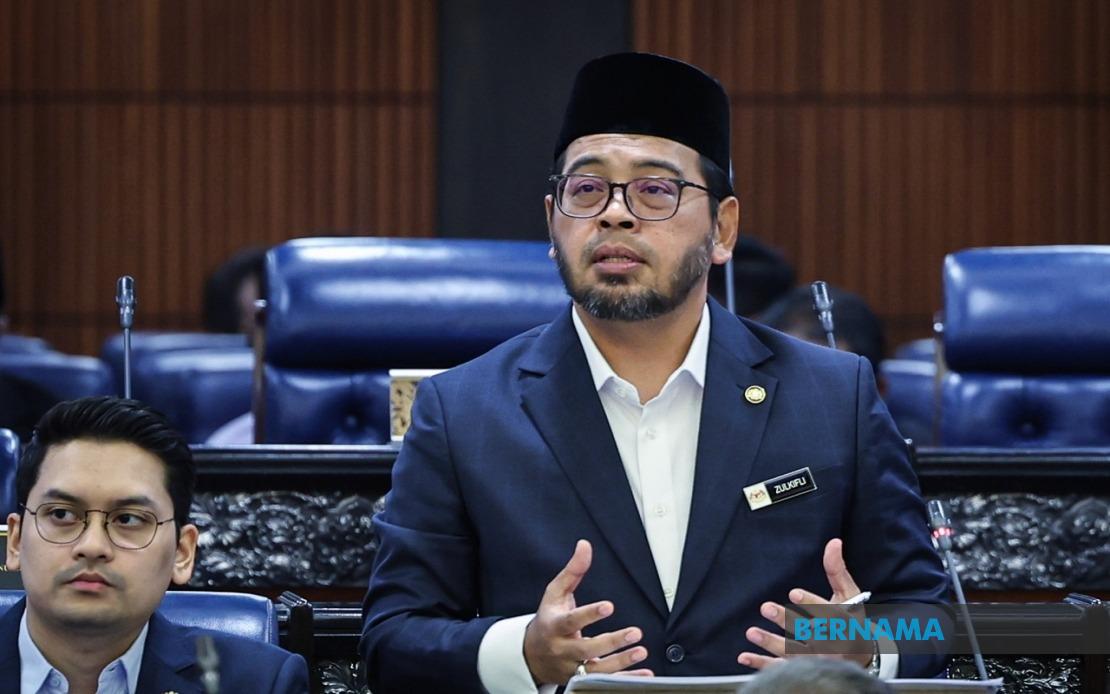
Parliamentarians spent more than ten hours on Tuesday demanding sweeping reforms to Lembaga Tabung Haji (TH) and accountability for the institution's handling of billions of ringgit in losses, with the tone of debate underscoring deep concern about the scale of mismanagement uncovered by a Royal Commission of Inquiry. The special sitting of the Dewan Rakyat reflected growing determination among lawmakers to prevent a recurrence of the governance failures that have shaken confidence in the body responsible for managing hajj pilgrimage arrangements for Malaysian Muslims.
The financial damage proved more extensive than initially perceived when Minister of Finance II Datuk Seri Amir Hamzah Azizan laid bare the full scope of TH's investment catastrophe. Fourteen investments generated nearly RM13 billion in losses, with seven of these ventures resulting in complete financial writeoffs. The government itself bore RM10.2 billion through a 2018 rescue operation channelled through Urusharta Jamaah Sdn Bhd, whilst TH itself absorbed an additional RM2.6 billion in impairment losses between 2018 and 2025 for investments it continued to hold. One particularly egregious case involved Al-Rawda Real Estates Development & Project Management Co Ltd, where intermediaries received 1.4 billion Saudi riyals—approximately RM1.5 billion—purportedly to secure leases on four hotels in Madinah and Makkah for pilgrims. The arrangement collapsed when the counterparty defaulted on rental payments, forcing TH to take a full RM1 billion impairment charge in 2024.
Parliamentary discourse centred overwhelmingly on the gap between institutional failures and the absence of meaningful consequences for those responsible. Lawmakers consistently demanded that findings from the RCI be followed by rigorous, transparent investigations culminating in enforcement action against individuals and entities implicated in misconduct, misappropriation, or governance breaches. The intensity of these calls reflected recognition that public trust in TH—an institution managing savings for more than 10 million depositors—cannot be restored through structural reforms alone; accountability must visibly accompany restructuring. Several lawmakers pointedly noted that without demonstrable consequences, depositors would remain justifiably sceptical of management claims to have resolved underlying problems.
The legislative agenda emerging from the debate centred on substantive amendments to the regulatory and legal framework governing TH's operations. Priority items included expedited amendments to the Tabung Haji Act 1995 to close supervisory gaps, enhanced controls over investment decisions and financial management protocols, and constitutional protections ensuring TH's leadership operates insulated from political interference. These proposals reflected a consensus that technical failures in governance—inadequate oversight, murky investment vetting procedures, and permeable safeguards—lay at the root of institutional dysfunction. The government, responding constructively, endorsed proposals for establishing a multi-agency task force to identify and monitor investments at elevated risk of loss, signalling receptivity to enhanced inter-departmental coordination on financial surveillance.
Minister in the Prime Minister's Department (Religious Affairs) Dr Zulkifli Hasan positioned government actions within a longer recovery narrative, emphasizing that initiatives undertaken since 2018 had stabilized TH's financial footing, tightened governance architecture, and improved investment portfolio quality. He underscored that the government deliberately delayed the RCI report's public release to permit TH management time to operationalize the Commission's recommendations and address structural vulnerabilities before public disclosure intensified scrutiny. This sequencing, he argued, maximized the institution's capacity to absorb and implement reforms rather than releasing findings that might precipitate deposit withdrawals or market panic whilst remedial measures remained incomplete.
Zulkifli articulated a governance philosophy directly addressing parliamentary concerns about individual accountability versus institutional safeguards. He stressed that an institution's strength cannot rest upon the competence or integrity of particular individuals, emphasizing instead that robust systems, transparent decision-making processes, internal controls, and balanced governance structures must constitute the permanent architecture undergirding TH's operations. This formulation implicitly acknowledged that no personnel screening regime can eliminate the risk that individuals will subsequently behave opportunistically; rather, institutional design should assume agents will test boundaries and should erect procedural guardrails accordingly. He encapsulated this principle with the observation that while individual office-holders inevitably rotate, the institutional principles and governance frameworks protecting depositor interests must remain constant and inviolable.
Government authorities have moved to translate investigative findings into enforcement action. Zulkifli disclosed that investigations initiated by relevant agencies have already resulted in the detention of several individuals suspected of involvement in alleged misconduct including bribery, abuse of power, and governance violations. These actions, though preliminary, signalled that prosecutorial machinery had engaged and that the government intended to pursue accountability beyond mere institutional reform. The specificity of alleged offences—bribery and abuse of power—suggested that investigations had progressed beyond identifying technical governance failures to uncovering potential corruption and criminal conduct requiring criminal justice intervention.
One prominent element of debate concerned deposit protection and hajj cost stability for Malaysian pilgrims. The government reaffirmed its commitment to maintaining the hajj package cost at RM33,300 for three consecutive seasons spanning 2024 through 2026, providing pilgrims with pricing certainty despite the institution's underlying financial turbulence. This assurance reflected recognition that disruption to hajj accessibility would compound reputational damage and erode public confidence further. The commitment demonstrated that alongside institution-building and accountability measures, the government intended to insulate ordinary depositors from bearing the financial consequences of management failures, a calculation balancing fiscal prudence with political and religious obligation.
The RCI report itself, released publicly on July 29, documented governance and operational weaknesses spanning the 2014 to 2020 period and advanced 25 recommendations for systemic improvement. By July 30, TH had implemented 75 per cent of the Commission's recommendations, demonstrating substantial movement toward compliance. This implementation rate, whilst respectable, acknowledged that certain reform priorities—likely involving legislative amendment, regulatory restructuring, or institutional capacity constraints—remained incomplete. Parliamentary debate implicitly challenged TH and government stakeholders to accelerate completion of the remaining quarter of recommendations whilst maintaining quality in implementation.
The sitting drew 39 MPs to participate in substantive debate, but notably, several opposition-affiliated lawmakers chose to absent themselves, declining to participate in proceedings. Government speakers and allied parliamentarians criticized this boycott as an abdication of democratic responsibility, arguing that opposition MPs had failed to discharge their constitutional obligation to scrutinize executive action and provide institutional checks and balances. The boycott was characterized as particularly indefensible given that the stakes involved the financial interests and pilgrim aspirations of more than 10 million TH depositors who deserved robust parliamentary oversight regardless of partisan affiliation. This criticism pointed to an underlying tension: whilst governance failures at TH reflected executive and management dysfunction, their resolution required sustained parliamentary vigilance transcending normal partisan boundaries, a standard that selective participation undermined.
The parliamentary intervention represents a critical juncture for TH's institutional recovery. Legislators signalled that technical reforms, whilst necessary, remain insufficient without demonstrable accountability, strengthened legal frameworks, and governance architectures resilient against future capture or mismanagement. For Malaysian Muslims saving for the hajj—a religiously and personally significant undertaking—parliamentary insistence on accountability and transparency reflects recognition that trust in TH cannot be rebuilt through statements alone but requires visible enforcement action, institutional redesign, and tangible protections demonstrating that government takes the stewardship of pilgrim savings with utmost seriousness. The convergence of legislative pressure, government acknowledgement of failures, and accountability machinery now moving forward suggests that political consensus, at least among government and aligned parliamentarians, has solidified behind a transformative reform agenda.

