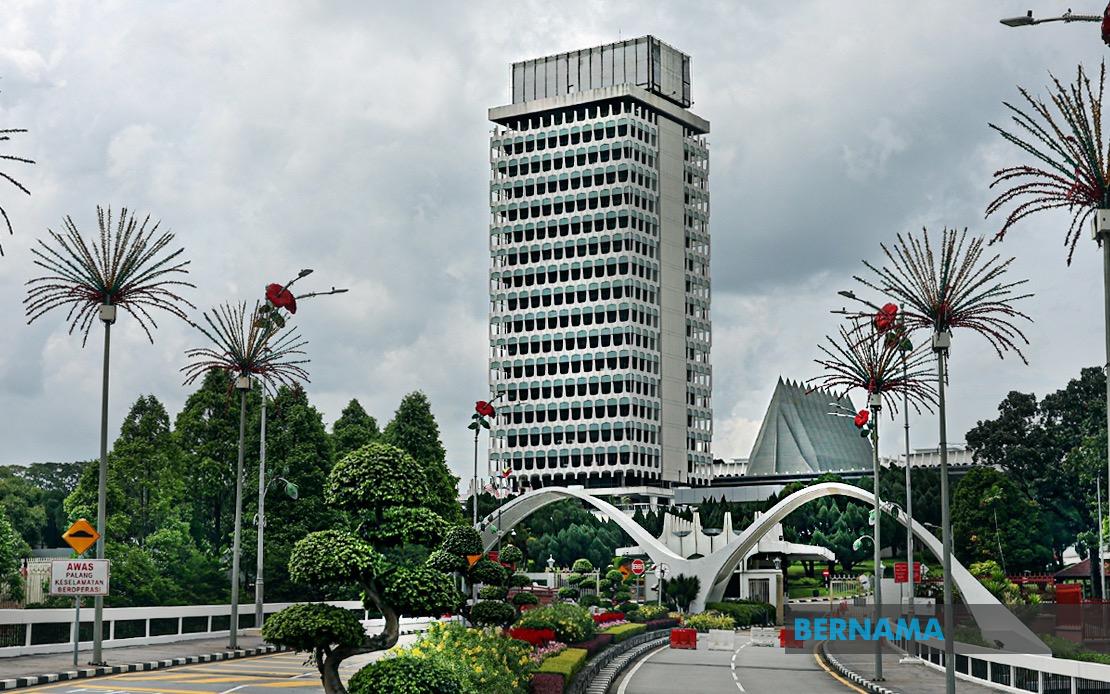
Prime Minister Datuk Seri Anwar Ibrahim used his platform during Parliament's second sitting week to address one of the most contentious issues facing Malaysia's federal structure: the distribution of funds between Kuala Lumpur and the states. During Ministers' Question Time on Tuesday, Anwar clarified that the vast majority of Malaysian states receive significantly more Federal Government money than they generate in tax revenue, fundamentally reframing the debate around resource allocation and national equity.
The Prime Minister's intervention came amid growing anxieties among several state governments about whether they were receiving fair treatment. Rather than viewing federal allocations as a zero-sum competition, Anwar emphasised that the distribution mechanism prioritises development requirements and public welfare across regions. This principle reflects a deliberate policy choice to use federal resources as an instrument for reducing regional disparities, a crucial consideration for a nation with marked economic differences between developed urban centres and rural or less industrialised areas. The clarification carries particular significance given the political sensitivities surrounding federalism in Malaysia, where state governments remain jealously protective of their constitutional rights and revenues.
The Prime Minister also addressed a procedural matter that has frustrated development planning at the state level. When state governments seek additional funding for development initiatives that involve a Notice of Change, such requests must undergo renegotiation before the Federal Government considers approving supplementary allocations or providing loans. This requirement, while potentially cumbersome, reflects a commitment to transparent fiscal management and prevents ad hoc expansion of budget commitments without proper scrutiny. The mechanism underscores the interplay between federal oversight and state autonomy that characterises Malaysia's governance structure.
Anwar further reminded Parliament that the electoral calendar imposes legal constraints on executive announcements. He stressed that Section 24B of the Election Offences Act 1954 prohibits the announcement of new projects or policies during election campaign periods. This prohibition, though sometimes tested by political actors eager to claim credit, serves to prevent the weaponisation of public resources during competitive electoral contests and maintains a baseline of administrative propriety.
The parliamentary sitting witnessed passage of three significant pieces of legislation addressing modern criminality and child protection. The Sexual Offences Against Children (Amendment) Bill 2026 represents an updated legal framework for an issue of profound social concern. Complementing this measure, Parliament approved amendments to the Employment Insurance System (Amendment) Bill 2025, demonstrating continued focus on worker protections and social security. The Cybercrime Bill 2026 proved particularly consequential, introducing specific offences and penalties for digital forgery—commonly known as deepfakes—and criminalising the creation and distribution of manipulated intimate images through complex computer systems. These provisions address a rapidly evolving threat landscape where technological sophistication enables unprecedented violations of privacy and dignity.
Minister in the Prime Minister's Department (Law and Institutional Reform) Datuk Seri Azalina Othman Said revealed that the government is drafting modernised contract law legislation designed to recognise third-party rights and overhaul the framework governing commercial agencies. The initiative specifically accounts for artificial intelligence's growing role in commerce and legal arrangements. She noted that the Study of Contract Law Reform in Malaysia has reached completion, with its final report—encompassing policy recommendations, comparative international analysis, and draft legislation—now circulating among Members of Parliament. This move suggests the government recognises that Malaysia's commercial legal architecture requires updating to accommodate technological change and contemporary business practices.
Concern over the rising cost of living dominated economic discussions during the week. The government reaffirmed its commitment to ensuring adequate supplies of essential goods while maintaining price stability for basic necessities and streamlining distribution channels. Economy Minister Akmal Nasrullah Mohd Nasir disclosed that daily monitoring occurs across essential commodities, with the government coordinating actively with Petronas and private sector participants to stabilise energy supply. This multi-stakeholder approach reflects recognition that price stability depends on secure supply chains, adequate refining capacity, and predictable energy availability—factors particularly sensitive in a region vulnerable to supply shocks and geopolitical disruption.
Education Minister Wong Kah Woh announced that the MADANI Book Voucher programme 2026 will distribute RM221.6 million across more than 2.2 million students under the Ministry of Education's purview. The e-voucher scheme, each worth RM100 per student, commenced redemption on the previous Wednesday and extends until October 31. This initiative aims to improve educational access and encourage reading among younger Malaysians, addressing concerns that economic pressures may limit families' capacity to purchase educational materials.
Communications Minister Datuk Fahmi Fadzil reported that the government is finalising regulatory instruments under the Online Safety Act 2025, with particular attention to private messaging features. These regulations will establish clearer obligations for digital platforms regarding harmful content moderation. The Malaysian Communications and Multimedia Commission is simultaneously exploring agentic artificial intelligence technology to enhance complaint management efficiency and reduce officer workload—a recognition that traditional human-centred moderation cannot scale adequately to manage billions of daily social media interactions. The government has also encouraged private platforms to harness artificial intelligence for faster detection and removal of guideline-violating content, creating a synergy between regulatory frameworks and technological capability.
The current parliamentary sitting spans 16 days from June 22 to July 16, providing an extended window for legislative activity and executive accountability. The mix of bills addressed during this second week—spanning child protection, cybercrime, social security, and contract law reform—demonstrates Parliament's engagement with issues ranging from criminal justice modernisation to commercial regulation and educational access. Together, these discussions and legislative outcomes reveal a government attempting to calibrate federal-state relations, criminalise emerging threats, and deploy technology judiciously in service of public administration and citizen welfare.

