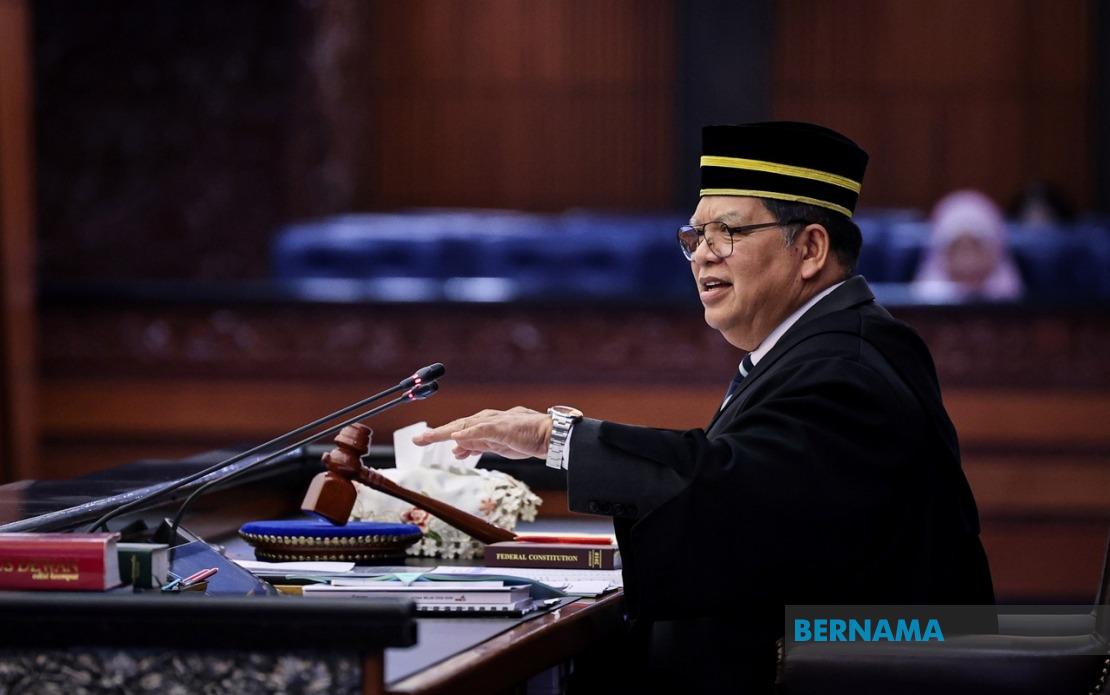
The Malaysian Parliament concluded its Second Meeting of the Fifth Term on July 16 after a productive 16-day session that began on June 22, delivering a substantial legislative package addressing contemporary challenges from digital crime to child welfare. Dewan Rakyat Speaker Tan Sri Dr Johari Abdul confirmed passage of 13 Bills across multiple policy domains, marking steady progress on the government's legislative agenda despite Malaysia's turbulent political environment.
Among the most significant enactments was the Cybercrimes Bill 2026, a key piece of legislation aimed at strengthening Malaysia's legal defences against digital threats at a time when cybercriminal activity has become increasingly sophisticated and costly for both public and private institutions across Southeast Asia. The passage also included the Sexual Offences Against Children (Amendment) Bill 2026, reflecting renewed parliamentary focus on child protection mechanisms in an era of escalating online exploitation of minors. Complementing these measures, lawmakers approved the Road Transport (Amendment) Bill 2026, addressing evolving challenges in Malaysia's road safety and vehicle regulation frameworks.
The commercial and regulatory architecture received equal attention through passage of the Competition (Amendment) Bill 2026 and its companion piece, the Competition Commission (Amendment) Bill 2026. These amendments modernise Malaysia's competition law at a moment when regional trade integration and cross-border commerce demand more sophisticated mechanisms for ensuring fair market conduct. Observers view these reforms as essential calibrations to keep Malaysia's competition regime aligned with international standards and capable of addressing digital platform monopolies that have emerged as pressing concerns throughout Southeast Asia.
Communications policy underwent substantial revision through approval of the Communications and Multimedia (Amendment) Bill 2026 and the Malaysian Communications and Multimedia Commission (Amendment) Bill 2026. Given Malaysia's position as a regional technology hub and its growing digital economy, these legislative updates reflect parliamentary recognition that existing regulatory frameworks require periodic refinement to accommodate rapid technological change, emerging business models, and evolving consumer protection needs in the digital marketplace.
Additional Bills addressing specialised sectors included the Control of Padi and Rice (Amendment) Bill 2026, which fine-tunes agricultural regulations affecting Malaysia's rice production and food security landscape. The Witness Protection (Amendment) Bill 2026 strengthens safeguards for individuals providing testimony in sensitive cases, a critical element of judicial integrity. The Social Work Profession Bill 2026 establishes professional standards for social workers, elevating their occupational status whilst ensuring quality service delivery in vulnerable communities. The National Trust Fund Bill 2026 and Statistics Bill 2026 completed the legislative slate, addressing financial governance and data infrastructure respectively.
Beyond legislation, the 16-day sitting accommodated three ministerial briefings, one specialised briefing in the Special Chamber, and six separate presentations by Select Committee chairmen on their investigative reports. This multi-layered engagement suggests Parliament is functioning as an effective forum for government accountability and inter-departmental information sharing, despite Malaysia's recent history of parliamentary dysfunction and frequent adjournments.
Speaker Johari utilised his adjournment address to remind all Members of Parliament to complete health screenings before October 30 and lodge medical records with the Parliament medical office, a precaution that appears informed by recent health incidents affecting lawmakers. His explicit encouragement for MPs to prioritise wellbeing during the looming election campaign period acknowledges the physical and mental toll of intensive campaigning whilst maintaining parliamentary responsibilities.
The announcement of a Malaysian Parliament hosting programme, though incomplete in the original dispatch, indicates expanding parliamentary outreach beyond elected representatives. The initiative encompasses Members of Parliament, parliamentary administration staff, Malaysian Youth Parliament participants, and members of the general public, reflecting a broader institutional commitment to parliamentary education and civic engagement. Such programming carries particular significance for a nation where public understanding of parliamentary processes and legislative procedure remains inconsistent across demographic and educational lines.
Speaker Johari's closing remarks emphasised collaborative spirit and stakeholder appreciation, recognising contributions from fellow MPs, government officials, parliamentary personnel, journalists covering proceedings, and auxiliary participants. This rhetoric of unity and institutional gratitude carries subtle weight in Malaysian politics, where parliamentary relations have frequently been strained by partisan conflict, walkouts, and disputes over procedural matters that sometimes overshadow substantive legislative work.
The adjournment to a date to be determined follows Malaysia's established parliamentary calendar patterns, typically allowing interim periods for committee work, public consultation on pending legislation, and government preparation of additional bills. The timing, occurring midway through 2026, positions Parliament for potential reconvening before year-end, though Malaysia's electoral cycle and governing coalition dynamics may influence actual scheduling. For Malaysian stakeholders monitoring legislative progress, this 16-day sitting demonstrates Parliament's institutional capacity to process significant legislation efficiently when procedural obstacles are minimised and partisan tensions remain contained.

