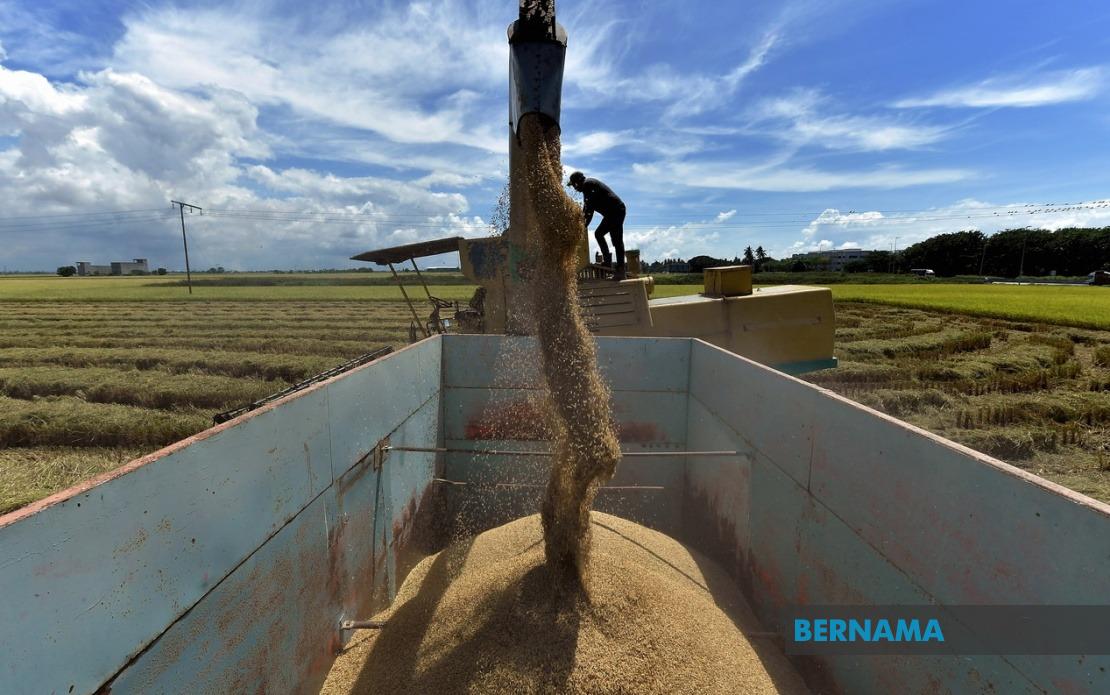
Parliament has endorsed the Control of Padi and Rice (Amendment) Bill 2026, marking a decisive shift in how Malaysia tackles misconduct within its strategically vital rice sector. The legislation cleared the Dewan Rakyat through a majority voice vote after deliberation from lawmakers across government and opposition ranks, signalling broad consensus on the need for tougher enforcement mechanisms in an industry that underpins national food security.
At the heart of the amendments lies a substantial recalibration of punitive measures designed to deter illegal activity. Section 22 of the principal Act now imposes maximum fines of RM250,000 for individuals found guilty of violations, while corporate entities face potential penalties reaching RM1 million. These thresholds represent the first meaningful review of financial sanctions in three decades, as Deputy Minister of Agriculture and Food Security Datuk Chan Foong Hin emphasized during the parliamentary proceedings. The absence of penalty adjustments since the original Act's introduction in 1994 had rendered the existing framework increasingly obsolete, unable to match the scale of illicit profits being generated within what is now a multi-billion-ringgit industry.
The enforcement rationale underpinning these reforms rests on documented evidence of substantial contraband activity. Official seizure data demonstrates that rice smuggling and the unauthorized diversion of domestically-produced white rice constitute a persistent challenge to market integrity and supply chain stability. Yet under the previous penalty regime, sentences imposed on offenders bore little relationship to the considerable gains accrued through such misconduct. This disconnect had effectively rendered penalties ineffectual as a deterrent, allowing the economic calculus for potential wrongdoers to tilt toward violation. Chan articulated this fundamental problem with clarity: existing sanctions had become divorced from both the seriousness of the offences and the substantial wealth accumulated through them, necessitating a recalibration that properly reflects the gravity of such breaches.
Beyond the numerical increase in fines, the amendments embody a commitment to protecting padi farmers from price distortion and market manipulation schemes. By elevating the cost of non-compliance, legislators aim to create an environment where illicit trading networks lose their profitability advantage over legitimate agricultural supply chains. This protection extends to farmers' income stability and market access, critical considerations for a sector employing hundreds of thousands across rural Malaysia. The measure acknowledges that food security rests not merely on production volumes but on the integrity of distribution systems and the preservation of incentives for lawful agricultural enterprise.
Parliamentary debate revealed nuanced perspectives on implementation, with lawmakers offering complementary observations on enforcement architecture. Datuk Idris Ahmad from Perikatan Nasional's Bagan Serai constituency stressed that heightened penalties must be accompanied by explicit prosecution guidelines and specialist training for legal officers. His intervention underscored a practical concern: raising financial penalties proves ineffectual if prosecutorial capacity and strategic clarity remain underdeveloped. Without well-articulated guidelines defining when and how enforcement should occur, and without prosecutors equipped to navigate the technical complexities of rice sector violations, penalty provisions remain largely symbolic.
Parliamentary opposition members brought forward alternative priorities. Tan Hong Pin from Pakatan Harapan's Bakri seat urged the ministry to conduct a more granular review of proposed penalty levels and advocated for establishing an autonomous oversight committee to regularly evaluate Padiberas Nasional Berhad's (BERNAS) effectiveness in combating cartel behaviour. His position reflects broader concerns about whether penalties alone can address structural market concentration issues, particularly the dominance of BERNAS in domestic rice procurement and distribution. An independent assessment mechanism could provide accountability mechanisms beyond the legislative framework itself, offering ongoing scrutiny of whether industry consolidation inadvertently facilitates the very misconduct the bill targets.
Technological innovation emerged as another significant theme in legislative discourse. Azli Yusof representing Shah Alam advocated for comprehensive digital traceability infrastructure spanning the entire padi and rice supply chain, designed to minimize leakages and operational disruptions. Similarly, Manndzri Nasib from Tenggara proposed equipping every rice package with QR code functionality, enabling real-time tracking accessible to both consumers and enforcement authorities. Such measures would substantially complicate illicit diversion schemes while simultaneously providing transparency that empowers buyers to verify product authenticity and detect instances of hoarding or deliberate supply constriction.
These technological proposals address a critical vulnerability in current systems: the opacity of rice movement through distribution networks. When bags are unmarked and traceable only through paper documentation or informal channels, enforcement becomes reactive rather than preventative. Real-time digital visibility would fundamentally alter enforcement economics by eliminating the anonymity that currently enables smuggling and mislabelling. For Malaysian consumers concerned about rice provenance and pricing, such transparency mechanisms offer tangible assurance unavailable under existing arrangements.
The legislative passage carries implications extending beyond Malaysia's borders. Regional rice supply chains remain vulnerable to disruptions emanating from any individual country's food security failures. Malaysia's position as both a significant rice consumer and a nation with established production capacity makes its market stability relevant to broader Southeast Asian food security architecture. By strengthening domestic enforcement and implementing traceability systems, Malaysia positions itself as a market less vulnerable to manipulation and supply shocks, potentially stabilizing regional pricing dynamics that affect neighbouring nations similarly reliant on rice availability.
The bill's approval also signals parliament's willingness to invest in regulatory modernization for critical infrastructure sectors. Food security, long treated as a peripheral concern in policy discussions dominated by manufacturing and finance, has now secured legislative priority reflecting awareness of its foundational importance. This reorientation may presage similar overhauls in other essential commodity sectors where enforcement frameworks have similarly deteriorated through decades of non-amendment.
Looking forward, the practical impact of these amendments will depend substantially on three factors: the adequacy of resources allocated to enforcement, the willingness of prosecutors to pursue complex cases involving sophisticated smuggling networks, and the effectiveness of complementary measures addressing structural market issues. The bill represents necessary but potentially insufficient reform if implementation capacity remains constrained or if deeper questions about market concentration and farmer support remain unaddressed through parallel policy channels.

