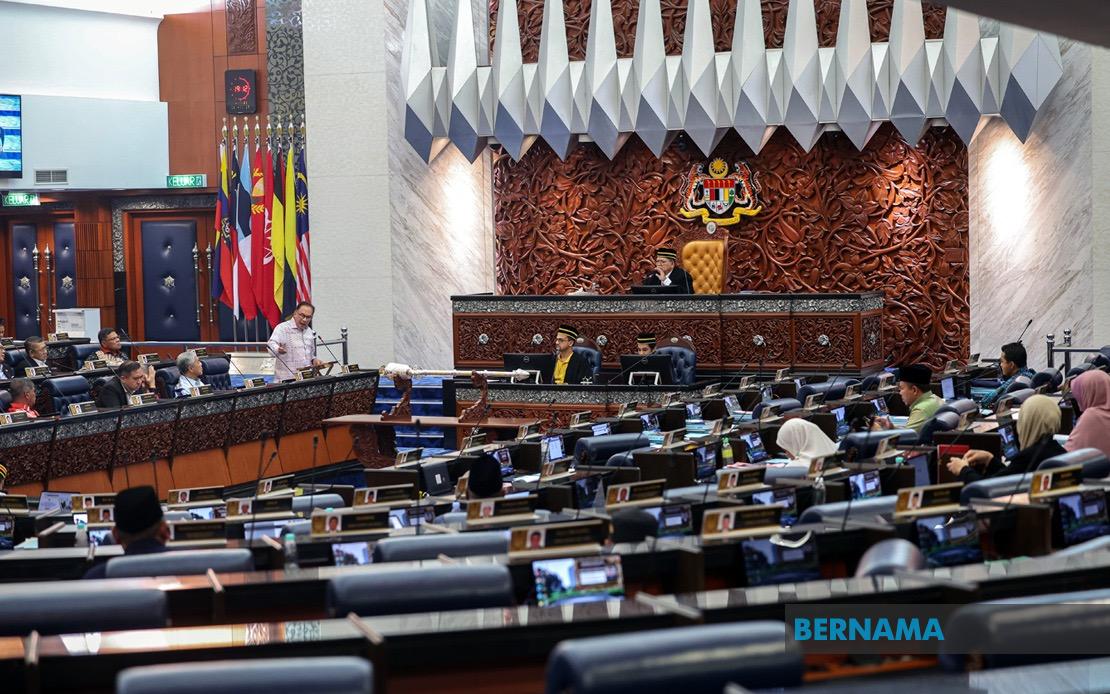
Malaysia's parliament has given the green light to channel RM14.5 billion in proceeds from Malaysian Government Investment Issues (MGII) issued between January and May 2026 into the Development Fund, marking another step in the government's debt management and infrastructure financing strategy. The Dewan Rakyat approved the motion through majority voice vote following parliamentary debate, with Deputy Finance Minister Liew Chin Tong providing detailed justification for the move during the sitting.
The Development Fund operates as a mechanism for channelling capital towards long-term infrastructure and development projects. Unlike operating expenditure, which must be funded entirely through tax revenue and government receipts, development spending can legally be financed through borrowing. This distinction has underpinned Malaysia's fiscal framework for decades and continues to shape how the government allocates its financial resources between immediate operational needs and longer-term national development priorities.
The RM14.5 billion figure represents only a portion of the broader MGII issuance programme unveiled for 2026. In total, the government intends to issue approximately RM95 billion in MGII across the full year, making these instruments a cornerstone of Malaysia's domestic borrowing strategy. The breakdown reveals the complexity of modern government financing: RM55 billion has been earmarked to refinance MGII that is reaching maturity, a necessary operation to prevent debt defaults and maintain market confidence. Additionally, RM2 billion will help fund the redemption of Malaysian Islamic Treasury Bills (MITB), the government's short-term shariah-compliant debt instruments that appeal to Islamic finance investors.
The remaining RM38 billion addresses what may be the most politically sensitive component of this borrowing programme—partial financing of the 2026 fiscal deficit. As Malaysia continues efforts to consolidate its public finances following the pandemic era, deficit reduction remains a stated government priority, yet revenue collection has not kept pace with spending demands in certain quarters. The issuance of MGII provides an interim mechanism to bridge this gap while fiscal consolidation measures take effect.
Liew outlined the mechanics of how the January-to-May period unfolded in practice. The government raised RM40 billion through MGII issuances during these five months. After deducting RM25.5 billion required to service maturing MGII obligations, the net proceeds available for new development spending amounted to RM14.5 billion. This net figure, rather than the gross issuance, is what parliament approved for transfer to the Development Trust Account, underscoring the government's emphasis on distinguishing between refinancing activities (which maintain existing debt) and new borrowing (which finances fresh development).
The parliamentary debate touched on a concern that resonates throughout Southeast Asia's capital markets: the potential for government securities issuance to crowd out private sector borrowing from domestic financial institutions. When governments issue large volumes of bonds, institutional investors such as the Employees Provident Fund (EPF) and the Retirement Fund Incorporated (KWAP) may allocate disproportionate amounts of their investment portfolios to these perceived low-risk instruments, leaving less capital available for corporate and small business lending. Datuk Zulkafperi Hanapi raised this question directly, seeking assurance that the RM95 billion MGII programme would not constrain private sector access to credit.
Liew's response offered several reassurances. He noted that the government has been deliberately reducing its annual borrowing volumes over recent years, suggesting a commitment to gradual fiscal consolidation. More importantly, he reframed the relationship between government securities issuance and domestic financial stability. Rather than viewing MGII as competing with private investment opportunities, the deputy minister characterised these instruments as providing essential investment outlets for the EPF, KWAP, and other institutional investors who need safe, liquid vehicles to deploy their capital. Without adequate government securities supply, these institutions would face pressure to deploy capital overseas, potentially causing capital flight and currency depreciation—a serious concern for any emerging market.
This argument reflects a sophisticated understanding of Malaysia's financial ecosystem. The country's two massive pension and provident funds collectively manage trillions of ringgit and require diversified portfolios that include stable government debt. By ensuring adequate MGII issuance, the government essentially enables these funds to remain invested domestically, anchoring capital within the Malaysian financial system and supporting the ringgit. The crowding-out concern, while not dismissed entirely, is positioned as less problematic than the alternative scenario of insufficient government securities forcing institutional investors to seek foreign assets.
Liew also signalled that this parliamentary approval represents only a partial implementation of the 2026 MGII programme. The motion specifically covered bonds issued through May 2026 and the transfer of their remaining proceeds. He indicated that the government would return to parliament during a subsequent sitting to seek approval for transferring remaining MGII issuances expected between June and December. This staged approach allows parliament to maintain oversight of the government's borrowing programme while providing the executive with flexibility to respond to economic conditions in the latter half of the year.
For Malaysian investors and financial market participants, the approval signals continuity in the government's approach to domestic funding. MGII have become important instruments for portfolio managers, offering shariah-compliant returns for Islamic finance practitioners and conventional alternatives for other investors. The sustained issuance schedule provides stability and liquidity in the secondary market, encouraging further institutional participation. This, in turn, helps keep borrowing costs moderate and predictable, benefiting the broader public finances.
The broader context involves Malaysia's ongoing efforts to achieve fiscal sustainability following the fiscal pressures of recent years. While development spending remains necessary to maintain infrastructure quality and support long-term economic growth, the reliance on MGII issuance underscores the government's continued challenges in matching expenditure to domestic revenue sources. The approval of RM14.5 billion in transfers to the Development Fund, therefore, represents a pragmatic interim solution rather than a definitive answer to Malaysia's fiscal equation—one that keeps infrastructure investment flowing while the government works toward improved revenue collection and spending discipline in the years ahead.

