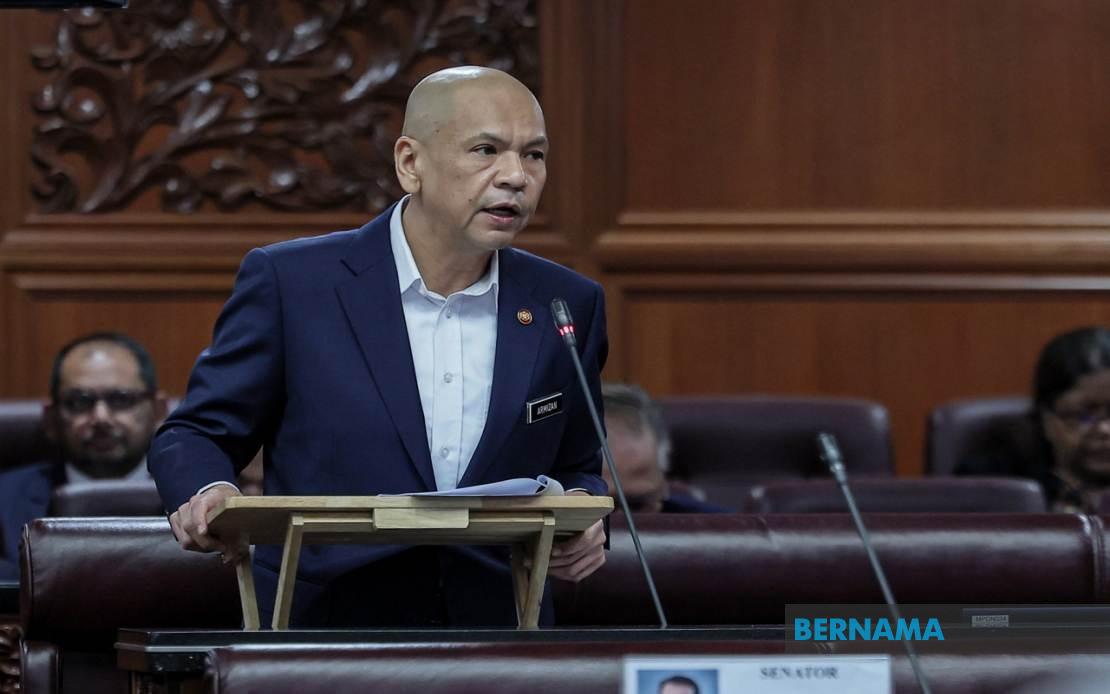
The Domestic Trade and Cost of Living Ministry has launched a significant legislative overhaul of Malaysia's competition framework, with the Competition (Amendment) Bill 2026 and the Competition Commission (Amendment) Bill 2026 cleared for first reading in Parliament on June 23. Minister Datuk Armizan Mohd Ali, who presented both measures to the Dewan Rakyat, indicated that proceedings would advance to second reading during the current parliamentary session, signalling the government's commitment to modernising the nation's competition regime.
The Competition (Amendment) Bill represents an extensive restructuring of the Competition Act 2010, aimed at equipping the Malaysia Competition Commission with more robust tools for investigating anticompetitive conduct and enforcing compliance across the economy. The revisions recognise that the existing legislative architecture, though comprehensive when introduced, requires updating to reflect evolving market dynamics and enforcement challenges that have emerged over the past decade. By strengthening MyCC's investigative and enforcement apparatus, the amendments address practical gaps that regulators have encountered when pursuing cases involving complex corporate structures or digital economy participants.
One of the most consequential changes involves expanding the jurisdictional scope of competition law itself. Currently, the Competition Act 2010 restricts its application to commercial activities, a limitation that has periodically created ambiguity regarding which sectors fall within regulatory oversight. Clause 3 of the amendment bill proposes eliminating this restriction by extending competition law coverage to all economic activities without exception. For Malaysian businesses and consumers, this shift carries substantial implications. It means that even entities operating in traditionally regulated sectors—such as utilities, telecommunications, or financial services—would now be explicitly subject to competition scrutiny, potentially exposing anti-competitive practices previously shielded by sectoral carve-outs or regulatory exemptions.
Enhancing MyCC's information-gathering capacity represents another critical element of the reform agenda. Clause 7 grants the commission authority to obtain information and documentation from any individual or government entity when conducting market reviews, a power previously constrained by narrower statutory language. This expansion recognises that comprehensive market reviews often require access to data held by state-owned enterprises, public authorities, and regulatory agencies. For Southeast Asian investors evaluating Malaysia's competitive landscape, this signals a maturing regulatory environment increasingly capable of diagnosing systemic market problems and informing policy responses.
The amendments also address a persistent enforcement challenge: the destruction or concealment of evidence during investigations. Clause 13 introduces criminal penalties for individuals who intentionally destroy, alter, deface, or conceal data or materials with the intent to obstruct MyCC's investigative work. This provision recognises that modern enforcement often hinges on digital records and business documentation; companies facing investigation have sometimes removed or manipulated such materials to frustrate regulatory action. By criminalising these behaviours, the amendment creates additional deterrents and provides MyCC with alternative legal avenues when prosecuting obstruction of investigations.
Parallel changes to the governance and decision-making structures within MyCC itself appear in the Competition Commission (Amendment) Bill 2026. These measures reflect a broader reform trend visible across Malaysian regulatory agencies, emphasising institutional independence and transparent operations. Clause 8 clarifies and reinforces MyCC's advisory role, explicitly authorising the commission to counsel the minister, public authorities, and regulatory bodies on competition implications of proposed policies, procedures, and programmes. This formalisation elevates the status of competition considerations within government decision-making, acknowledging that competition impacts permeate public policy across multiple sectors.
Delegation of functions within MyCC represents another organisational enhancement. Clause 10 permits the commission to delegate any of its powers or functions to its chairman, committees, officers, or employees, providing operational flexibility as caseloads fluctuate and specialised investigations demand concentrated expertise. This restructuring mirrors practices adopted by competition authorities in more mature jurisdictions, where functional delegation permits faster response times and more efficient resource allocation than rigid hierarchical structures allow.
The amendment addressing MyCC officer appointments deserves particular attention from governance observers. Subclause 12(a) proposes vesting appointment authority in the commission itself, acting upon the chief executive officer's recommendation, rather than in external parties. While this change may appear technical, it carries symbolic and practical weight. It reinforces institutional autonomy by reducing external influence over personnel decisions and establishing a merit-based appointment culture within the organisation. For Malaysian observers concerned with regulatory independence, this adjustment signals movement toward insulating MyCC from political pressure that might discourage robust enforcement against politically-connected corporations.
Consequential amendments to the Competition Commission Act 2010 accompany these substantive changes, ensuring that foundational legislation remains internally consistent as primary competition law evolves. This legislative housekeeping prevents interpretative conflicts and maintains the coherence of the regulatory framework. For legal practitioners advising clients on competition compliance, harmonised legislation reduces uncertainty and clarifies obligations across different statutory instruments.
The timing of these amendments reflects broader regional and global trends in competition policy. Jurisdictions across Southeast Asia have been modernising competition frameworks to address digital economy challenges, cross-border transactions, and sophisticated cartels that older legislation struggles to address. Malaysia's amendments position the country alongside peers implementing comparable reforms, suggesting a competitive impulse to maintain credibility with international investors and trading partners who increasingly view robust competition enforcement as a marker of market-friendly governance.
For Malaysian businesses, particularly those in sectors newly captured by expanded competition law, the amendments will necessitate compliance recalibration. Procurement practices, pricing strategies, and supplier relationships previously operating in regulatory grey zones may now require explicit competition law analysis. Larger corporations with global operations will recognise these developments as consistent with frameworks in other significant markets, while smaller enterprises may need to seek compliance guidance to navigate the expanded regulatory perimeter.
The progression to second reading during the current parliamentary sitting suggests the government anticipates smooth passage without major amendments, indicating broad political consensus on the need for competition law modernisation. Once enacted, these amendments will substantially reshape Malaysia's competition enforcement landscape, equipping regulators with contemporary tools while establishing clearer boundaries for permissible business conduct. The reforms ultimately reflect recognition that competition law must evolve continuously to remain effective in markets that undergo constant structural change.