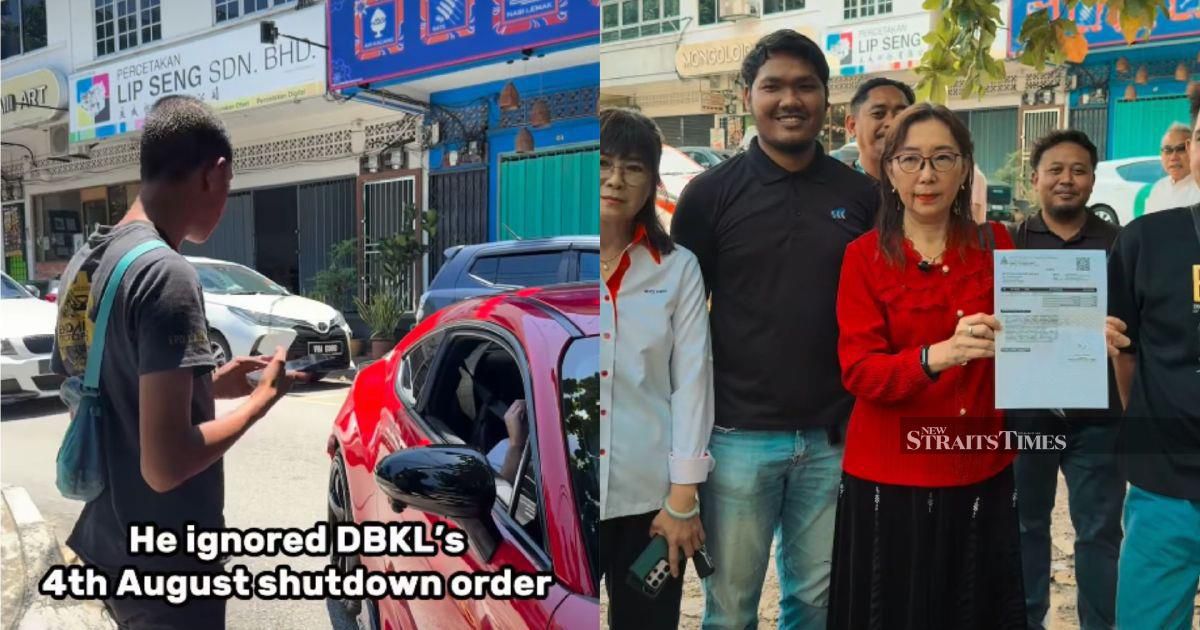
A man operating as an unlicensed parking attendant in the Taman OUG residential area of Kuala Lumpur has been taken into custody following a series of escalating enforcement interventions and an alleged physical confrontation with a municipal officer. The suspect was apprehended along Jalan Hujan in the neighbourhood after repeatedly disregarding official notices ordering him to cease his illegal collection activities. The arrest marks an intensification of local authorities' efforts to suppress informal revenue schemes that have become increasingly prevalent in residential districts across Malaysia's capital city.
Unauthorised parking collectors represent a persistent challenge for urban enforcement agencies throughout Kuala Lumpur and neighbouring regions. These individuals typically operate by directing vehicles into parking spaces and subsequently demanding payment from motorists, creating a parallel revenue system that operates entirely outside municipal oversight and without legitimacy. The practice generates friction within residential communities where homeowners and visitors object to being pressured for parking fees in areas where such arrangements should not exist. The Taman OUG situation underscores how determined such operators can become when facing initial enforcement pressure, escalating conflicts rather than ceasing operations.
The enforcement process in this case followed the standard procedural protocol that authorities employ when addressing unlicensed street-level operators. Officials issued multiple written notices directing the individual to stop his activities, a step designed to provide clear legal warning before escalating intervention. The issuance of successive enforcement notices indicates that the suspect showed flagrant disregard for administrative directives, continuing his operations despite explicit warnings. Such persistent non-compliance frequently precedes more serious confrontations, as determined operators calculate that authorities may lack sustained commitment to enforcement or perceive the risks of continued activity as manageable. This miscalculation often culminates in direct physical confrontation when enforcement action finally becomes unavoidable.
The alleged assault on the enforcement officer elevates the severity of the incident beyond simple regulatory violation. Physical aggression against municipal or enforcement personnel represents not only a criminal matter but also a significant breach of public order and a threat to the operational safety of officials performing their duties. Malaysia's regulatory framework provides legal recourse for such incidents, with assault charges carrying potential imprisonment and financial penalties. The escalation to violence suggests that the suspect viewed the enforcement encounter as an existential threat to his informal income source rather than a routine administrative correction, prompting him to respond with physical resistance rather than acquiescence.
Taman OUG, situated in Kuala Lumpur's established residential corridors, represents the type of middle-class neighbourhood where informal parking collection has become increasingly visible to residents and their visitors. The community likely reported the ongoing activities to local authorities, prompting the formal enforcement intervention that led to this arrest. Residential areas throughout Kuala Lumpur have experienced similar incursions by parking collectors who exploit the dense vehicle populations in established neighbourhoods without sufficient formal parking infrastructure. The visibility of such activities within residential communities generates citizen complaints and reputational concerns for local authorities who must demonstrate responsiveness to quality-of-life issues.
The broader phenomenon of unlicensed parking collection reflects deeper urban governance challenges facing Malaysian cities. Individuals drawn into such activities often lack formal employment opportunities or legitimate income sources, viewing parking collection as accessible informal sector work. The low barriers to entry and perceived ease of revenue generation attract determined operators who assess the enforcement risk as manageable. However, the absence of legitimate licensing frameworks means that once authorities decide to enforce, the confrontation becomes binary—either compliance or removal, with no regulatory middle ground. This binary enforcement approach can generate the kind of desperation that sometimes manifests in physical resistance.
The arrest carries important signalling implications for both the broader Kuala Lumpur community and enforcement agencies themselves. For residents and business operators, it demonstrates that municipal authorities maintain operational capacity to address street-level violations despite resource constraints. For enforcement officials, it reinforces that persistent non-compliance will trigger escalated intervention rather than tacit tolerance. However, the alleged assault also indicates that enforcement actions targeting determined operators carry inherent safety risks for officials, underscoring the necessity for proper protocols and backup resources during confrontations with individuals who have demonstrated willingness to disregard authority.
The incident reflects one dimension of Malaysia's informal economy, where regulatory gaps and enforcement inconsistencies create spaces for income-generating activities that technically violate municipal regulations but remain sufficiently tolerated that operators perceive continuation as viable. The Taman OUG case demonstrates how this equilibrium can shatter when enforcement finally materialises, particularly if the individual perceives the enforcement action as disproportionate or threatens to eliminate his income entirely. Building more sustainable solutions likely requires balancing strict enforcement with alternative employment pathways or regulated informal sector mechanisms that would reduce the desperation driving such confrontations.
Authorities have not yet released detailed information regarding the specific charges that the suspect will face, though assault against an enforcement official typically carries serious criminal implications beyond simple regulatory violations. The case will proceed through Malaysia's criminal justice system, where courts will assess both the parking collection allegations and the assault charges. The outcome may influence how similar incidents are handled in other Kuala Lumpur neighbourhoods experiencing comparable problems with unlicensed parking collectors.

