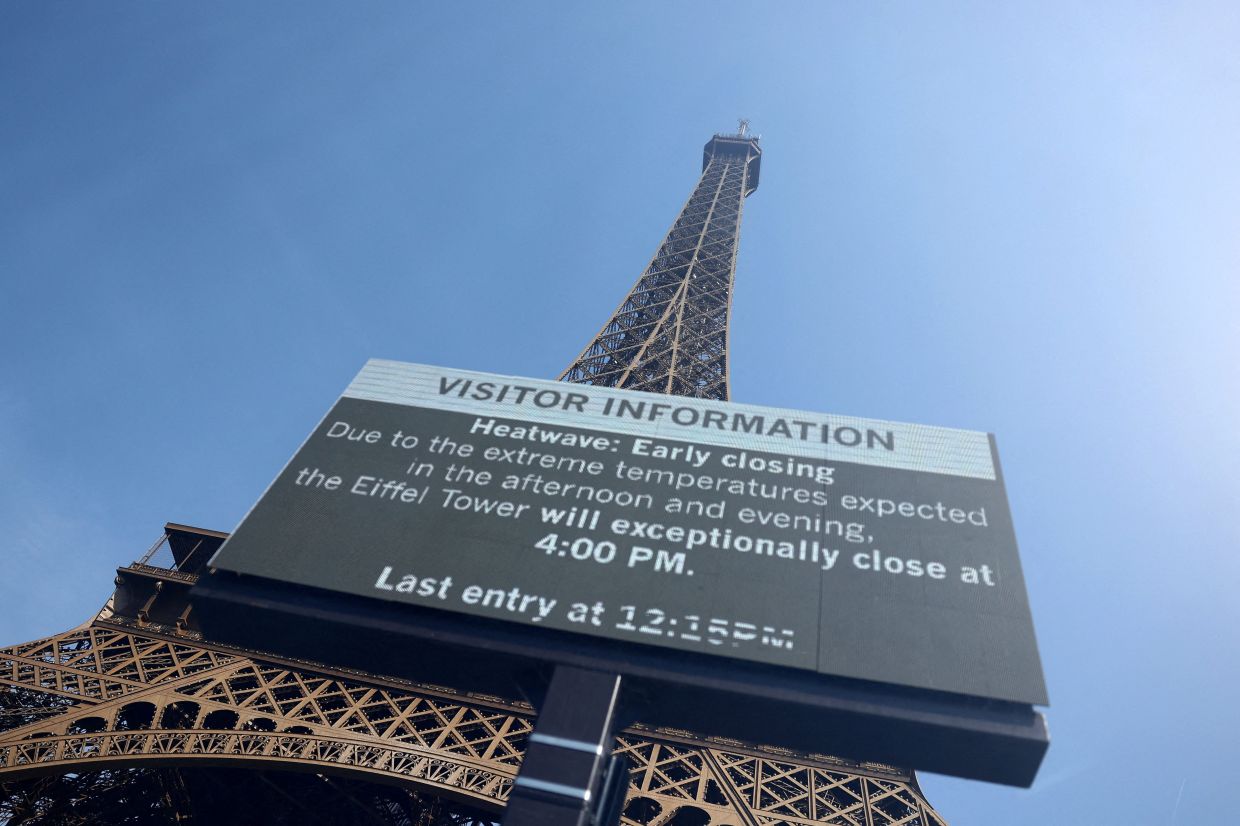
France experienced its most sweltering June day on record on June 23, when temperatures soared to levels unseen since meteorological measurements began in 1947, prompting major disruptions to tourism across the capital. The extreme weather forced the Eiffel Tower to shut its doors at 4pm—significantly earlier than the usual post-midnight closing during the high season—and management indicated that abbreviated operating hours would likely become necessary in the coming days. The 324-metre iron lattice monument, which welcomes approximately seven million visitors annually, represents just one casualty of conditions so severe they have pushed more than half of mainland France into the nation's highest weather alert level.
Maite Blazques, a 35-year-old nurse from Madrid, epitomises the growing frustration among international visitors whose carefully planned holidays have unravelled due to circumstances beyond anyone's control. She had spent months saving to take her six-year-old son to Paris, viewing the trip as a significant family milestone. Instead of ascending the Eiffel Tower, exploring the historic Marais quarter on foot, or enjoying a leisurely Seine river cruise, she found herself forced to completely reimagine their itinerary to escape the oppressive heat that made outdoor activities unbearable. Other tourists report similar disappointment: American visitor Tamara Dancer had her guided tour cancelled on the afternoon the heatwave peaked, while 45-year-old engineer John Beeler described the experience as leaving him and his wife suffocating in streets, underground trains, and even their rental accommodation.
The logistical challenges extend far beyond individual tours. The Louvre, the world's most-visited museum with roughly nine million annual visitors, has also grappled with operational constraints tied to thermal management. Museum administrators have publicly acknowledged that the sprawling palace complex—accumulated over centuries through construction and renovation by successive French monarchs and presidents—remains fundamentally inadequate in addressing modern climate realities. This admission carries particular weight given the institution's recent litany of crises, including a brazen US$100 million jewellery theft, persistent water leakage problems, and ongoing maintenance emergencies that have already strained resources and staff capacity.
The broader implications for heritage preservation and public access underscore a mounting tension across Europe's tourism sector. While some visitors have adapted by seeking refuge in air-conditioned museums and churches, others have abandoned hopes of experiencing Paris's street culture and architectural grandeur as intended. Drake Winners, a 66-year-old retired Londoner, crystallised the fundamental challenge: discovering Paris traditionally requires walking through neighbourhoods and discovering unexpected vistas, yet extreme heat renders such exploration physically dangerous and psychologically defeating. This observation highlights how climate disruption doesn't merely inconvenience travellers—it fundamentally erodes the experiential value that motivates visits to historic cities.
Beyond the capital, heritage attractions nationwide face similar pressures. Mont Saint-Michel, the spectacular medieval island monastery in Normandy and France's most-visited attraction outside the Paris region, has urged tourists to postpone visits entirely during the red alert period. Such unprecedented guidance from major cultural institutions signals how seriously authorities regard the public safety implications of sustained extreme temperatures. The cascading closures and warnings reflect not merely operational convenience but genuine concern about heat-related medical emergencies among crowds in poorly ventilated historical buildings and outdoor sites.
For Malaysia and broader Southeast Asia, this scenario carries instructive resonance. While the region has long contended with heat and humidity, the confluence of rising baseline temperatures, extreme weather events, and aging infrastructure creates comparable vulnerabilities in tourism-dependent economies. Malaysian heritage sites, from Kuala Lumpur's historical districts to World Heritage areas, increasingly confront questions about climate resilience and visitor safety. The Paris situation demonstrates that even wealthy, developed nations struggle to adapt iconic attractions to thermal stress, suggesting Southeast Asian destinations must begin proactive planning now.
The economic ramifications warrant particular attention for countries reliant on tourism revenue. International visitors represent crucial foreign exchange earnings and employment across hospitality, transportation, and retail sectors. When major attractions close or become inaccessible, the ripple effects extend throughout entire regional economies. Travel agents must adjust bookings, hotels experience cancellations or modified stays, and local businesses dependent on foot traffic suffer significant losses. The disruption in Paris during high season—when tourist spending peaks—magnifies these economic consequences.
From a strategic perspective, this crisis illuminates infrastructure investment priorities for destinations worldwide. Air-conditioning systems in heritage buildings present preservation dilemmas; cooling mechanisms can damage fragile artworks or compromise historical integrity. Yet inadequate climate control increasingly renders spaces unbearable or unsafe for visitors and staff. Museums and heritage organisations face difficult trade-offs between maintaining authenticity and ensuring public safety and comfort. These tensions will intensify as climate patterns shift and extreme heat events become more frequent rather than exceptional.
The experience also underscores psychological dimensions of tourism disruption. Visitors invest emotionally and financially in travel experiences, and when extreme weather forces cancellations or modifications, disappointment extends beyond mere itinerary adjustments. The photographs left untaken, the family memories unmade, and the anticipated experiences unfulfilled create lasting frustration. For the tourism industry globally, adapting to climate realities means rethinking everything from seasonal calendars to attraction design to visitor expectation management.
Looking forward, Paris and other heritage destinations must balance multiple imperatives: preserving irreplaceable cultural assets, ensuring visitor safety and satisfaction, maintaining economic viability, and accepting that climate adaptation requires fundamental rethinking rather than marginal adjustments. The question is no longer whether extreme heat will disrupt tourism—it's how quickly cultural institutions and destination managers can innovate resilience strategies that allow meaningful access during increasingly challenging environmental conditions.

