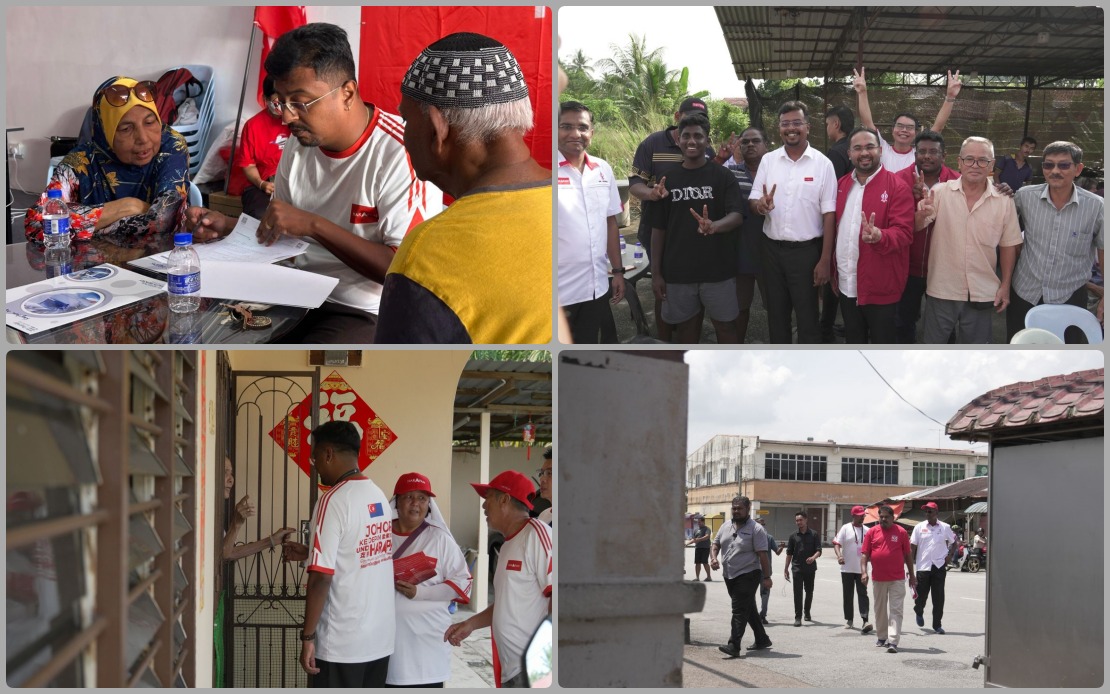
Dr. A. Ruban, the Pakatan Harapan candidate seeking to represent the Paloh state assembly constituency, has been hospitalised in Batu Pahat following a flare-up of an existing spinal condition. The PH representative was admitted at midday after experiencing acute pain from a slipped disc that had substantially restricted his mobility since the morning, according to his campaign manager Abdul Majid Abd Aziz. The timing of the medical intervention comes during a critical phase of the Johor state election campaign, with polling day scheduled for July 11.
Dr. Ruban's previous medical history includes earlier spinal surgery, indicating a chronic vulnerability to recurring back complications. Abdul Majid attributed the sudden deterioration to the physical demands of the electoral campaign, noting that the candidate had undertaken numerous community walkabouts and grassroots engagement activities across the constituency. The combination of intensive ground-level campaigning, exhaustion from a compressed schedule, and the pre-existing spinal weakness appears to have culminated in this acute episode requiring hospitalisation.
The medical outlook remains relatively favourable, with campaign officials reporting that Dr. Ruban's condition is stable and not considered critical. Abdul Majid indicated that discharge from the hospital could occur within one to two days, suggesting the hospitalisation is primarily for pain management and stabilisation rather than emergency intervention. This assessment provides some reassurance for the campaign team, though it also raises questions about the candidate's physical capacity to maintain full campaign activities in the remaining days before the July 11 poll.
Despite the candidate's temporary incapacity, the PH campaign machinery has pledged continuity in its ground operations within the Paloh constituency. Abdul Majid assured supporters and voters that the party's campaign apparatus would maintain active community engagement and voter outreach in Dr. Ruban's absence. The campaign spokesperson stated that while the candidate is unable to conduct face-to-face interactions personally, the party intends to ensure that Dr. Ruban's policy platform and electoral messaging still reach voters through alternative channels and through other party representatives and volunteers.
The Paloh state assembly seat represents a significant electoral battleground, featuring a four-way contest that reflects the fragmented political landscape in contemporary Malaysian state politics. Dr. Ruban contests against D. Jeevakumar representing Perikatan Nasional, independent candidate G. Kamaleswaren, and incumbent Lee Ting Han of Barisan Nasional. This multi-cornered configuration complicates vote distribution and potentially shifts the dynamics compared to straight two-way or three-way contests. Each candidate's ability to mobilise support effectively throughout the campaign period becomes particularly consequential in such split contests.
The incident underscores the physical toll that intensive election campaigns impose on candidates across all parties in Malaysia. The rigorous schedule of walkabouts, town halls, and community engagement activities, while essential for building voter connections and demonstrating commitment, frequently extracts a significant health cost on politicians, particularly those contesting multiple election cycles within compressed timeframes. The hospitalisation of Dr. Ruban, whatever the outcome of his candidacy, highlights the demanding nature of electoral politics in Malaysia's state elections.
For context, the Johor state election represents the 16th such poll in the state since Johor's return to electoral politics. The state has historically served as a significant political battleground between Barisan Nasional, which dominated for decades, and opposition coalitions seeking to expand their representation. Recent years have witnessed increased political competition and fragmentation, with multiple coalitions and independent candidates contesting seats that once saw more straightforward contests. The emergence of Perikatan Nasional as a third-force option alongside Pakatan Harapan has further complicated the political arithmetic.
Early voting was conducted on the same day as Dr. Ruban's hospitalisation, allowing voters unable to cast ballots on the main election day to participate in the democratic process. The conduct of early voting has become a standard feature of Malaysian elections, recognising that various voter segments—including healthcare workers, security personnel, and others in essential services—often cannot participate during standard polling hours. The staggered voting process provides officials with preliminary data on voter turnout and participation patterns ahead of the main election day.
The broader context for the Paloh seat and wider Johor election involves the ongoing realignment of Malaysian politics following the 2022 general election and the subsequent formation of the unity government at federal level. The 2022 federal election fragmented the political landscape significantly, with no coalition commanding a clear majority and necessitating unprecedented power-sharing arrangements. State elections following this realignment have proven fluid, with local factors, incumbent performance, and constituency-specific considerations often weighing more heavily than national political narratives.
The PH coalition's strategy in Johor reflects its broader repositioning as a centrist force seeking to appeal to urban and semi-urban voters concerned with governance quality and economic management. The deployment of candidates with professional credentials—such as Dr. Ruban's apparent medical background—represents an attempt to project competence and attract educated voters increasingly sceptical of traditional political machines. Whether such positioning proves effective in states with strong BN organisational infrastructure remains an empirical question that Johor elections help illuminate.
For Malaysian voters and political observers, the Paloh contest encapsulates larger questions about political competition, voter choice, and the vibrancy of democratic contestation in Malaysian state politics. The hospitalisations, campaign dynamics, and multi-candidate contests all contribute to a richer electoral environment compared to previous eras of more controlled, single-dominant-party politics. The outcome of such contests increasingly depends on effective ground mobilisation, candidate credibility, and the ability to respond dynamically to shifting voter preferences and local issues, as demonstrated by the PH campaign's determination to maintain momentum despite their candidate's health challenge.

