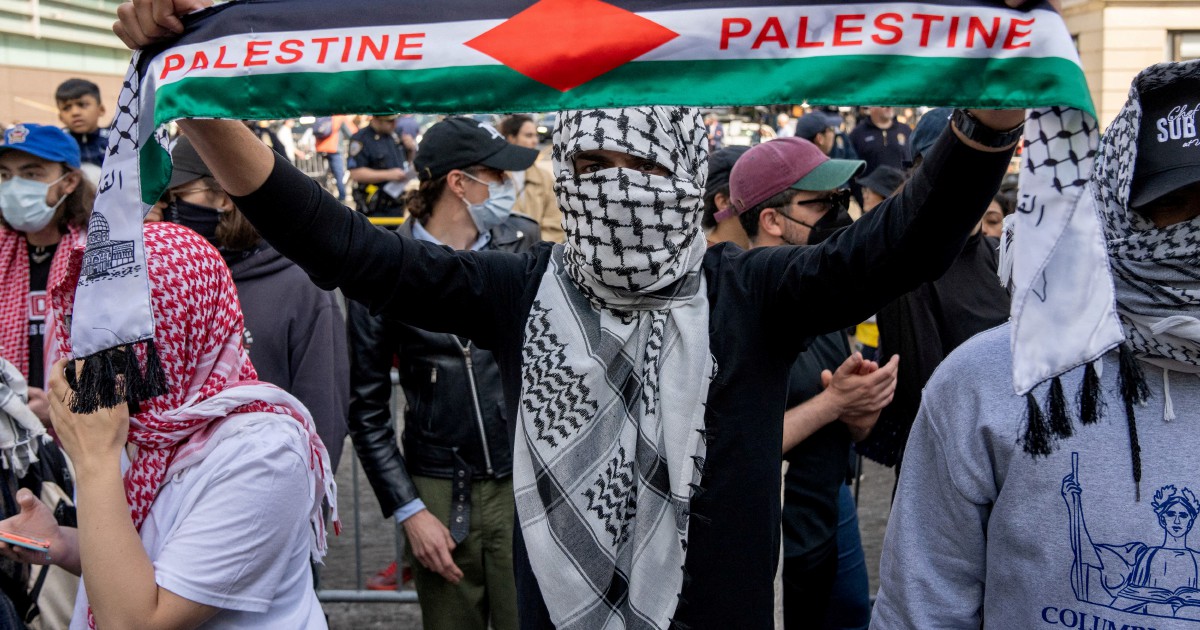
A coalition of Palestinian students and former staff members has initiated legal action against Columbia University, with a court filing in New York detailing allegations of systematic discrimination against the university's Palestinian community. The lawsuit marks an escalation in tensions that have simmered within the institution since the latter months of 2023, when pro-Palestine activism on campus intensified alongside the humanitarian crisis in Gaza.
The legal challenge comes at a time of heightened scrutiny of American universities' handling of campus activism and free speech concerns. Columbia University, one of the United States' most prestigious institutions, has faced mounting criticism from multiple directions—advocates argue the institution has failed to protect Palestinian students from harassment, whilst others contend that pro-Palestine activism has created hostile environments for Jewish students. This lawsuit represents one of the most formal contestations yet of how Columbia has navigated these competing pressures.
The plaintiffs allege that Columbia's administration adopted policies and practices that disproportionately burdened Palestinians whilst failing to extend equivalent protections to their community. These complaints range from disciplinary actions against Palestinian student organizations to what the plaintiffs characterize as disparate treatment in response to campus demonstrations and speech. The scope of the allegations suggests systemic patterns rather than isolated incidents, indicating the complainants believe discrimination penetrated institutional decision-making at multiple levels.
Columbia's campus witnessed particularly intense activism beginning in October 2023, with student groups organizing demonstrations in response to geopolitical events. The university subsequently implemented measures intended to maintain order and safety, including restrictions on certain gatherings and investigations into student conduct. Depending on whose account one credits, these measures either represented reasonable campus management or constituted discriminatory targeting of Palestinian voices.
For Malaysian and Southeast Asian observers, this case illuminates broader challenges facing international academic institutions managing politically charged campus environments. Universities across the region increasingly confront similar dilemmas: balancing institutional neutrality with student activism, protecting freedom of expression whilst ensuring campus safety, and avoiding the appearance of favouring particular national or ethnic constituencies. The Columbia lawsuit provides a cautionary example of how these tensions can escalate into formal legal disputes.
The timing of the lawsuit also reflects evolving attitudes within the American legal system toward campus discrimination claims. Previously, courts often deferred substantially to universities' institutional autonomy in managing student conduct and campus affairs. However, recent decisions have shown greater willingness to examine whether universities applied their policies evenhandedly across different student communities. If the plaintiffs prevail in establishing that Columbia treated Palestinian students differently from other groups, it could establish precedent affecting how American universities defend their disciplinary decisions.
Columbia's response to these allegations will probably emphasize that its policies were content-neutral and applied consistently across the campus community regardless of the political perspectives involved. The university may argue that any disproportionate impact on Palestinian students resulted from the nature and scale of certain activism rather than discriminatory intent. Such defences, however, face the challenge that plaintiffs can potentially demonstrate documented disparities in how similar conduct was treated when involving different student communities.
The financial and reputational stakes for Columbia are considerable. Beyond potential legal liability, a judgment against the university could damage its standing amongst Palestinian students and faculty considering enrollment or employment, whilst also inviting criticism that the institution failed to uphold promised commitments to non-discrimination. Conversely, a complete defence victory might be perceived as vindicating the university's approach but could intensify perceptions amongst pro-Palestine activists that institutional channels failed to acknowledge their grievances.
This lawsuit arrives during a particularly sensitive moment for American academia. Universities have faced federal investigations, congressional scrutiny, and public controversy regarding their handling of both antisemitism and Islamophobia, alongside questions about campus free speech. Columbia's experience suggests that litigation increasingly supplements or replaces traditional administrative remedies for aggrieved students, reflecting broader shifts toward judicial resolution of campus disputes that universities once handled internally.
For international students and scholars, the Columbia case underscores potential legal vulnerabilities within the American university system. Students from Malaysia and other countries considering study in the United States should understand that campus activism, even when politically motivated, can trigger disciplinary processes that vary in transparency and fairness. The lawsuit illustrates that campus communities are not insulated from broader geopolitical conflicts and that institutional responses to activism can have lasting consequences for individual students' educational experiences and career trajectories.
The outcome of this litigation will likely reverberate throughout American higher education, influencing how other universities calibrate their responses to pro-Palestine and other activist movements. If courts find merit in the discrimination claims, institutions may face pressure to demonstrate more rigorous documentation of decision-making processes and greater consistency in applying disciplinary standards. The case thus represents not merely a dispute between Palestinian students and one university, but a potential inflection point in how American academia balances competing values of inclusion, free expression, institutional order, and protection of vulnerable student populations.

