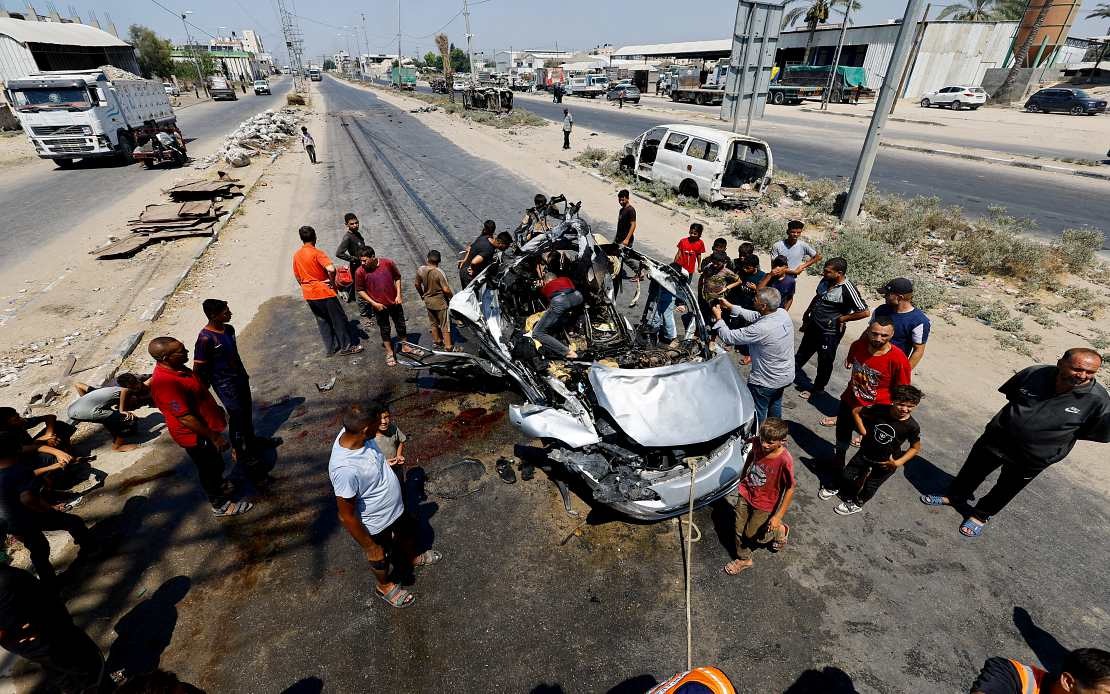
The Palestinian leadership has accused Israel of maintaining its military campaign against Palestinian territories despite publicly accepting a ceasefire arrangement, raising serious doubts about the viability of peace efforts in the region. Speaking on Monday through presidential spokesperson Nabil Abu Rudeineh, the Palestinian Authority expressed frustration that the agreed ceasefire framework has failed to translate into meaningful protection or relief for Palestinian civilians. The statement, issued through the Palestine News and Information Agency, highlighted a fundamental disconnect between diplomatic agreements and ground realities that threatens to unravel fragile negotiations.
According to Abu Rudeineh, the ceasefire represents little more than symbolic commitment on paper while violence persists across Palestinian territories. The second phase of the Gaza ceasefire, which was intended to represent a comprehensive end to hostilities and provide substantive security guarantees for Palestinians, has not achieved either objective. Instead, Palestinian civilians continue to face military operations that contradict the terms both parties ostensibly agreed to honour. This contradiction exposes what Palestinian officials view as bad faith engagement from Israeli authorities, undermining confidence in negotiating processes and international mediation efforts.
The Palestinian Authority specifically cited ongoing attacks targeting refugee camps and villages as evidence that Israel has not ceased its operations. These strikes, according to Palestinian statements, form part of a deliberate strategy to diminish Palestinian presence in contested territories and eliminate the refugee question from future peace negotiations. By targeting civilian areas where displaced Palestinian populations reside, Israeli military actions allegedly aim to reshape demographic and political realities on the ground—an approach that Palestinian leadership characterises as contrary to international law and humanitarian principles governing conflict.
Palestinian officials have called upon the international community, with particular emphasis on the United Nations Security Council, to intervene decisively. Rather than accepting Israeli assertions of compliance, Abu Rudeineh urged the Council to enforce the ceasefire terms through binding resolutions and concrete pressure on Israel to cease offensive operations immediately. The statement reflects Palestinian frustration with international institutions that have repeatedly called for ceasefires but lack mechanisms or political will to enforce compliance from powerful parties. For Malaysian policymakers and the broader Southeast Asian region watching Middle Eastern developments, this scenario underscores how international agreements without enforcement mechanisms often collapse without delivering promised humanitarian outcomes.
The Palestinian position encompasses three primary demands: immediate implementation of the ceasefire's second phase, cessation of Israeli military operations across Gaza, the West Bank, and occupied East Jerusalem, and provision of international protection mechanisms for Palestinian civilians. These demands reflect Palestinian recognition that their security ultimately depends on external guarantees rather than bilateral trust with Israel. The emphasis on international protection mechanisms is particularly significant, suggesting that Palestinian leadership views existing frameworks as inadequate for preventing civilian casualties and ensuring compliance with humanitarian norms.
A central concern outlined by Palestinian officials is the pattern of impunity that they argue characterises Israeli military conduct. According to their assessment, the absence of meaningful international accountability encourages further violations of international humanitarian law and international law generally. This impunity, from the Palestinian perspective, creates a vicious cycle wherein each violation without consequence emboldiens further violations. The psychological and political consequences of perceived injustice in enforcement extend beyond immediate military operations, damaging prospects for reconciliation and sustainable peace arrangements that might otherwise emerge from negotiated settlements.
The Palestinian statement articulated a broader vision for regional stability that extends far beyond immediate ceasefire implementation. Leadership emphasised that genuine security and stability across the Middle East remain impossible while Israeli occupation persists and military aggression continues. This framing positions the Israeli-Palestinian conflict as a fundamental barrier to broader regional peace, affecting not only the immediate parties but also neighbouring states and the wider international community invested in Middle Eastern stability. For Southeast Asian nations with economic and diplomatic interests in Middle Eastern stability, Palestinian arguments about the necessity of resolving the occupation question connect directly to regional peace prospects.
Palestinian officials invoked international legitimacy frameworks, specifically the United Nations resolutions regarding Palestinian rights and the Arab Peace Initiative, as foundations for their negotiating position. These references serve to position Palestinian claims within established international law and consensus rather than presenting them as sectarian demands. The emphasis on the Arab Peace Initiative particularly carries weight regionally, as it represents a collective Arab consensus position that has been formally presented to international forums. References to East Jerusalem as the capital of an independent Palestinian state reflect the Palestinian leadership's unwillingness to compromise on what they view as core components of self-determination and viable statehood.
The Palestinian statement carries implications for regional actors beyond Israel and Palestine. Southeast Asian nations, while geographically distant, maintain significant diplomatic and economic relationships throughout the Middle East. Understanding Palestinian perspectives on ceasefire failures and their assessment of Israeli compliance helps contextualise ongoing regional tensions that affect international trade, energy security, and broader geopolitical stability. Moreover, Malaysian and other Southeast Asian governments' positions on Middle Eastern conflicts increasingly shape their standing within broader international communities and their relationships with major powers aligned differently on Israeli-Palestinian questions.
The credibility gap between ceasefire agreements and their implementation on the ground represents a persistent challenge to international mediation efforts globally. The Palestinian experience demonstrates how powerful military actors can technically accept negotiated frameworks while maintaining operational freedom to continue hostile actions through ambiguous interpretations of agreement terms. This pattern has profound implications for conflict resolution mechanisms elsewhere and raises questions about the structural adequacy of current international tools for enforcing peace agreements between unequal parties where one side possesses overwhelming military superiority. Future ceasefire negotiations, whether in the Middle East or elsewhere, may require more robust enforcement mechanisms and clearer operational definitions of compliance.
Moving forward, Palestinian leadership has signalled that accepting further ceasefire agreements without addressing underlying occupation issues represents a dead-end approach. This position may complicate ongoing international mediation efforts but reflects Palestinian assessment that repeated cycles of ceasefire-violation-negotiation consume time and resources without producing substantive progress toward their core objectives. The stakes involved in these negotiations extend well beyond Palestinian territories, affecting regional stability and international law's credibility in conflict resolution contexts worldwide.

