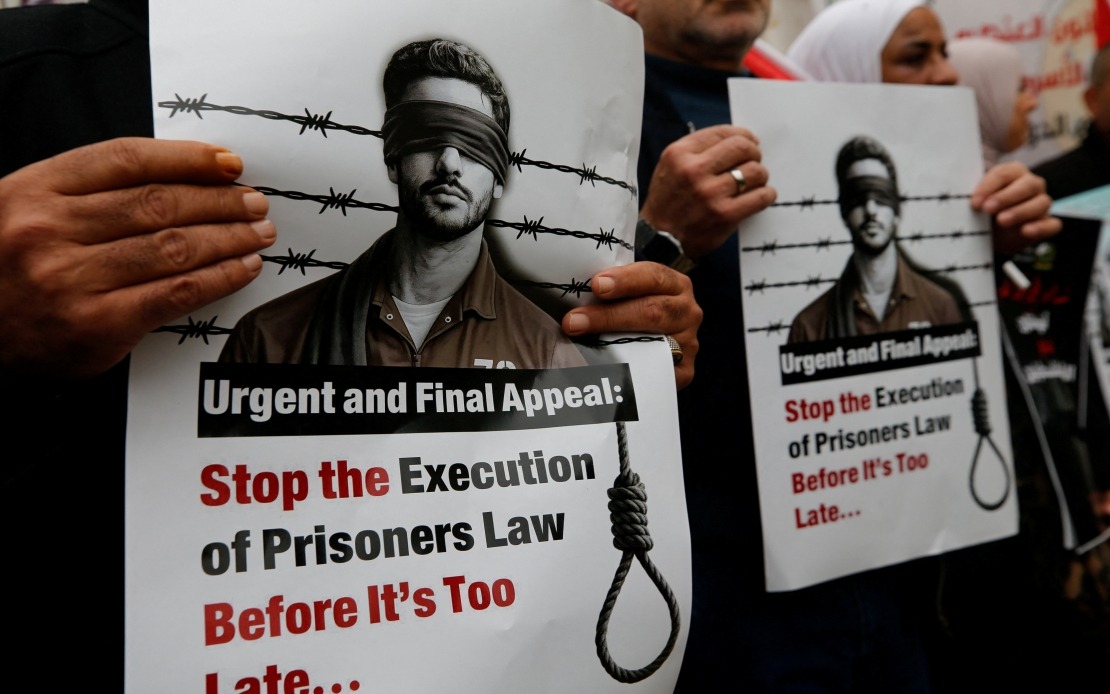
The Palestinian government has formally documented allegations that Israeli authorities are holding more than 3,376 Palestinian detainees in administrative detention without formal charges or trial, marking a significant escalation in documented claims of arbitrary imprisonment. Released in the form of Situation Report #92 from the Palestine Prime Minister's Office, the document presents a stark picture of what Palestinian officials characterise as systematic human rights violations within Israeli correctional facilities, raising concerns that extend far beyond individual cases to suggest institutional patterns of abuse that demand international scrutiny.
According to the Palestinian administration's account, the detention system extends its grip across vulnerable populations, with 360 Palestinian children currently incarcerated alongside adult detainees. The inclusion of minors within the administrative detention framework represents a particularly troubling dimension, as it underscores the scope and reach of the detention apparatus. Additionally, the report identifies three pregnant Palestinian women facing conditions described as deliberately degrading, including starvation, humiliation, and deprivation of essential prenatal healthcare—circumstances that raise urgent humanitarian concerns for both mother and unborn child.
The catalogue of alleged abuses documented in the Palestinian report spans a troubling spectrum of mistreatment. Detainees reportedly endure beatings and prolonged stress positions that border on torture, with accounts of electrocution, deliberate sleep deprivation, starvation protocols, and incidents of sexual violence. Prison conditions themselves are characterised as inhumane, featuring inadequate provisions of food and potable water, what Palestinian authorities allege is the deliberate facilitation of disease transmission, and systematic denial of medical treatment. These allegations paint a picture of detention environments designed not merely to incarcerate but to inflict suffering as a mechanism of control.
The broader detention landscape in Palestinian territories reflects the scale of the conflict's human toll. The Palestinian government records indicate that more than 9,500 Palestinian detainees have been documented across the West Bank, including the disputed territory of occupied Jerusalem. This figure encompasses both those held under formal conviction and those detained administratively without trial, suggesting that detention has become a widespread instrument of governance within the occupied territories. For Malaysian readers monitoring regional and global human rights trends, these figures underscore ongoing concerns about detention practices in conflict zones and their intersection with rule of law principles that Malaysia itself has committed to upholding internationally.
The human cost extends beyond active detention. The Palestinian report documents that hundreds of released detainees carry severe physical and psychological scars from their incarceration, with some individuals dying shortly after release due to cumulative effects of the abuse they experienced while imprisoned. This phenomenon—where imprisonment itself becomes a pathway to mortality—suggests conditions so severe that they inflict lasting damage even after formal custody ends. The long-term health and psychological impacts on survivors raise questions about rehabilitation and reintegration support, issues that typically require sustained international humanitarian engagement.
The Palestinian government's documentation occurred against a backdrop of broader casualties from the ongoing conflict dating back to October 2023. According to figures accompanying the detention report, at least 73,054 Palestinians have been killed in Gaza, including 21,638 children, with an additional 173,480 injured. The West Bank and occupied Jerusalem have witnessed 1,175 Palestinian deaths, among them 246 children, alongside 12,919 wounded. These casualty figures represent a humanitarian catastrophe of immense proportions, contextualising the detention abuses within a wider pattern of violence and suffering affecting Palestinian communities across multiple territories.
During the period of June 22 to 28, Palestinian officials recorded 362 military assaults by Israeli forces, 47 shooting incidents independent of airstrikes, and 114 incidents attributed to settler attacks across the West Bank and occupied Jerusalem. Beyond those killed and wounded, the Palestinian government documents that 11,200 Palestinians remain missing, presumed dead or in unaccounted detention. The conflict has also devastated Palestinian institutional capacity, with more than 1,700 health workers killed and 262 journalists and media workers also fatally targeted. These losses to medical and journalistic professionals undermine Palestinian society's capacity to provide healthcare and document violations, compounding the humanitarian crisis.
Parallel to documenting allegations of detention abuses, the Palestinian Cabinet has advanced an ambitious governance reform agenda designed to strengthen institutional functioning and public financial management. President Mahmoud Abbas approved amendments to the Value Added Tax law, enabling the Palestinian government to launch a comprehensive institutional development program within the Ministry of Finance. These reforms include establishment of a Higher Council for Public Revenues and modernisation of financial administration systems, initiatives aimed at aligning Palestinian financial practices with international standards while combating tax evasion and smuggling that undermine public revenue collection.
The Palestinian government's simultaneous pursuit of financial and digital modernisation reflects an attempt to build institutional capacity despite the conflict environment. The Cabinet approved a General Policy for the Telecommunications and Information Technology Sector covering the period 2026 to 2028, designed to accelerate digital transformation and enhance government digital services. Complementing this technology initiative, Palestinian authorities endorsed replacement of paper health insurance cards with smart card systems, a move intended to improve data security, combat fraud, and create foundational infrastructure for expanding digital health services across Palestinian populations.
For Southeast Asian observers including Malaysian policymakers, the Palestinian situation presents a complex intersection of humanitarian crisis, detention practice controversies, and institutional development efforts. The documentation of systematic detention abuses raises questions about accountability mechanisms and international responses to alleged violations. Simultaneously, the Palestinian government's pursuit of administrative and technological reform suggests continued efforts to strengthen governance capacity. The contradiction between institutional building and the scale of human suffering raises profound questions about the sustainability and effectiveness of such reforms when undertaken within an active conflict environment where basic security and humanitarian needs remain unmet.
The detention figures and abuse allegations carry implications for Malaysia's foreign policy positions and regional human rights advocacy. As a Southeast Asian nation that has historically advocated for Palestinian rights within international forums, Malaysia's response to such allegations—through diplomatic channels, multilateral organisations, and humanitarian engagement—reflects broader commitments to international humanitarian law and accountability. The scale of documented abuses and the number of detainees held without trial place pressure on countries like Malaysia to articulate clear positions on detention practices and support mechanisms for affected populations, particularly vulnerable groups including children and pregnant women.

