The Palestinian Foreign Ministry has mounted a robust defence of the United Nations Relief and Works Agency for Palestine Refugees in the Near East (UNRWA), characterising the agency as an indispensable pillar supporting millions of Palestinians across occupied territories and neighbouring host countries. The statement comes amid escalating international efforts to curtail or eliminate UNRWA's operations, creating a critical juncture for humanitarian assistance in one of the world's most volatile regions. Ramallah's firm position underscores the Palestinian Authority's view that dismantling the agency would constitute a catastrophic blow to an already fragile population facing severe humanitarian challenges.
UNRWA operates across a sprawling network encompassing the Gaza Strip, the West Bank including East Jerusalem, and refugee camps throughout the region. The agency provides essential services spanning education, healthcare delivery, social protection programmes, and emergency humanitarian assistance. For generations of Palestinians, UNRWA has functioned as the primary institutional mechanism for accessing basic services, particularly in camps where host governments have limited capacity or willingness to absorb the full burden of refugee welfare. The scale of this operation is staggering, serving millions of registered refugees and their descendants who have depended upon these services for over seven decades since the agency's establishment following the 1948 Palestinian displacement.
Palestine's Foreign Ministry emphasised that UNRWA operates under formal UN mandate and functions in accordance with established international legal frameworks. This assertion matters significantly because it positions the agency not merely as a charity or development organisation, but as a legitimate instrument of international law with defined legal status and protections. The ministry's emphasis on institutional legitimacy reflects awareness that critics frame UNRWA's disbandment as administrative reform rather than political elimination, a framing that obscures the legal and humanitarian dimensions of the dispute. By grounding its argument in international law, Ramallah attempts to shift the conversation from political preference toward binding legal obligations.
The Palestinian statement firmly rejected terminology and frameworks it views as fragmenting Palestinian geographic and political identity. Officials stressed that the Gaza Strip constitutes an integral part of the occupied State of Palestine rather than a separate entity, and that Palestinians across Gaza, the West Bank, East Jerusalem, and diaspora communities represent a unified people. This linguistic and conceptual resistance reflects deep concern that accepting linguistic separation could entrench de facto territorial partition and undermine eventual Palestinian statehood claims. The Foreign Ministry understood that terminology debates carry profound political consequences in peace negotiations and international legal proceedings.
Crucially, Ramallah distinguished between humanitarian assistance and political resolution, asserting that aid provision cannot substitute for the inalienable rights of Palestinian refugees under United Nations General Assembly Resolution 194. This distinction proves essential because some international actors propose replacing UNRWA with alternative humanitarian mechanisms while avoiding addressing refugee rights and potential return or compensation frameworks. By explicitly connecting the UNRWA debate to broader questions of refugee status and rights, Palestine rejected a humanitarian narrowing that would decouple agency operations from the underlying political questions driving refugee displacement and displacement policies.
The catalyst for Palestine's statement emerged from comments by United States President Donald Trump's Board of Peace, which declared on social media that UNRWA possessed no place in a reconstructed Gaza. The board framed this position as liberation from perpetual dependency and conflict cycles, suggesting that ending UNRWA operations would catalyse new development approaches and Palestinian self-sufficiency. This rhetoric repackages termination as progressive reform, arguing that UNRWA dependency has perpetuated conflict rather than resolving underlying grievances. The framing presents a direct challenge to Palestinian arguments about refugee rights and international legal obligations.
Trump's Board of Peace, established in January 2024 as part of his administration's initiative to broker Gaza settlement, represents a significant institutional vehicle for projecting American political preferences into Palestinian governance structures. The board held its inaugural Gaza-focused meeting in February at the United States Institute of Peace in Washington, operating under presidential leadership and directing attention toward implementing Trump's twenty-point plan for ending Gaza conflict. This plan, approved through a November Security Council resolution, encompasses the administrative and political framework within which the UNRWA dispute now unfolds. The board's institutional position and American backing grant its pronouncements substantial geopolitical weight despite formal limitations on its authority.
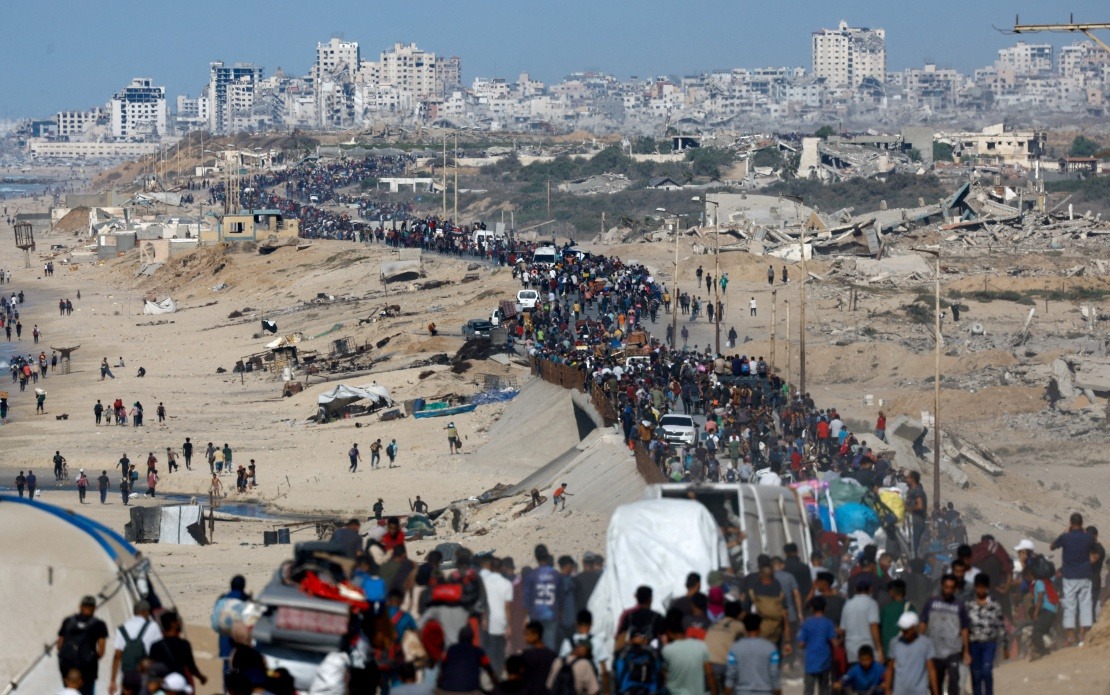
The broader context reveals profound tension between humanitarian imperatives and political reconstruction agendas. Since October 2023, the Gaza conflict has produced staggering casualty figures, with Palestinian authorities documenting over 73,000 deaths and more than 173,000 injuries, predominantly affecting civilian populations including women and children. Within this devastated landscape, UNRWA functions as perhaps the primary institution maintaining elementary social services, education systems, and emergency response capacity. Dismantling the agency amid active conflict would produce immediate humanitarian catastrophe affecting populations already experiencing severe deprivation, malnutrition, and disease vulnerability.
For Malaysian policymakers and Southeast Asian observers, the UNRWA debate carries significance extending beyond immediate Palestinian circumstances. The dispute touches fundamental questions about international humanitarian law, refugee status and rights, the role of UN institutions, and the relationship between conflict resolution and refugee rights frameworks. Malaysia, as a major humanitarian donor and advocate for developing world interests within UN forums, has traditionally supported UNRWA's mandate and refugee protection principles. The current American pressure to dismantle UNRWA tests whether established international norms regarding refugee status and humanitarian protection retain binding force when confronted by great power preferences for political reconfiguration.
The Palestinian position explicitly invoked international law and UN obligations as the foundation for UNRWA's continuity, calling upon all states, institutions, and international organisations to respect the agency's mandate, privileges, and immunities. This appeal to universal legal principles rather than Palestinian interest alone reflects strategy to frame UNRWA's preservation as a global governance issue rather than merely Palestinian advocacy. By emphasising that UNRWA protections extend beyond Palestinian territories to refugee camps throughout the region, the statement highlighted how dismantling the agency would affect host countries including Jordan, Lebanon, and Syria, each hosting substantial Palestinian refugee populations dependent upon agency services.
Looking forward, the outcome of the UNRWA dispute will substantially shape humanitarian architecture in the post-conflict Gaza period and establish precedent regarding whether great powers can unilaterally eliminate UN-mandated agencies serving refugee populations. Palestine's robust defence of UNRWA's mandate, grounded in legal frameworks and humanitarian necessity, provides the principal counterargument to American pressure for institutional elimination. The coming months will reveal whether international law and humanitarian principle can withstand geopolitical pressure from administration committed to comprehensive regional restructuring under its preferred political framework.

