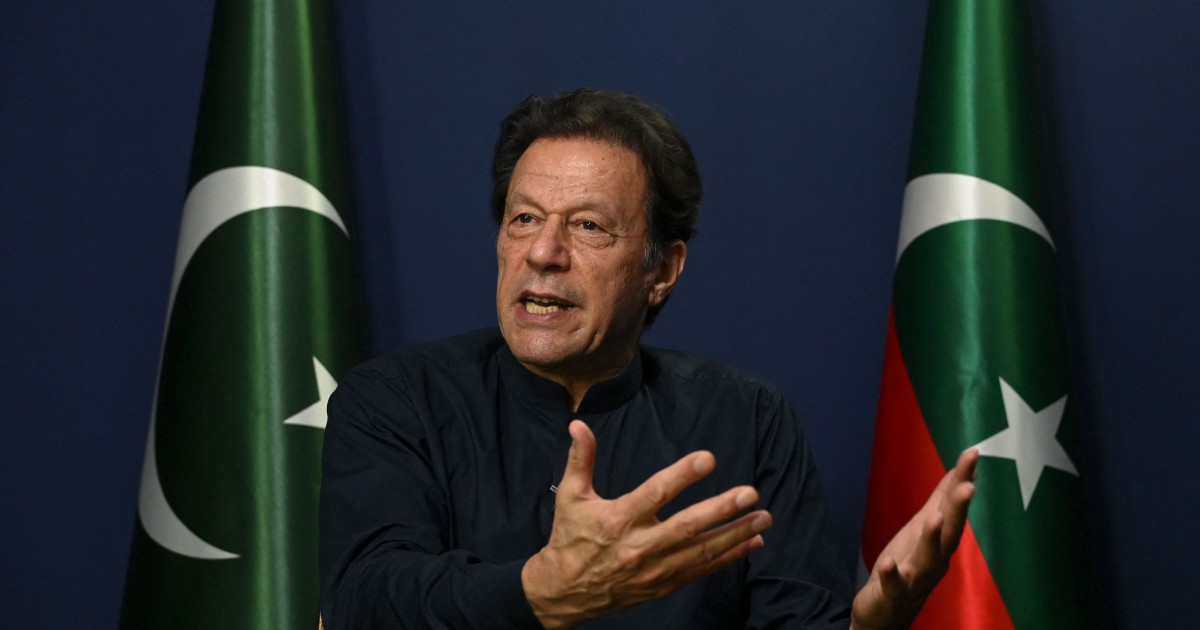
Pakistan's Supreme Court has issued a directive requiring that former Prime Minister Imran Khan be transferred from jail to a hospital, marking a significant development in the ongoing legal and political turmoil surrounding the imprisoned opposition leader. The ruling, announced on Tuesday, represents a response to months of advocacy by Khan's Pakistan Tehreek-e-Insaf party and his family, who have repeatedly voiced alarm about his deteriorating health whilst in custody.
The transfer order carries substantial implications for Pakistani politics at a delicate juncture. Khan's detention has been a lightning rod for controversy since his arrest in August 2023 on corruption charges that his supporters dismiss as politically motivated persecution. The former cricketer-turned-politician has remained one of South Asia's most polarising figures, commanding fierce loyalty amongst his base whilst facing fierce opposition from Pakistan's military-backed establishment and the ruling coalition government.
Conceivable health complications arising from prolonged incarceration have formed a persistent theme in Khan's legal defence strategy. His party has contended that prison conditions have compromised his wellbeing, whilst family members have publicly disclosed concerns about his cardiac health and general medical needs. These assertions have resonated with Khan's supporters, who view the detention itself as a form of persecution designed to remove a formidable political challenger from the landscape before general elections scheduled for 2024.
The Supreme Court's intervention reflects the judiciary's willingness to oversee executive detention practices, at least in high-profile cases attracting international scrutiny. Pakistan's superior courts have historically navigated contentious political matters with considerable caution, balancing institutional pressures against public perception and legal principle. A hospital setting would theoretically afford Khan access to superior medical facilities compared to conventional jail accommodation, whilst simultaneously maintaining his custody status under judicial supervision.
The timing of this ruling merits examination within Pakistan's broader political context. Elections held earlier in 2024 returned a fragmented parliament, with Khan's PTI capturing substantial electoral support despite his imprisonment and the party's exclusion from certain procedural arrangements. Renewed agitation surrounding his detention—including street demonstrations and social media campaigns—has intensified pressure on state institutions to demonstrate procedural fairness, even as anti-Khan forces within the government appear committed to pursuing legal cases against him.
For Malaysian and Southeast Asian observers, Khan's predicament illustrates the precarious intersection between democratic governance and institutional autonomy in developing democracies. Pakistan's experience demonstrates how political rivalries can weaponise the justice system, potentially undermining faith in judicial impartiality and creating cycles of institutional mistrust. These dynamics, whilst particularly acute in Pakistan, resonate across the region where questions of prosecutorial independence and political influence over courts remain contested matters in countries ranging from Malaysia to Thailand to the Philippines.
The hospital transfer decision also signals potential fractures within Pakistan's power structure. The Supreme Court's willingness to intervene in Khan's detention suggests at least some judicial independence from executive pressure, though sceptics question whether such rulings represent genuine institutional autonomy or carefully calibrated political theatre designed to maintain appearances whilst substantive outcomes remain predetermined. The gap between judicial pronouncement and practical implementation frequently determines whether court orders constitute genuine relief or symbolic gestures.
International dimensions further complicate Khan's situation. Human rights organisations have documented concerns about detention conditions and due process protections, raising reputational questions for Pakistan's democratic credentials internationally. The hospital transfer, by acknowledging health concerns requiring specialised medical intervention, implicitly concedes that conventional jail conditions may be unsuitable for the detainee—a concession that potentially strengthens Khan's broader legal arguments about the appropriateness of his continued detention.
The PTI's response to the court order has framed it as vindication of their longstanding complaints regarding Khan's treatment. Party statements typically emphasise the health dimensions whilst situating the broader detention within a narrative of political victimisation. This framing resonates powerfully amongst Khan's supporters, many of whom view institutions as corrupted by military-bureaucratic interests hostile to democratic reform and transparent governance.
Moving forward, the hospital transfer may constitute a temporary accommodation rather than a resolution of the underlying political conflict surrounding Khan. His numerous legal cases remain pending, and government adversaries appear determined to pursue convictions regardless of interim relief measures. The transfer decision potentially buys time for all parties—allowing Khan's health concerns to be addressed whilst maintaining his custody status and permitting legal proceedings to continue.
For Pakistan's democratic trajectory, Khan's case exemplifies deeper questions about institutional independence, political accountability, and the rule of law. Whether courts can genuinely constrain executive overreach or whether they ultimately function as instruments of political consolidation remains contested. The hospital transfer order provides a temporary reprieve, but the fundamental struggles shaping Pakistan's political future remain unresolved.

