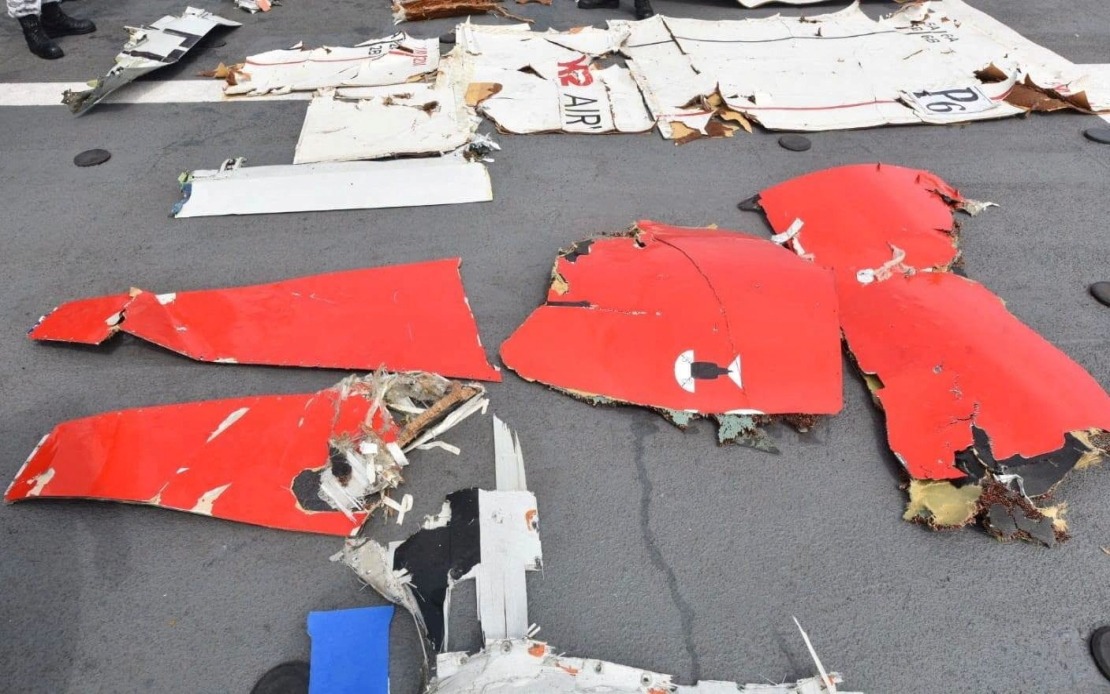
Pakistan's maritime authorities have recovered pieces of a cargo aircraft that vanished in the Arabian Sea, marking a significant development in a search-and-rescue operation that has gripped the South Asian nation for nearly two days. The fragments of the Boeing 737 operated by K2 Airways were located by naval units off the coast near Amara, positioned west of Karachi, following an intensive 12-hour search effort, according to statements released Thursday by Pakistan's airport authority through social media channels.
The disappearance of the aircraft has intensified concerns about aviation safety in Pakistan, a country that has experienced several high-profile air disasters in recent years. The five-member crew, comprising two pilots, two aircraft engineers, and a loadmaster, were aboard the twin-engine jet when communications ceased abruptly on Tuesday evening as the plane traversed the Arabian Sea during what should have been a routine international flight. The aircraft had departed from Sharjah in the United Arab Emirates with Karachi as its intended destination, a route typically considered routine by regional standards.
Investigators have determined that the Boeing 737 experienced a rapid and catastrophic loss of altitude before disappearing entirely from air traffic control radar. Prior to this sudden descent, crew members had reported navigation difficulties to ground control, providing authorities with crucial information as they attempt to reconstruct the final moments before contact was lost. The specific nature of these navigation problems remains under investigation, though such issues can range from instrument malfunctions to environmental factors affecting electronic systems.
Searching for the crew and remaining wreckage has proven exceptionally challenging due to environmental conditions in the region. The onset of the monsoon season has generated rough sea conditions that significantly impede recovery operations, limiting visibility and making it hazardous for naval vessels and helicopter teams to conduct thorough searches across the expanse of ocean where the aircraft is believed to have gone down. These seasonal weather patterns represent a persistent obstacle to both the rescue effort and subsequent investigation work.
K2 Airways, the private Pakistani carrier operating the aircraft, released the names of the five crew members and issued a statement expressing the airline's deep sorrow over the incident. The airline emphasized its cooperation with Pakistan's Civil Aviation Authority and other relevant government agencies, pledging continued support to the families affected by the tragedy. Founded in 2018, K2 Airways operates a relatively small fleet and represents one of Pakistan's newer entrants into the competitive aviation market.
The aircraft itself, a Boeing 737, had originally been manufactured in 1999 for passenger service before undergoing conversion to cargo configuration in later years. The conversion process, while common in the industry, involves significant modifications to the aircraft's interior and operational systems. Such aircraft typically serve additional decades in cargo operations after their commercial passenger life concludes, though they remain subject to rigorous maintenance and certification requirements.
Pakistan's Prime Minister Shehbaz Sharif acknowledged the tragedy on Wednesday, expressing personal condolences to the families of the missing crew members and underscoring the government's commitment to the search operation. The statement represented official recognition of the severity of the incident and signaled that authorities were mobilizing all available resources to locate the missing personnel and determine the cause of the accident.
The incident highlights ongoing challenges facing Pakistan's aviation sector, which operates in a geographically complex region with variable infrastructure and weather conditions. While major international carriers maintain strong safety records, smaller regional operators sometimes face scrutiny regarding maintenance protocols and crew training standards. The investigation into this accident will likely focus on mechanical integrity, crew actions, and environmental factors to identify contributing causes.
For regional aviation authorities and operators across Southeast Asia, incidents such as this serve as important reminders of the inherent risks involved in maritime aviation operations. The Arabian Sea, while generally well-traveled by commercial aircraft, presents specific meteorological and geographical challenges that require constant vigilance and adherence to established safety protocols. Airlines operating routes across the Indian Ocean and Arabian Sea basins must maintain heightened awareness of seasonal weather patterns and their implications for flight safety.
The recovery operation is expected to continue as weather permits, with naval units maintaining surveillance of the search area. The discovery of aircraft fragments, while tragic, enables investigators to begin detailed examination of structural components, which may provide crucial insights into what precipitated the aircraft's final descent. For the aviation industry and the families awaiting news, the next phase of the investigation represents both a technical endeavor and a humanitarian mission to provide answers and closure.

