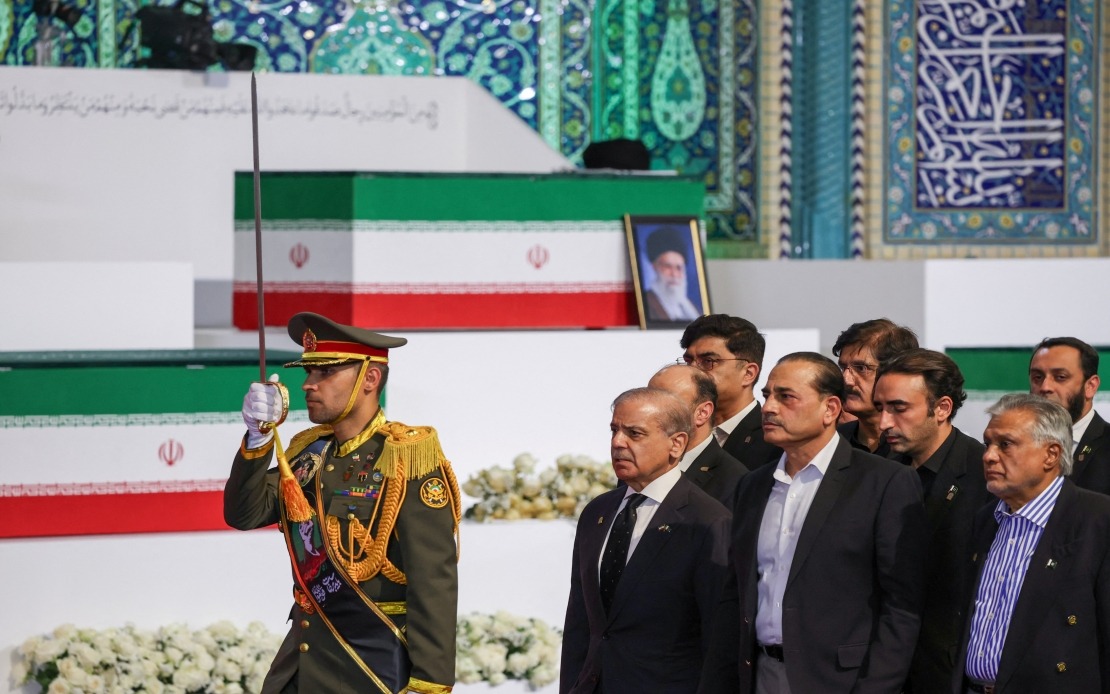
Pakistan demonstrated remarkable diplomatic commitment by sending a high-ranking delegation to the funeral of Iranian Supreme Leader Ayatollah Ali Khamenei, earning effusive recognition from Tehran for what observers view as a strategic reassertion of bilateral ties. The contingent, led by Prime Minister Shehbaz Sharif, arrived in the Iranian capital on Friday alongside delegations from approximately 100 nations, including Malaysia, Bangladesh, Saudi Arabia, Turkiye, Qatar, Oman, Egypt, Russia, Iraq, China and India. Iran's Ambassador to Islamabad, Reza Amiri Moghadam, publicly commended Pakistan's participation, describing it as testimony to the "enduring friendship and brotherhood" binding the two neighbouring countries, remarks that underscore the symbolic weight Tehran attaches to Islamabad's show of solidarity.
The funeral marked a watershed moment in regional geopolitics. Khamenei, who served as Iran's Supreme Leader from 1989 until his death, was killed on February 28 alongside several family members in what Iran characterised as a United States-Israeli attack on his compound in Tehran. The assembled international attendance reflected the global dimensions of Iran's influence and the significance of ceremonial respect across the Muslim-majority world. Pakistan's decision to send such a formidable delegation signals strategic calculation: reinforcing the relationship with Iran at a moment when the Islamic Republic faces heightened international pressure and regional instability.
The composition of Pakistan's delegation underscored the gravity of the occasion. Beyond Shehbaz Sharif, the contingent included Deputy Prime Minister and Foreign Minister Ishaq Dar, the nation's top military officer, Chief of Army Staff Field Marshal Syed Asim Munir, and major political figures including National Assembly Speaker Sardar Ayaz Sadiq and Pakistan People's Party chairman Bilawal Bhutto Zardari. The inclusion of Interior Minister Mohsin Naqvi and Information Minister Attaullah Tarar rounded out a roster spanning civilian, military and parliamentary hierarchies. This cross-institutional representation conveyed a coordinated national message rather than a token gesture, with each participant symbolising a pillar of Pakistan's state apparatus.
Ambassador Moghadam's assertion that Pakistan's delegation was "the largest from any country at the ceremony" carries particular significance for Islamabad's regional standing. Pakistan shares a 959-kilometre border with Iran and maintains deeply entangled economic, security and cultural relationships with the Islamic Republic. The decision to field such a substantial contingent, larger than those sent by any other nation, reflects both historical bonds and contemporary strategic interest in preventing Iranian alienation during a period of regional volatility. For Malaysian readers familiar with regional dynamics, this gesture mirrors the delicate balancing acts smaller nations must perform when managing relations with influential regional powers.
Prime Minister Shehbaz Sharif's own remarks at the ceremony underscored the reverence with which Pakistan's leadership regarded Khamenei's legacy. In paying homage, Shehbaz described the late Supreme Leader's "wisdom, leadership and profound influence on Iran and the wider region" as something destined for generational remembrance. Such language transcends mere diplomatic protocol; it positions Khamenei as a transformative figure whose impact extended well beyond Iran's borders into the broader Islamic world, an implicit acknowledgment of the ideological and political currents that animate Pakistani-Iranian relations.
The timing of these funeral proceedings merits attention. Public ceremonies commenced on Saturday, with Khamenei's burial scheduled for July 9 in Mashhad, his birthplace and a city of immense religious significance within Shia Islam. This extended mourning period provided opportunity for successive waves of international delegations to pay respects, yet Pakistan's presence on the first and most prominent day, coupled with its numerical superiority, positioned Islamabad as a primary mourner and ally rather than a peripheral observer. The symbolism of placement mattered: Pakistan's delegation stood among the foremost nations acknowledging Iran's loss.
For observers across Southeast Asia, this episode illuminates how Pakistan calibrates its diplomatic positioning within the Islamic world. Despite longstanding tensions with Iran over various regional issues, Pakistan recognised that appearing at Khamenei's funeral served multiple purposes simultaneously. Domestically, it placated Iran-sympathetic constituencies within Pakistan, particularly among Shia communities and anti-American sentiment. Regionally, it reaffirmed Pakistan's membership in the broader Muslim-majority world order at a moment when Iran faced unprecedented isolation. Internationally, it demonstrated that despite American and Israeli actions Iran deemed critical, the global Muslim community remained engaged and respectful.
The funeral's international dimension also reflected Iran's persistent effort to maintain diplomatic relationships despite contentious foreign policies. The presence of Russian, Chinese, Iraqi and Saudi delegations alongside Pakistani, Turkish and Malaysian representatives suggested that despite geopolitical polarisation worldwide, ceremonial respect for deceased national leaders transcended ordinary diplomatic divisions. Iran's ability to convene such an assembly, mere days after suffering what it termed an act of military aggression, conveyed resilience and continued relevance within international affairs.
Pakistan's substantial commitment carries implications for Southeast Asian nations navigating their own relationships with Iran. The display of high-level attendance, military participation, and political unity around a state funeral demonstrated how countries can maintain substantive engagement with Iran while managing relations with Western powers and navigating regional fault lines. For Malaysia and other nations seeking to preserve balanced regional diplomacy, Pakistan's approach offered a template for honouring significant bilateral relationships during moments of international sensitivity.
The ambassador's characterisation of Pakistan's gesture as reflecting "the depth of the historic ties and shared values that have united Iran and Pakistan through the trials and triumphs of history" suggests a relationship durable beyond temporary fluctuations. Pakistan and Iran have weathered sanctions, sectarian tensions, border disputes and ideological differences, yet maintain underlying strategic coordination rooted in geography, history and shared regional interests. Khamenei's funeral provided opportunity to publicly recommit to these deeper connections even as immediate circumstances demanded careful diplomatic management.

